Connect with us today to learn more about our industrial automation solutions—and how to commission them for your application.
Why Choose Toyota Yaris Mirrors for Global Buyers?
For global buyers, choosing a Toyota Yaris Mirror is about more than matching a familiar shape. The correct mirror can restore a clear view, suit the vehicle’s original mounting points, and make daily driving less stressful. Yet Yaris specifications vary by model year, trim, and sales market. A mirror that looks right in a product photo may still have the wrong connector, adjustment type, or indicator placement.
A Toyota Yaris Mirror specialist’s practical reminder is useful here: “Check the vehicle details before judging a mirror by appearance.” This is an illustrative quotation, not a verified statement from a named, independently sourced expert. Buyers should compare the model year, door position, left- or right-hand fitment, and features such as electric adjustment, heating, or turn signals. A close look at the plug and mounting points can prevent a frustrating mismatch. Small differences matter.
Quality also deserves careful attention. A steady housing, clear glass, and secure adjustment help the mirror stay useful through ordinary commutes and rougher roads. Suppliers should provide precise compatibility information, clear product images, and a sensible returns process. These details build trust more reliably than broad claims. Still, listings can be imperfect, and photos do not always reveal every connector or finish. Confirming fitment with the vehicle identification details or an experienced parts professional is a practical final check. For global buyers, that small step can save time, shipping costs, and unnecessary uncertainty.
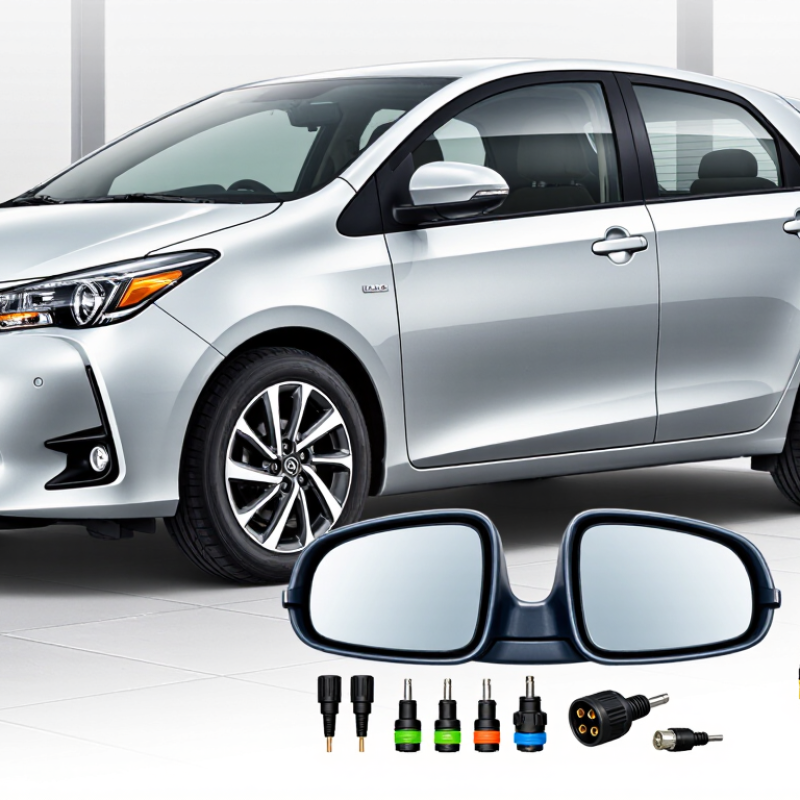
What Toyota Yaris Mirrors Are and How They Differ by Model
Compact hatchback door mirrors are exterior assemblies that combine a housing, mounting base, adjustment mechanism, and shaped glass. Depending on model year, market, and trim, a mirror may also include heating, power folding, an indicator, or blind-spot monitoring. These features are not interchangeable by appearance alone. Connector pins, mounting points, and glass curvature can differ, even when two housings look nearly identical.
The National Highway Traffic Safety Administration’s 2014 rear-visibility rule specified a clear area measuring 10 by 20 feet behind a vehicle for required rearview camera systems. It does not define side-mirror fitment, but it highlights why visibility components must work as intended. On a compact hatchback, a wide-angle glass section can reveal more of the adjacent lane, while a heated element helps clear a misted surface. One drawback: aftermarket glass may slightly change familiar distance cues.
Tips: Match the model year, market, and trim before ordering. Compare the connector and mounting base, then verify the part number against the vehicle identification number. Check adjustment and heating after installation. Small differences matter.
How to Check Fitment Across Yaris Generations and Markets
A mirror that fits one Yaris may not fit another. Before ordering, match the model year, generation, and body style, then check the vehicle identification details where available. Market versions can differ even when their names look identical. Left-hand-drive and right-hand-drive layouts may use different mirror assemblies or adjustment controls.
Compare the mounting points, mirror shape, and connector with the part already on the car. Count the plug pins, and check for electric adjustment, heating, turn signals, or blind-spot indicators. Details matter. A connector that looks close can still have a different pin layout. If possible, photograph the old mirror and its label, and compare them with the seller’s fitment information. Not always easy. Catalogues may use broad year ranges, so ask for confirmation using the vehicle’s market, trim, and production date. A careful check takes a few minutes; guessing can leave you with a mirror that bolts on but lacks a needed function.
| Fitment dimension | What to check | Why it matters | Practical verification |
|---|---|---|---|
| Model year and generation | Confirm the vehicle’s production year and generation using its registration documents or vehicle identification number (VIN). | Yaris generations overlap in some markets, and a model year alone may not identify the correct mirror assembly. | Compare the vehicle’s year, body style, and market with the seller’s application listing. Treat broad year ranges as a starting point, not a fitment guarantee. |
| Market and model identity | Check the country or region where the vehicle was originally sold and confirm its exact model designation. | Vehicles carrying the same name in different markets can use different platforms, body shells, or mirror assemblies. | Use the VIN or a market-specific parts catalogue where available. Do not rely on the model name alone. |
| Body style and door configuration | Identify whether the vehicle is a hatchback, sedan, or another body style, and note its door configuration. | Mirror bases, mounting angles, and door trim can differ between body versions, even within a similar year range. | Compare the existing mirror’s mounting area and door profile with clear photographs of the replacement. |
| Mounting base and bolt pattern | Compare the mirror’s triangular mounting base, bolt count, bolt spacing, and locating tabs. | A similar-looking housing will not fit securely if the base shape or mounting points differ. | Remove the interior trim only if appropriate, then compare the mounting points with the replacement specifications or the original part. |
| Left-hand or right-hand side | Confirm the required side from the vehicle’s direction of travel: left-hand mirror or right-hand mirror. | Side-specific assemblies are not interchangeable. Driver and passenger positions also vary with steering configuration. | State the vehicle’s steering position and the required vehicle side when ordering; do not identify the side only by where you stand outside the car. |
| Steering position and mirror shape | Check whether the vehicle is left-hand drive or right-hand drive, and compare the mirror housing and viewing angle. | Market-specific mirror geometry and glass specifications may differ to provide the intended field of view. | Match the original assembly’s side, shape, and market application. Confirm any glass or visibility specification required for the destination market. |
| Electrical connector | Compare connector shape, pin count, wiring, and any available wiring diagram or part specification. | Power adjustment, heating, folding, and signal functions may use different wiring and connectors. | Match the connector and functions exactly. A matching plug shape alone does not confirm that every electrical function is compatible. |
| Mirror functions | Check for manual or power adjustment, heated glass, power folding, memory features, and an integrated turn signal. | Assemblies with different equipment levels may look alike but may not connect to the vehicle’s wiring or controls. | Compare the original mirror’s controls and features with the replacement’s stated equipment before purchase. |
| Glass and housing details | Check glass size and shape, convex or aspheric markings, blind-spot markings, housing finish, and any cap or cover requirements. | Glass and cover details can vary by market, trim, and safety specification even when the main housing appears similar. | Use photographs and part references to compare the complete assembly, not just the outer housing. |
| Part-number cross-check | Record the number on the original assembly, if available, and compare it with a verified replacement reference. | A matching or superseding part reference is stronger evidence than a general product title or visual resemblance. | Confirm the reference against the VIN and the correct market catalogue; ask the seller to verify unclear substitutions. |
| Installation and final test | After installation, test adjustment, folding, heating, indicator operation, and mirror stability where equipped. | Correct physical installation does not by itself confirm that all electrical features work properly. | Follow the vehicle’s repair instructions, protect wiring and trim, and check that the mirror provides a clear view before driving. |
| Global buyer checklist | Provide VIN or exact model code, production year, sales market, body style, steering position, side required, connector details, and mirror functions. | These details help distinguish similar-looking assemblies across generations and regional versions. | When any detail is uncertain, verify it with the original assembly or a qualified parts source before ordering. |
How Mirror Features Support Visibility and Everyday Safety
A well-matched side mirror helps drivers notice traffic approaching from behind and beside a compact car. A broad, clear view matters when merging, changing lanes, or reversing into a narrow space. The mirror should sit securely and move smoothly, so drivers can adjust it without taking their attention from the road for long.
Some replacement mirrors include convex glass, which can show more of the adjacent lane. Objects may look smaller or farther away than they really are, though. A quick glance is not enough; drivers should check the view and judge distance carefully. Heated glass can help clear light mist or frost, while a sturdy housing may better withstand daily bumps. Features vary, so confirm the mirror’s shape, connector, and adjustment method before choosing a replacement.
Small details count. A loose mirror can vibrate over rough pavement and blur the view. After installation, check the reflection from the normal driving position, then adjust it to reduce blind areas. Even a properly fitted mirror cannot show every nearby vehicle. A shoulder check remains useful, especially in busy traffic. Visibility improves with good equipment, but habits matter too.
Materials, Durability, and Design for Different Driving Conditions
Mirror quality depends on more than a clear reflection. Many replacement housings use impact-resistant plastics, while the glass needs a stable backing to limit vibration on rough roads. A tight, even seam can help keep rain and dust away from the adjustment mechanism. Materials also face sun, frost, and repeated washing. UV-resistant finishes may slow fading, but no coating stays new forever. Small details matter.
Driving conditions shape the useful design. In wet weather, a well-sealed housing helps protect moving parts; in cold regions, heated glass can reduce frost when the vehicle supports that feature. Wide-angle glass may reveal more of the next lane, though objects can appear farther away than they are. That takes adjustment. Folding mirrors can be practical on narrow streets, but their hinges still need smooth, secure movement. Buyers should check the exact vehicle year, mounting points, connector, and available functions before ordering. Fit is not always perfect across versions, and a careful comparison can prevent a costly return.
What Global Buyers Should Consider When Choosing a Replacement Mirror
When choosing a replacement mirror for a compact hatchback, verify the vehicle’s model year, body style, and mounting position. A similar shape does not guarantee a correct fit. Compare the connector, adjustment controls, and any heating or indicator functions with the original unit. Small details matter.
Check the mirror glass and housing separately. A clear reflection, secure backing plate, and smooth adjustment are practical signs of quality. If the car has power folding or other built-in features, confirm that the replacement supports them; a plug that fits may still lack the right functions. I would not rely on a product photo alone. Ask for clear images of the connector and mounting points, and confirm what comes in the box.
Global buyers should also consider shipping protection, return terms, and local installation options. Long-distance delivery can expose painted housings and glass to knocks, so sturdy packaging matters. Vehicle specifications can vary by destination, even within the same model range. Check local inspection or equipment requirements before ordering, since these can differ. If fitment details remain unclear, compare the part with the original mirror before installation. It takes a little extra time. Better than a second shipment.