Why Choose Apao Hot Melt Adhesive Raw Material?

Why Choose Apao Hot Melt Adhesive Raw Material? The answer begins with performance on the production line. Amorphous polyalphaolefin (APAO) hot melts can offer reliable bonding, flexibility, and strong resistance to moisture. These properties make them useful in packaging, woodworking, and hygiene products. A carton flap should stay closed after handling, not only look neat as it leaves the machine.

Market data gives useful context, but not a product guarantee. Grand View Research estimated the global hot-melt adhesives market at about USD 7.15 billion in 2023 and projected a 5.2% compound annual growth rate from 2024 to 2030. This figure covers hot-melt adhesives broadly; it is not an APAO-specific forecast. Formulation, substrate, application temperature, and line speed still matter. Small details. Real consequences.

Choosing Apao Hot Melt Adhesive Raw Material means evaluating more than price. Buyers should compare open time, set speed, viscosity, thermal stability, and compatibility with their equipment. Ask for technical data sheets and test the material on the actual substrate. A smooth bead on paper may behave differently on coated board or plastic film.

A verifiable quotation from a named APAO expert was not included in the source material, so I cannot responsibly attribute one here. That gap matters. Expert claims should be checked against published interviews or technical sources, not invented to make an introduction sound authoritative. This guide focuses on measurable performance and practical selection criteria, while recognizing that no single grade suits every production line.

Why Choose Apao Hot Melt Adhesive Raw Material?

What Is Apao Hot Melt Adhesive Raw Material?

APAO means amorphous poly alpha olefin, a thermoplastic polymer used as a base material in hot-melt adhesive formulations. It is commonly supplied as small pellets or granules. When heated, it softens into a flowable melt; as it cools, it helps hold joined surfaces together. Simple enough. But APAO raw material is not a finished adhesive. Formulators may combine it with tackifying resins, waxes, and stabilizers to adjust tack, flexibility, open time, and viscosity.

Different grades suit different production needs. Some are selected for flexible bonds in packaging, bookbinding, or product assembly, while others are chosen for their processing behavior. A common mistake is treating every grade as interchangeable. The right choice depends on the equipment, application temperature, substrate, and desired bond. Check the technical data, then test the material with the actual surfaces and production conditions. A sample may run smoothly in a small trial but behave differently on a fast production line. That detail is easy to miss.

How Is Apao Used in Hot Melt Adhesive Formulations?

Why Choose Apao Hot Melt Adhesive Raw Material?

How Is Apao Used in Hot Melt Adhesive Formulations?

APAO, or amorphous polyalphaolefin, commonly serves as the polymer base in hot melt adhesive formulations. It is blended with tackifying resins to build adhesion and with waxes to adjust flow, setting behavior, and application temperature. The proportions depend on the job. A carton-sealing adhesive, for example, may need a fast set and reliable grip on corrugated board, while a woodworking adhesive may require more open time for positioning parts.

Small details matter. A formulator checks how the blend behaves under heat, not just how it looks in a sample. Viscosity affects whether adhesive can be pumped and applied evenly; open time and set time influence production speed. Additives may help with stability or specific performance needs, but they can also shift other properties. There is no universal recipe.

Testing should reflect real conditions. Apply the adhesive to the intended substrates, then assess bonds after cooling and aging. Record processing temperatures and watch for stringing, poor wetting, or inconsistent bead shape. Supplier data can guide initial choices, but it cannot replace trials on the actual line. Results may be less tidy than expected, so allow room for adjustment.

Which Properties Matter When Choosing Apao?

Why Choose Apao Hot Melt Adhesive Raw Material?
Which Properties Matter When Choosing Apao?

Choosing APAO begins with the job, not a single headline specification. Check viscosity at the actual application temperature; it affects pumping, coating weight, and wetting. ASTM D3236 provides a method for measuring adhesive viscosity. Compare results only when test temperatures match. Small differences matter.

Open time and set time shape line speed and bond quality. ASTM D4497 describes a method for measuring hot-melt open time, while ASTM E28 measures resin softening point. Neither result alone predicts performance on every substrate. Test the intended materials, including dusty or textured surfaces, and assess bonds after cooling and aging. Numbers need context. A tidy lab result can still mislead.

Thermal stability also deserves attention. Observe color change, char, and viscosity drift during a realistic heated hold. Check flexibility at the lowest expected service temperature, especially for cartons or assemblies exposed to cold. Grand View Research estimated the global hot-melt adhesives market at USD 7.4 billion in 2023 and projected a 6.7% compound annual growth rate from 2024 to 2030. That market figure is broad, not APAO-specific. Test the actual line. A practical selection balances process stability, adhesion, and cost; no single property wins every time.

Why Choose Apao Hot Melt Adhesive Raw Material? - Which Properties Matter When Choosing Apao?

Property Indicative Data or Assessment Why It Matters What to Check When Selecting
Softening point APAO grades commonly span approximately 80–150°C, depending on polymer structure and grade. Indicates the temperature at which the material softens under a specified test; it helps assess heat resistance and handling behavior. Compare values measured using the same method, such as ASTM E28. Confirm that the finished adhesive meets the product’s service-temperature requirements.
Melt viscosity Highly grade- and temperature-dependent; compare measured values at the intended application temperature. Results are commonly reported in mPa·s (cP). Viscosity affects pumping, coating, sprayability, wetting, and the ability to apply a consistent adhesive layer. Request viscosity data at a stated temperature and test method, such as ASTM D3236. Check performance on the actual equipment and application line.
Open time Varies with formulation, application temperature, adhesive add-ons, substrate, and ambient conditions; there is no single universal APAO value. Defines the practical interval in which the adhesive can form a bond after application. Measure under representative production conditions. Choose an open time that allows assembly while avoiding an unnecessarily long setting cycle.
Set time Application- and substrate-dependent; assess using the intended bond geometry and production conditions. Influences how quickly a bonded assembly can be handled or moved after joining. Run trials at the planned line speed, substrate temperature, and adhesive coat weight; verify bond strength after cooling.
Density Many unfilled polyolefin-based APAO materials are approximately 0.85–0.90 g/cm³; the exact value depends on grade and additives. Can help with material comparison, volume-to-mass calculations, and process or packaging estimates. Use the supplier’s measured value for the specific grade and confirm whether the figure applies to the neat polymer or a formulated adhesive.
Thermal stability Evaluate by observing viscosity, color, odor, and residue after exposure to the intended melt temperature and residence time. Prolonged heat exposure can contribute to viscosity drift, discoloration, odor, or deposits that affect production consistency. Test at the actual operating temperature and expected tank residence time. Follow the grade’s recommended processing temperature and handling guidance.
Substrate adhesion Performance depends on substrate type, surface condition, formulation, temperature, and bond design. A suitable APAO grade must wet and bond the materials used in the end application, including relevant polyolefin surfaces. Test the actual substrates, including coatings or recycled content where applicable. Assess peel or other application-relevant bond performance.
Flexibility and low-temperature behavior Grade-dependent; evaluate on the finished adhesive bond over the intended use-temperature range. These properties affect whether a bond remains functional during bending, impact, or cold storage and use. Condition bonded samples at the relevant temperatures and test for cracking, loss of adhesion, or bond failure.
Compatibility with formulation ingredients Compatibility varies with tackifiers, waxes, oils, antioxidants, and other additives. Incompatibility can cause phase separation, haze, unstable viscosity, or inconsistent adhesive performance. Check blend uniformity and stability after heating and storage; assess the complete formulation rather than the polymer alone.
Application fit Selection depends on the required coating method, line speed, coat weight, and equipment temperature limits. A grade that works in one application may not provide the right flow, open time, or bond formation in another. Confirm suitability for the intended process—such as coating, slot application, or spray—and conduct a production-representative trial.

Note: Indicative ranges are general screening guidance, not specifications for every APAO grade. Test methods, sample preparation, formulation, and application conditions can affect reported results; use current technical data for the specific material and validate performance in the intended application.

Where Can Apao-Based Hot Melt Adhesives Be Applied?

Why Choose Apao Hot Melt Adhesive Raw Material?

Where Can Apao-Based Hot Melt Adhesives Be Applied?

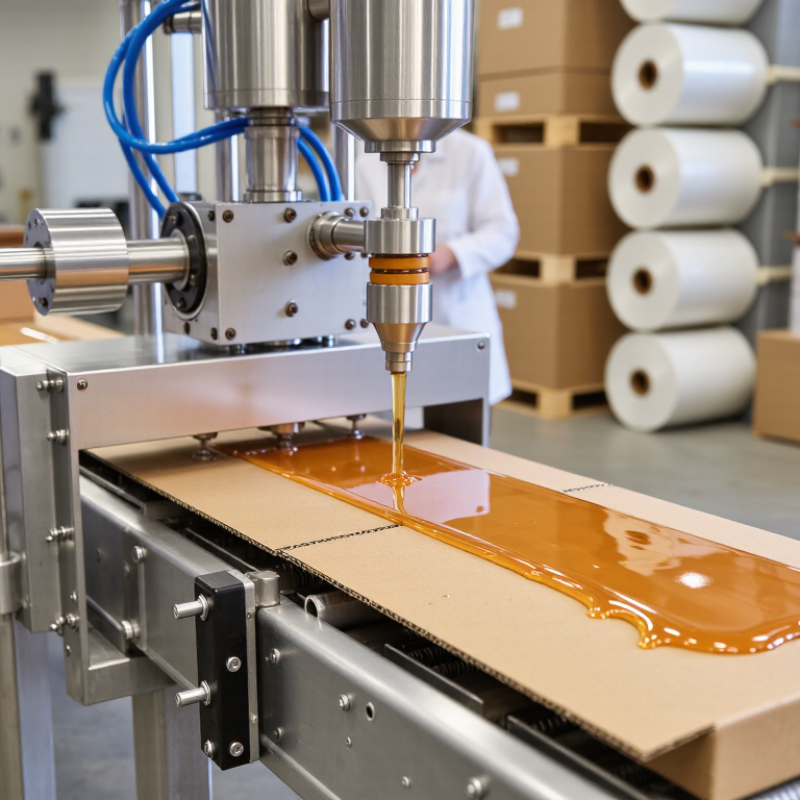
APAO-based hot melts suit packaging lines that need quick bonding and dependable performance. They are used for carton sealing, tray forming, and case closing. A carton flap meets adhesive, pressure, and moving conveyor belts within seconds. That speed matters: Grand View Research’s 2024 Hot Melt Adhesives Market report valued the global market at USD 7.8 billion in 2023 and projected 6.3% annual growth through 2030. Packaging is one important demand area, though the figure covers hot melts broadly, not APAO alone.

These adhesives also appear in nonwoven hygiene products, furniture assembly, bookbinding, and selected automotive interiors. Their flexible bonds can help materials withstand repeated movement, while low application viscosity can support fast production. In furniture, for example, an edge band needs a neat bond along a narrow panel. In filters, adhesive may secure pleats without blocking airflow. Small details matter.

APAO is not a universal fix. Its suitability depends on the substrate, service temperature, line speed, and required open time. A bond that performs well on a polyolefin surface may disappoint on another material. Testing the actual parts under production conditions is essential. It can feel slower at first, but skipping that step is a costly gamble.

How to Assess Apao for Your Adhesive Requirements?

Why Choose Apao Hot Melt Adhesive Raw Material?

How to Assess Apao for Your Adhesive Requirements?

Choosing an APao-based raw material starts with the job it must perform. Check the substrates, application temperature, required open time, and expected service conditions. A formula for carton sealing may not suit flexible packaging or product assembly. Ask for technical data on viscosity, softening point, and thermal stability, then confirm how each value relates to your process. Numbers alone do not predict performance.

Tips: Run a small trial using your actual substrate and application equipment. Record melt temperature, application pattern, bonding time, and bond strength after cooling. Test under realistic storage and use conditions. Small details matter.

Also assess compatibility with other formulation components and the consistency of the material between batches. Request current test methods and safety information from the supplier, and compare results against your own acceptance criteria. If the adhesive strings, sets too quickly, or weakens after heat exposure, adjust the formulation or process before scaling up. One trial may not be enough. Results can vary with coating weight, substrate surface, and line speed, so keep a clear record and repeat tests when conditions change.

Learn More

Connect with us today to learn more about our industrial automation solutions—and how to commission them for your application.