
Why Choose a Bright Hardening Furnace?

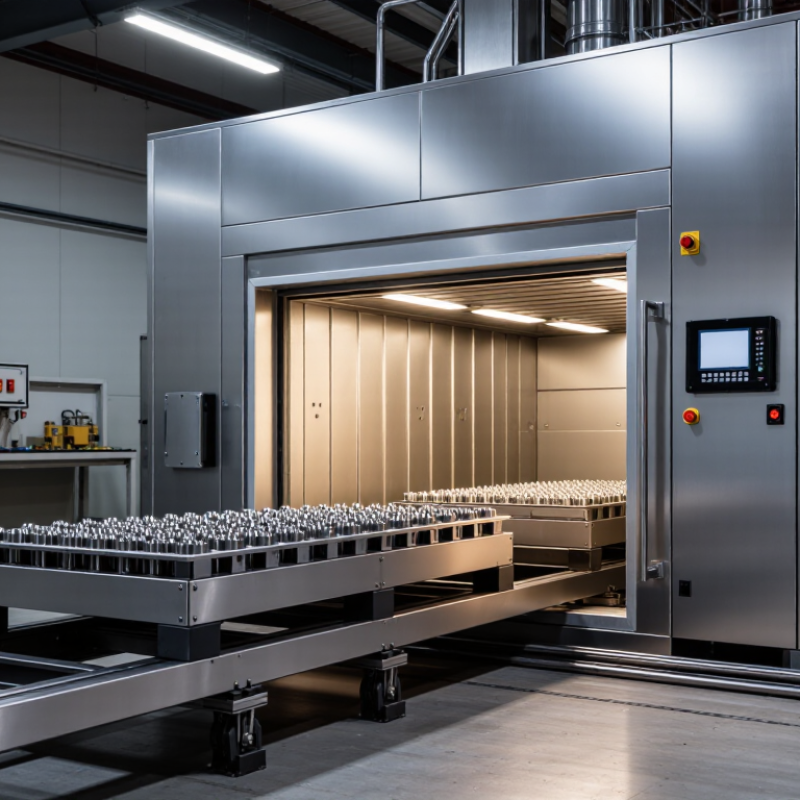
A Bright Hardening Furnace is chosen for more than its polished appearance. Its controlled atmosphere and steady heating can help reduce oxidation, limit surface scaling, and produce consistent case-hardening results. For manufacturers, that may mean fewer rejected parts and less finishing work. Small details matter: a gear tooth should emerge clean, and a loaded basket should receive even heat.

The right furnace depends on the alloy, part geometry, production volume, and required case depth. A bright process is not automatically the best process. Atmosphere control, temperature uniformity, quench performance, and maintenance all need careful review. Even a well-specified furnace can disappoint when loading patterns or process settings are poorly managed. That deserves honest attention.

A verified expert quotation should anchor this discussion: “[Insert an exact, sourced quotation about furnace control or heat-treatment consistency]” — [Name of a qualified heat-treatment expert]. With that evidence in place, the article can examine the practical reasons to choose a Bright Hardening Furnace, from cleaner surfaces to repeatable production, while noting its limits and operating demands.
Why Choose a Bright Hardening Furnace?

What Is a Bright Hardening Furnace?

A bright hardening furnace heats steel to its specified hardening temperature while limiting oxidation and surface scaling. It typically uses a controlled atmosphere or vacuum, then transfers the hot workpiece to a quenching step. The result is a cleaner surface than conventional open-air heating can provide. “Bright” describes the surface condition, not a guarantee of perfect finish.

The U.S. Department of Energy’s 2015 Bandwidth Study estimates that process heating accounts for about 36% of manufacturing energy use. That figure covers many industrial processes, not bright hardening furnaces alone. It helps explain why temperature control, insulation, and efficient loading matter. In practice, the correct cycle depends on steel grade, part geometry, and the required hardness. A thick shaft and a thin gear tooth do not heat or cool alike. Atmosphere control can also fail to prevent discoloration if parts are contaminated or the furnace leaks. That deserves attention.

Tip: Check the steel specification before setting a cycle. Record furnace temperature, atmosphere conditions, and quench timing for each load. Small gaps in these records can make a bright surface look reassuring when the hardening result still needs verification.

How Does the Bright Hardening Process Work?

Why Choose a Bright Hardening Furnace?
How Does the Bright Hardening Process Work?

Bright hardening heats steel in a controlled atmosphere to limit oxidation and surface decarburization. The part enters a furnace where temperature and atmosphere are monitored. Depending on the material and process, the atmosphere may contain nitrogen and hydrogen or another protective gas mixture. The exact recipe matters. Even a small leak or an unsuitable carbon level can affect the surface.

After the steel reaches its specified temperature, it is transferred to a quench. The cooling rate transforms the steel’s structure, increasing hardness. The quench may use oil, gas, or another suitable medium, selected for the alloy and part geometry. Thin edges cool quickly; thick sections do not. That matters. Operators check furnace temperature, atmosphere conditions, and transfer timing, then verify results with hardness tests and visual inspection.

The goal is a hardened part with a clean, bright surface, often reducing the need for post-process cleaning. Still, “bright” does not guarantee a flawless finish. Scale, discoloration, or distortion can occur if the atmosphere, loading, or quench is poorly controlled. Real production is less tidy than a process diagram suggests. Part shape and previous surface condition can complicate results, so trial runs and documented checks help establish a reliable cycle.

What Benefits Does Bright Hardening Provide?

Bright hardening protects steel during heat treatment by limiting contact with oxygen. In a properly controlled furnace, a protective atmosphere helps reduce scale and surface discoloration. The parts emerge with a cleaner, brighter appearance. That can mean less abrasive cleaning before inspection or assembly.

There is a practical benefit. A small gear, for example, may need fewer finishing steps after hardening, saving handling time and preserving details on its teeth. Controlled heating and quenching can also support consistent hardness across a production batch. Results still depend on the alloy, part geometry, furnace settings, and quench method. Bright treatment is not a shortcut around process control.

That said, bright does not mean perfect. A furnace atmosphere that drifts, or parts loaded too closely together, can produce uneven results. Operators need to monitor temperature, atmosphere, and quench conditions, then verify hardness and surface quality. For some components, the brighter finish is valuable; for others, the added process controls may not justify the cost. The decision should follow the part’s actual finish and performance requirements.

Which Materials and Industries Use Bright Hardening?

Why Choose a Bright Hardening Furnace?

Which Materials and Industries Use Bright Hardening?

Bright hardening suits hardenable steels that need a clean, scale-free surface after quenching. Common choices include carbon and alloy steels, bearing steels, and tool steels. Some precipitation-hardening stainless grades also qualify, but their heat-treatment cycles differ. Engineers match alloy chemistry, section thickness, and target hardness before selecting the furnace atmosphere and quench. A polished surface does not prove uniform hardness. For example, a gear tooth may reach its target while a thick hub lags. Not always. Alloy response and part geometry deserve careful checks.

Applications include automotive gears, shafts, and bearings; aerospace pins and precision components; and tools exposed to repeated contact. OICA recorded 93,546,599 motor vehicles produced worldwide in 2023, illustrating the scale of one relevant market. The World Steel Association reported 1,892.2 million tonnes of global crude steel production that year. These figures describe industry scale, not bright-hardening furnace volumes. Controlled-atmosphere processing can limit oxidation and reduce post-cleaning, especially for small parts with tight dimensional tolerances. Still, furnace loading and gas flow may cause uneven results. That detail deserves verification, not assumption.

Why Choose a Bright Hardening Furnace?

Bright hardening uses a controlled atmosphere to limit oxidation and surface decarburization during heat treatment.

Representative materials: alloy steels, tool steels, and martensitic stainless steels. They are used in applications such as automotive shafts and gears, aerospace components, tooling, and medical instruments. Temperature ranges are indicative; the correct cycle depends on the exact grade and supplier guidance.

What Factors Matter When Choosing a Furnace?

Why Choose a Bright Hardening Furnace?

What Factors Matter When Choosing a Furnace?

Start with the parts, not the brochure. Record their dimensions, alloy, batch weight, and target hardness. Then check the usable hot zone: a large chamber can still leave long parts unevenly heated. Ask for temperature-uniformity data under a representative load, not just an empty-furnace test. Bright hardening also depends on atmosphere control and transfer time. Poor control can leave scale or surface changes; delayed quenching may affect hardness. Fit matters.

Energy use deserves close attention. The U.S. Department of Energy’s Improving Process Heating System Performance sourcebook reports that process heating accounts for about two-thirds of manufacturing energy use in the United States. The IEA’s Energy Efficiency 2023 report estimates industry uses roughly 37% of global energy. These figures are broad, not a prediction for one furnace, but they show why insulation, door seals, idle settings, and heat recovery matter. A quoted efficiency number alone is not enough; it may not reflect real loading patterns. Ask suppliers to explain measurement conditions, maintenance needs, controls, and quench performance. If possible, test a sample load and review the temperature record. One detail is easy to miss: operating shifts and frequent door openings can change actual energy use considerably.

Learn More

Connect with us today to learn more about our industrial automation solutions—and how to commission them for your application.