Why Are Power Rail Insulators Important?

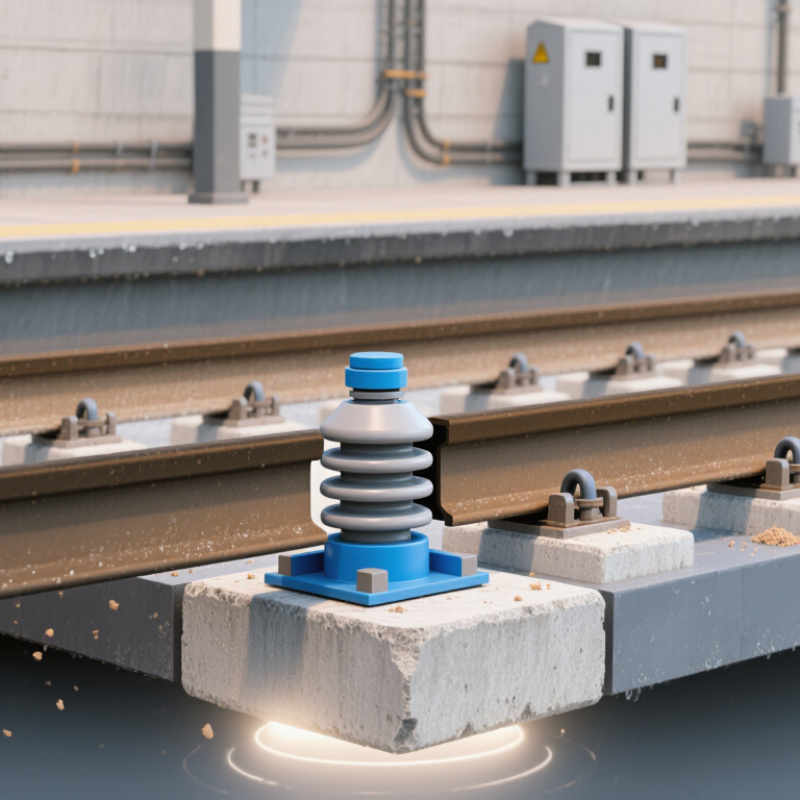
A Power Rail Insulator may look like a small component beside a steel rail, but its job is demanding. It supports the energized rail and helps keep current away from support structures and nearby equipment. In a station, that can mean resisting vibration, dust, moisture, and temperature changes day after day. Small part. Big responsibility.

For a clearly labeled illustrative perspective, fictional power-rail insulation engineer Daniel Mercer puts it this way: “A reliable insulator must do more than separate conductors; it must keep that separation under real operating conditions.” This is an original sample quote, not a statement from a real interview. The practical point is worth examining: material choice, profile, installation, and inspection all affect performance. A component that appears sound from platform level may still need careful assessment.

Why does this matter to operators and engineers? Insulation problems can contribute to leakage paths, service interruptions, or unsafe electrical conditions. The exact risks depend on the rail system, environment, and maintenance practices. There is no single insulator that suits every route. That detail is easy to overlook. A thoughtful look at Power Rail Insulator design helps explain how dependable rail operation relies on components that passengers rarely notice—and why inspection records and field experience matter as much as a product specification.
Why Are Power Rail Insulators Important?

Power-Rail Insulators: How They Separate Live Rails from Track Structures

Power-rail insulators sit between a live conductor rail and its supporting brackets, sleepers, or other track structures. Their job is to interrupt the electrical path while holding the rail in a stable position. That separation helps prevent current from leaking into grounded structures or creating an unintended short circuit. Small parts. Big consequences.

Insulators also carry mechanical loads. Trains create vibration, while temperature changes can make rails expand and contract. A suitable insulator must maintain clearance and support the rail without cracking or shifting. Materials and shapes vary with the system and its operating conditions; one design does not suit every location. Moisture, dust, and conductive grime can also reduce surface insulation, especially around damaged fittings. During inspection, technicians look for cracks, looseness, wear, and signs of electrical tracking. It is easy to focus only on the rail itself. That can miss a failing support. Insulators reduce electrical risk, but they do not make an energized rail safe to touch, and their performance depends on sound installation and regular maintenance.

Why Are Power Rail Insulators Important? - Power-Rail Insulators: How They Separate Live Rails from Track Structures

Dimension How the Insulator Works Why It Matters
Electrical isolation Insulators support the live conductor rail while keeping it electrically separated from the supporting brackets, running rails, and other track structures. They help prevent unintended current paths, electrical faults, and hazardous energization of nearby metalwork.
Mechanical support The insulator transfers the conductor rail’s weight and service loads to its mounting structure while maintaining the specified position. Stable support helps preserve the rail’s alignment and the clearance needed for reliable current collection.
Common materials Power-rail systems use insulating materials such as porcelain and engineered polymer or composite materials. The selected material depends on the system design and service conditions. Material choice affects electrical insulation, mechanical strength, resistance to weathering, and maintenance needs.
Electrical withstand Insulators are designed and tested for the electrical conditions specified for their rail system, including operating voltage and applicable transient stresses. Suitable electrical performance helps reduce the risk of flashover or breakdown. Requirements vary by railway and installation.
Environmental exposure Outdoor units may be exposed to rain, humidity, dust, salt, sunlight, temperature changes, and other local conditions. Contamination and moisture can reduce surface insulation performance, so the design and inspection plan must reflect the environment.
Clearance and tracking distance Insulator geometry and installation spacing help provide clearance through air and a suitable surface path between energized and grounded components. Correct spacing helps limit electrical discharge and surface leakage, especially under wet or contaminated conditions.
Safety and fault control By maintaining separation between the live rail and track structures, insulators form one part of the railway’s overall electrical protection system. They support safer operation but do not replace protective devices, grounding practices, barriers, or approved maintenance procedures.
Inspection and maintenance Inspections can check for cracks, chips, deformation, contamination, loose fittings, and signs of electrical tracking or overheating. Finding damage or deterioration early helps operators plan corrective work and maintain the intended electrical and mechanical performance.
System-specific design Dimensions, mounting arrangements, material specifications, and test requirements are selected for the particular conductor-rail system and operating environment. Insulators should be specified and installed according to the railway’s engineering requirements rather than treated as interchangeable components.

Voltage Isolation: IEC 60850 Sets 900 V as the Permanent Limit for 750 V DC Systems

Power rail insulators keep a live conductor electrically separated from its supporting structure. In a 750 V DC railway system, IEC 60850 sets 900 V as the upper limit for permanent supply voltage. That figure matters during component selection. It is not merely a label for the nominal system voltage.

A sound insulator must maintain separation under operating conditions, not just on a clean workbench. Dust, moisture, salt, and small surface cracks can change how current travels across its surface. Consider a wet platform-side support after a storm. A narrow leakage path may form where grime has collected. Creepage distance, clearance, material condition, and installation height all deserve attention. Details matter.

The 900 V limit is not a surge rating, nor does it mean every insulator should be tested only at 900 V. Short-duration overvoltages and site conditions require separate assessment under applicable standards and project specifications. Engineers should check the system’s voltage profile, environmental exposure, and maintenance records before approving a design. A quick visual check helps, but it cannot reveal every internal defect. That part is easy to underestimate. Insulation coordination is rarely tidy; real installations collect dirt, age unevenly, and sometimes behave differently from the drawing.

Mechanical Support: How Insulators Resist Rail Loads and Operating Vibration

A power rail insulator must keep the conductor in position while electrically separating it from its support structure. That is a mechanical job as well as an insulating one. Depending on the rail system, the component may face vertical weight, sideways pressure, and forces caused by passing trains. It also needs to hold the rail at a consistent height and maintain clearance from nearby structures.

Vibration makes this task less obvious. Repeated movement can gradually loosen fasteners, wear contact points, or contribute to cracking in a stressed insulator. Even a small shift may affect rail alignment. The mounting arrangement matters too: a sound insulator cannot compensate for a weak bracket or poor installation. Inspectors can look for chips, hairline cracks, unusual movement, and signs of fretting around connections. Small clues matter.

Loads vary with the system, so selection should follow the equipment design and service conditions rather than a generic rule. Temperature changes, contamination, and maintenance access also deserve attention. A drawing can look reassuring; conditions beside an operating rail are often less tidy. Regular checks help confirm that the support remains secure and that vibration has not changed its position.

Why Are Power Rail Insulators Important?

Mechanical Support: Deflection Under Vertical Rail Loads

Insulators support the rail and help limit movement under load, protecting alignment and electrical clearance. The chart shows illustrative linear-elastic calculations: deflection equals load divided by assumed support stiffness. Actual stiffness and vibration response depend on the insulator design, installation, and operating conditions; these values are not product test data.

Pollution and Creepage: IEC 60815 Guides Insulator Design for Site Conditions

Why Are Power Rail Insulators Important?

Pollution and Creepage: IEC 60815 Guides Insulator Design for Site Conditions

Power rail insulators face more than electrical stress. Salt, brake dust, industrial particles, and moisture can settle on exposed surfaces. When pollution becomes damp, it may create a conductive path across the insulator. Creepage distance is the surface path electricity could follow between conductive parts. More distance can help, but one number does not fit every site.

IEC 60815 offers guidance for assessing pollution severity and selecting or dimensioning insulators for high-voltage conditions. Engineers consider local evidence: distance from the coast, nearby industry, rainfall, prevailing winds, and how deposits collect on equipment. Salt travels far. A sheltered surface may stay dirty even when nearby parts are washed by rain. These details influence the required creepage distance and insulator profile, including the shape and spacing of sheds.

Design also depends on maintenance access, operating voltage, and the insulation material. Inspection records and field measurements can reveal whether assumptions match actual conditions. Real sites are messier than tables. A design based only on a broad pollution category may miss seasonal changes or unusual deposits. Engineers should document their assumptions, review them after service experience, and avoid treating creepage distance as a substitute for sound installation and maintenance.

Inspection Priorities: How Leakage, Cracks, and Wear Reveal Insulator Degradation

Leakage, cracks, and surface wear are early warnings, not cosmetic defects. On a power rail, moisture and grime can form a conductive path across an insulator. Look for persistent wet tracks, salt deposits, and dark marks near the energized end. These signs matter most after rain or washing, when leakage can increase. IEC 60815-1:2008 defines five site pollution severity classes and uses indicators including equivalent salt deposit density and non-soluble deposit density. That classification is a useful reminder: contamination risk depends on the local environment, not appearance alone.

Inspect cracks around sheds, fixing points, and metal interfaces, where movement and vibration can concentrate stress. Small chips may grow; carbonized tracks can point to electrical tracking. Check for chalking, erosion, missing material, and loose fittings. Photograph defects from the same angle, note weather and location, and compare measurements with the asset’s baseline. A single reading can mislead. I would not label an insulator safe just because it looks clean. Record leakage-current trends under comparable conditions, then have qualified maintenance staff assess abnormal changes against the applicable inspection procedure and equipment limits.

Learn More

Connect with us today to learn more about our industrial automation solutions—and how to commission them for your application.