What Is a Versal Board Used For?
A Versal Board is a development platform for exploring AMD Versal adaptive SoCs, which combine programmable logic with processor cores and specialized compute engines. Engineers use it to prototype systems that need flexible processing, fast data movement, or hardware acceleration. The exact capabilities depend on the board and device.
A useful expert perspective comes from Salil Raje, AMD’s former head of Adaptive and Embedded Computing. Rather than inventing a direct quotation, this introduction summarizes the engineering principle associated with his work: match the compute architecture to the workload. That distinction matters. A board does not make every application faster by itself.
On a lab bench, a Versal Board can connect sensors, memory, and network interfaces while developers test software and hardware together. Teams may evaluate video pipelines, signal processing, embedded applications, or data-center acceleration. They can measure latency, throughput, and power, then revise the design. Small details count: interface limits, cooling, and tool support can change the result.
It is a prototype, not a shortcut. Developers still need to understand the workload and verify performance with realistic inputs. Some projects may not benefit from adaptive hardware at all. That is worth admitting early. A careful evaluation can reveal whether a Versal Board fits the system—or whether a simpler platform would do the job.
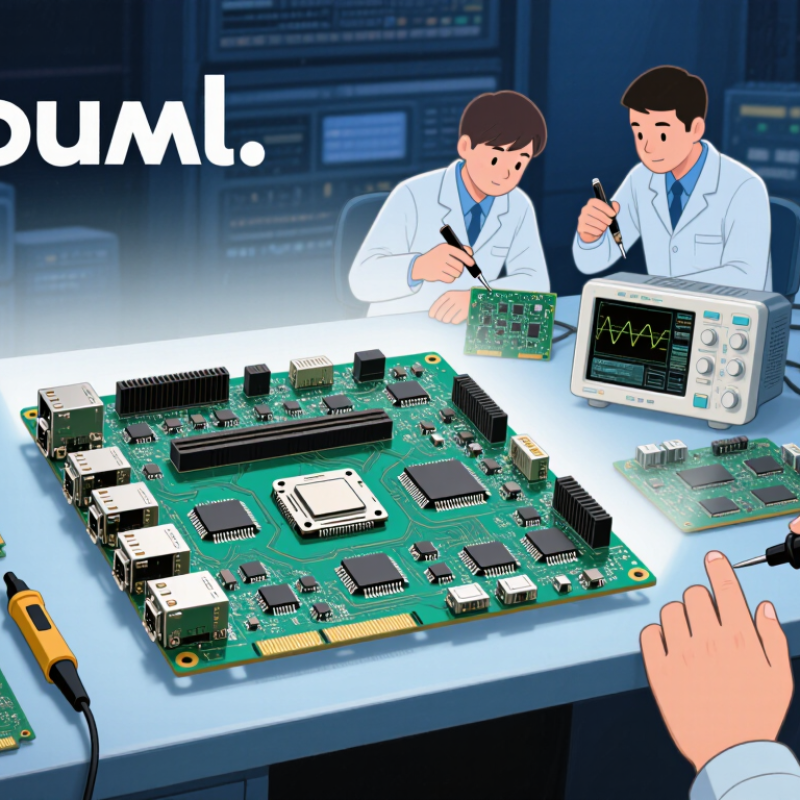
What a Versal Board Is and How It Combines Processing Resources
A Versal board is a development platform built around an adaptive system-on-chip. It brings several kinds of processing resources onto one device, rather than relying on a separate processor for every task. A typical design can include application processors for software, real-time processors for time-sensitive control, programmable logic for custom circuits, and specialized engines for parallel workloads. The exact mix depends on the device and board.
That combination matters when a system must handle different jobs at once. For example, a camera pipeline might use programmable logic to move and filter image data, while processor cores manage settings and user software. Specialized compute engines can accelerate repeated mathematical operations. Meanwhile, memory interfaces and high-speed connections move data between the board and other equipment. Less handoff, potentially.
Engineers use these boards to prototype embedded systems, test hardware-and-software designs, and evaluate performance before building a larger product. The programmable logic can be reconfigured, so teams can revise a data path without changing the physical board. That flexibility takes practice. Toolchains, timing constraints, and power limits can make a seemingly simple design difficult to tune. A board is not automatically faster just because it contains more processing resources; the workload must be mapped carefully, and measurements should confirm the result.
Key Components That Shape Its Capabilities
An adaptive-computing board is useful when a design needs both software control and hardware that can be reconfigured for specific tasks. Its programmable logic fabric handles parallel operations, such as filtering sensor streams or processing image pixels. Embedded processor cores run control code, while dedicated compute blocks can accelerate demanding workloads. The mix matters: a fast accelerator cannot help much if data arrives slowly.
Memory and I/O shape what the board can do in practice. High-bandwidth memory feeds compute units; connectors link cameras, sensors, networks, and storage. Power delivery and cooling are less glamorous, but they determine whether the system can sustain its workload. A board running image inference beside a warm industrial camera may behave differently in a sealed enclosure. Small detail. Software tools also matter: engineers need to map tasks to hardware and measure latency, bandwidth, and power, not just peak throughput.
The global FPGA market was valued at about $9.8 billion in 2023 and is projected to reach $17.5 billion by 2028, according to MarketsandMarkets’ FPGA market report. That growth signals demand for flexible hardware, though market size alone says little about a particular board’s fit. In evaluation, inspect memory capacity, I/O options, compute resources, and thermal limits against the actual workload. I would not treat a specification sheet as a performance guarantee; real data movement often exposes the weak point.
How Developers Build and Test Applications on a Versal Board
Developers use an adaptive compute board to turn application ideas into working hardware-software systems. A typical project begins with a small design: a sensor input, a processing task, and an output such as a display or network message. The board’s programmable logic can handle repeated operations, while embedded processors run control code and operating-system services. Keep the first test narrow. It is easier to trace one signal than a whole system.
A practical workflow often starts on a desktop computer. Developers write software, describe hardware blocks, and build a configuration that connects them. They then load that configuration onto the board and check whether its real pins, clocks, and memory behave as expected. For example, a camera test might capture a frame, pass it through a filter, and show the result on a monitor. Timing matters. A design that works in simulation may still miss deadlines on the physical board.
Testing usually involves serial logs, performance counters, and simple input patterns that reveal where data stalls. Developers can measure latency, inspect memory use, and compare output against known results. This takes patience. Board setup can be awkward, and a loose cable or incorrect clock setting may resemble a software bug. Those details deserve careful notes, even when they seem mundane. A measured result is more useful than a confident guess.
Common Workloads for Versal Boards
Versal boards are used for workloads that need both flexible hardware and software control. Their mix of processing cores, programmable logic, and specialized compute engines can support demanding tasks without forcing every operation through a general-purpose processor. A board might process several camera feeds, apply image filters, and pass selected results to an application running on its processor. That matters when low latency is more useful than simply adding more computing power.
Common workloads include real-time video analytics, signal processing, network packet handling, and sensor fusion. In a radar or imaging prototype, programmable logic can handle a steady stream of samples while software manages configuration and reporting. AI inference is another fit, especially when a model must analyze images or sensor data close to where it is collected. Some designs also use these boards to test hardware acceleration before building a larger system.
Workloads vary. Toolchains, memory capacity, power limits, and cooling all shape what a board can deliver. A model that runs well in a lab may struggle with sustained heat or real-world data rates. It is easy to underestimate integration time, too; hardware and software rarely cooperate perfectly on the first attempt. Careful benchmarking with representative inputs helps reveal those gaps.
What Is a Versal Board Used For? Common Workloads
Versal boards are designed for demanding, adaptable workloads that combine programmable logic, processing, and AI acceleration.
Illustrative relative parallel-processing potential (1 = lower, 5 = higher); scores describe workload characteristics, not benchmark results.
Industries That Use Versal-Based Systems
Adaptive computing boards are used where fixed hardware cannot keep pace with changing workloads. In aerospace, engineers may use them to process radar signals, combine sensor data, or test control systems. Low latency matters when a system must react to changing conditions. So does careful validation. A board alone does not make a system flight-ready.
Automotive teams use adaptive platforms to evaluate driver-assistance functions, camera feeds, and in-vehicle networks. Industrial operators may apply them to machine vision, equipment monitoring, and real-time control on production lines. Picture a camera checking a moving part: the board can help process each frame quickly, while a connected computer handles broader analysis. The exact split depends on the design. It can be awkward to optimize.
Telecommunications and data-center teams use these systems for programmable signal processing, network functions, and accelerated computing. Medical-device developers may also explore them for imaging or other demanding workloads, subject to rigorous verification and product requirements. In each industry, the appeal is flexibility: developers can adapt hardware logic as needs change. But development tools, power limits, cooling, and specialist skills all affect the final choice. The board is not a shortcut. It is one component in a carefully engineered system.