Connect with us today to learn more about our industrial automation solutions—and how to commission them for your application.
Top 10 Rake System Manufacturers for Global Buyers
Choosing a reliable Rake System manufacturer requires more than comparing catalog prices. Global buyers need equipment that performs consistently in demanding agricultural, construction, landscaping, or material-handling environments. A strong supplier should combine practical engineering, stable production, transparent specifications, and responsive after-sales support.
This guide introduces ten Rake System manufacturers serving international markets. Each company is considered through measurable factors, including material quality, working width, tooth strength, rake angle adjustment, corrosion resistance, customization, and replacement-part availability. Manufacturing experience matters. A rake used on rocky soil faces different stresses than one used for light surface grading. Small design details, such as reinforced joints and accessible grease points, can influence service life.
Buyers should also examine export capability, quality-control procedures, packaging standards, lead times, and technical documentation. Certifications may support confidence, but they should not replace product testing or supplier communication. Ask for drawings, load information, installation guidance, and recent customer references when possible.
No ranking can fit every market perfectly. A manufacturer with strong pricing may offer fewer customization options. Another may provide excellent engineering but longer delivery times. This guide recognizes those trade-offs rather than presenting a single universal winner. Specifications can change, and supplier performance may vary by region. Careful verification remains necessary.
The right choice depends on soil conditions, machine compatibility, operating frequency, budget, and local service expectations. With a disciplined comparison, buyers can reduce avoidable downtime and select a Rake System that supports dependable long-term operation.
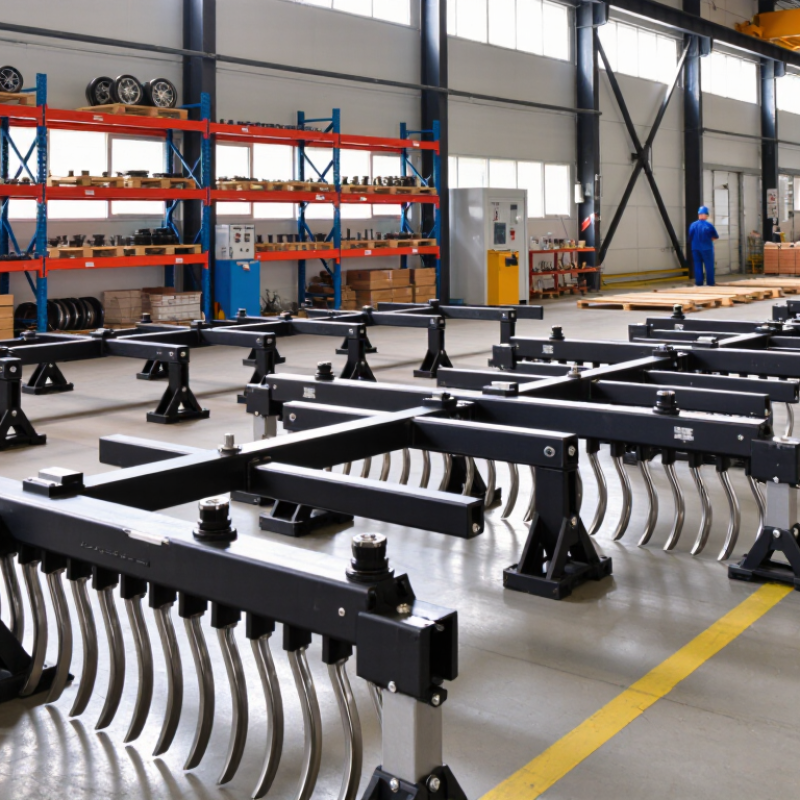
Rake Systems: Definition, Types, and Core Industrial Applications
A rake system is a mechanical screening unit that removes debris from flowing water or bulk material. It protects pumps, channels, conveyors, and downstream equipment. In wastewater plants, the rake captures plastics, leaves, cloth, and floating solids before treatment begins.
Common types include bar screens, step screens, chain-driven rakes, rotary rakes, and grab systems. Bar screens suit coarse debris and simple channels. Step screens handle finer solids with continuous movement. Rotary designs offer compact installation, while grab rakes work well in deep channels with irregular loads. Each type behaves differently under changing flow rates.
Selection depends on screen spacing, channel width, water depth, debris size, and cleaning frequency. Stainless steel components resist corrosion, but material choice still requires careful review. A poorly matched drive may stall during heavy loading. This happens more often than buyers expect. Operators should check torque, emergency stops, wash-water demand, and access for maintenance. In wastewater facilities, reliable rakes reduce manual cleaning and protect pumps. At water intakes, they help maintain steady flow during storms. Mining and aggregate sites may use heavier systems for wet screening and material separation. Energy consumption also matters, especially in plants operating around the clock. No rake system is perfect. Real performance depends on installation accuracy, maintenance discipline, and honest load calculations.
Criteria for Evaluating Global Rake System Manufacturers
Top 10 Rake System Manufacturers for Global Buyers
Criteria for Evaluating Global Rake System Manufacturers
Global buyers should evaluate rake systems through measurable field performance, not catalogue claims. The OECD-FAO Agricultural Outlook 2024–2033 projects annual global agricultural production growth of about 1.1%. This growth increases demand for machines that work reliably across different crops, soil conditions, and farm sizes. A strong manufacturer should provide test results for working width, field capacity, pickup losses, rotor stability, and fuel efficiency. I would not trust a brochure alone.
Build quality requires close inspection. Buyers should examine tine material, gearbox sealing, frame welds, hydraulic fittings, and corrosion protection. ISO 4254-10 provides safety requirements for agricultural haymaking machinery, including rotary rakes. Compliance evidence should be available before purchase. After-sales support matters equally. The FAO’s 2022 agricultural machinery data shows wide differences in mechanization levels between regions, so service networks and operator training can strongly affect real productivity.
Total cost is often misunderstood. A cheaper rake may require frequent tine replacement, longer downtime, or difficult spare-parts shipping. Request a five-year ownership estimate, including maintenance, transport, labor, and seasonal storage. Ask for references from farms with similar crops and weather conditions. Some evaluations still overvalue maximum width. That can be a mistake. Uneven fields, narrow roads, and limited tractor power may reduce practical output. A controlled field trial remains the most reliable test, although many buyers skip it under time pressure.
Top 10 Rake System Manufacturers for Global Buyers - Criteria for Evaluating Global Rake System Manufacturers
| No. | Evaluation Dimension | What Global Buyers Should Verify | Relevant Technical Reference | Recommended Benchmark or Evidence |
|---|---|---|---|---|
| 1 | Engineering and Design Capability | Ability to design coarse screens, bar screens, traveling screens, mechanical rakes, and customized intake systems for the specified flow and debris load. | Hydraulic calculations, structural analysis, site-specific design drawings, and equipment duty specifications. | A complete calculation package covering design flow, channel dimensions, head loss, rake duty cycle, debris conditions, and emergency operation. |
| 2 | Screen and Rake Materials | Material grades, weldability, wear resistance, and suitability for freshwater, wastewater, seawater, or industrial process water. | ASTM A36 or EN 10025 S275/S355 for carbon steel; stainless steel grades such as 304/304L or 316/316L where corrosion resistance is required. | Material certificates should identify grade, heat number, mechanical properties, and applicable standard for all load-bearing components. |
| 3 | Corrosion Protection | Protection system for submerged, splash-zone, outdoor, and chemically aggressive environments. | ISO 12944 for protective paint systems; hot-dip galvanizing requirements may be specified under ISO 1461. | The quotation should state surface preparation, coating system, dry-film thickness, inspection method, repair procedure, and expected service environment. |
| 4 | Hydraulic Performance | Screen opening, approach velocity, through-screen velocity, debris accumulation, and allowable head loss. | Project-specific hydraulic criteria; values must be confirmed by the process engineer because acceptable limits depend on water intake and debris conditions. | Require performance calculations for both clean-screen and partially blocked conditions, including the stated design safety margin. |
| 5 | Mechanical Load and Safety | Rake torque, lifting force, chain or cable capacity, overload protection, emergency stop functions, and structural deflection. | Applicable machinery-safety requirements, structural calculations, motor and gearbox data, and site-specific load cases. | Request documented load testing or factory acceptance testing for the rake mechanism, including overload protection and limit-switch verification. |
| 6 | Automation and Controls | Compatibility with local control panels, PLC systems, remote monitoring, differential-level sensors, and plant communication networks. | Electrical drawings, motor-control requirements, IP protection ratings, sensor specifications, and the buyer's automation protocol. | Controls documentation should include automatic/manual modes, high-level start signals, fault alarms, interlocks, cycle counters, and manual override procedures. |
| 7 | Quality Management and Testing | Control of welding, machining, dimensional inspection, painting, assembly, and final equipment testing. | ISO 9001 quality-management certification; welding quality may be evaluated against ISO 3834 or an equivalent contractual requirement. | The supplier should provide inspection and test plans, weld procedures, inspection records, nonconformance controls, and factory acceptance test reports. |
| 8 | Customization and Installation Fit | Ability to match channel width, water depth, rake angle, bar spacing, discharge arrangement, access restrictions, and lifting requirements. | Approved general arrangement drawings, interface drawings, civil-load data, and installation method statements. | Before purchase, verify all civil interfaces, anchor locations, maintenance clearances, lifting points, drainage needs, and transport dimensions. |
| 9 | Delivery and Global Logistics | Manufacturing capacity, export packaging, spare-parts availability, shipping terms, customs documentation, and installation support. | Incoterms® 2020, packing lists, commercial invoices, certificates of origin, and project delivery schedules. | Compare the confirmed production schedule, shipment dimensions and weights, delivery responsibility, spare-parts lead time, and local service coverage. |
| 10 | Lifecycle Cost and After-Sales Support | Total cost of ownership, energy use, wear parts, maintenance frequency, warranty terms, training, and technical response time. | Lifecycle-cost analysis should include purchase price, installation, electricity, lubrication, replacement parts, downtime, and scheduled maintenance. | Require a recommended spare-parts list, preventive-maintenance schedule, warranty conditions, operating manuals, training plan, and clearly defined service commitments. |
Buyer note: Technical benchmarks should be confirmed against the project’s flow rate, debris profile, water chemistry, channel geometry, local electrical requirements, and applicable national regulations before supplier selection.
Top 10 Rake System Manufacturers by Technology and Market Reach
The top 10 rake system manufacturers should be judged by technology and market reach, not factory size alone. IEA PVPS reported approximately 456 GW of new solar capacity in 2023. That growth increases demand for fixed-tilt structures, single-axis trackers, and rooftop mounting systems.
Strong manufacturers usually offer galvanized steel, anodized aluminum, and corrosion-resistant fasteners. Their engineering teams model wind uplift, snow pressure, soil conditions, and uneven terrain before production. Some systems now use sensors and remote monitoring to adjust tracker angles. Small details matter. A poorly aligned row can reduce output and complicate maintenance.
Market reach requires more than exporting containers. The leading ten candidates typically maintain regional warehouses, local installation partners, and documented testing records. IRENA reported global renewable capacity reached about 3,870 GW in 2023, with solar exceeding 1,400 GW. This scale favors suppliers with stable procurement and after-sales support across several climates.
Still, rankings can be imperfect. Public data rarely separates rake system revenue from wider solar equipment sales. Buyers should verify load certificates, warranty exclusions, replacement-part availability, and field performance. A low purchase price may hide costly foundation changes or delayed components. Technology looks impressive. Reliability is harder to prove.
Product, Industry, and Regional Comparison of the Leading Manufacturers
The top ten rake system manufacturers serve different farm sizes, crops, and operating conditions. Their product ranges usually include wheel rakes, rotary rakes, belt rakes, and side-delivery models. Rotary systems suit uniform hay swaths and higher field speeds. Wheel rakes often cost less and need simpler maintenance. Belt models can handle delicate forage with reduced leaf loss, but their moving parts demand closer inspection.
Industry needs shape the comparison. Dairy farms often prefer precise windrow formation before baling. Large contractors value wide working widths, hydraulic folding, and fast road transport. Small mixed farms may choose compact machines with low horsepower requirements. Agricultural dealers commonly assess frame strength, tine replacement time, bearing access, and parts availability. These details matter more than polished catalog images. A rake that performs well in dry grass may struggle in heavy, damp forage.
Regional performance is less uniform than many buyers expect. European manufacturers often emphasize compact transport dimensions and advanced adjustment systems. North American suppliers frequently focus on broad fields, rugged frames, and high daily output. East Asian producers may offer practical designs for smaller tractors and varied farm plots. Manufacturers serving South Asia and Latin America often prioritize affordability, simple repairs, and flexible configurations. Local soil, road limits, labor skills, and dealer support should influence the final choice. No ranking is perfectly neutral. I would verify field tests, warranty response, and spare-part delivery before comparing prices. A cheaper rake can become expensive during a narrow harvest window.
Top 10 Rake System Manufacturers for Global Buyers
Product, industry, and regional comparison based on commonly published operating-width specifications for major rake-system categories.
The comparison shows typical working-width ranges used in commercial hay and forage operations. Rotary and combination systems generally cover wider operating widths, while wheel and side-delivery rakes are commonly selected for simpler field layouts, lower machinery weight, and flexible transport.
How Global Buyers Can Select the Right Rake System Supplier
Selecting the right rake system supplier requires more than comparing catalog prices. Global buyers should examine working width, tine spacing, frame strength, and adjustment range. These details affect field performance.
Ask for material certificates, dimensional drawings, and recent inspection records. A dependable supplier can explain steel grades, coating thickness, weld checks, and load limits clearly. Request photos or videos from real operating conditions, not only polished factory images. Short evidence matters.
Test the system in soil that matches your work. Dry ground, wet soil, stones, and crop residue can expose different weaknesses. Check hydraulic connections, transport locks, replacement tine availability, and packaging quality. Confirm delivery terms, spare-part timelines, warranty coverage, and service response hours in writing. Do not rely on vague promises.
A supplier’s technical team should discuss local regulations and machine compatibility without forcing one solution. Independent references from similar climates are valuable. Still, references can hide limitations. A brochure may look perfect, while a loose bolt appears after ten hours. Include a small pilot order when possible, and record wear, adjustment effort, and operator feedback. I have seen buyers focus on purchase price and overlook downtime. That mistake becomes expensive quickly. Reliable selection is practical, documented, and sometimes slower than expected.