China Top Micron Pleated Filter Cartridge Supplier?
Choosing a China top Micron Pleated Filter Cartridge supplier requires more than comparing catalog prices. Buyers need verified filtration performance, stable production, and practical technical support. A reliable supplier should explain micron ratings, membrane materials, flow capacity, pressure limits, and compatibility with the target fluid. These details matter in pharmaceutical water systems, food processing lines, chemical applications, and industrial prefiltration.
Real experience often appears in small details. Ask how cartridges are sealed, tested, packed, and traced by batch. Request technical documents, sample reports, and clear replacement guidance. A professional manufacturer should also discuss housing dimensions, operating temperature, differential pressure, and cleaning conditions. Certifications can support credibility, but they should match the actual product and market requirements. Paperwork alone proves little.
No supplier is perfect. Even experienced factories may need time to improve communication, lead times, or customization accuracy. This is worth considering honestly. The strongest partnerships usually develop through sample testing, factory audits, and documented performance reviews. Look for evidence, not impressive wording. A dependable China supplier should welcome technical questions and provide consistent answers.
This guide examines how to identify a capable Micron Pleated Filter Cartridge manufacturer in China. It considers material quality, manufacturing experience, inspection controls, export reliability, and after-sales service. The goal is practical selection, not a forced recommendation. Your process conditions still decide the final choice. Test carefully before full-scale purchasing.
What Is a Micron Pleated Filter Cartridge?
China Top Micron Pleated Filter Cartridge Supplier?
What Is a Micron Pleated Filter Cartridge?
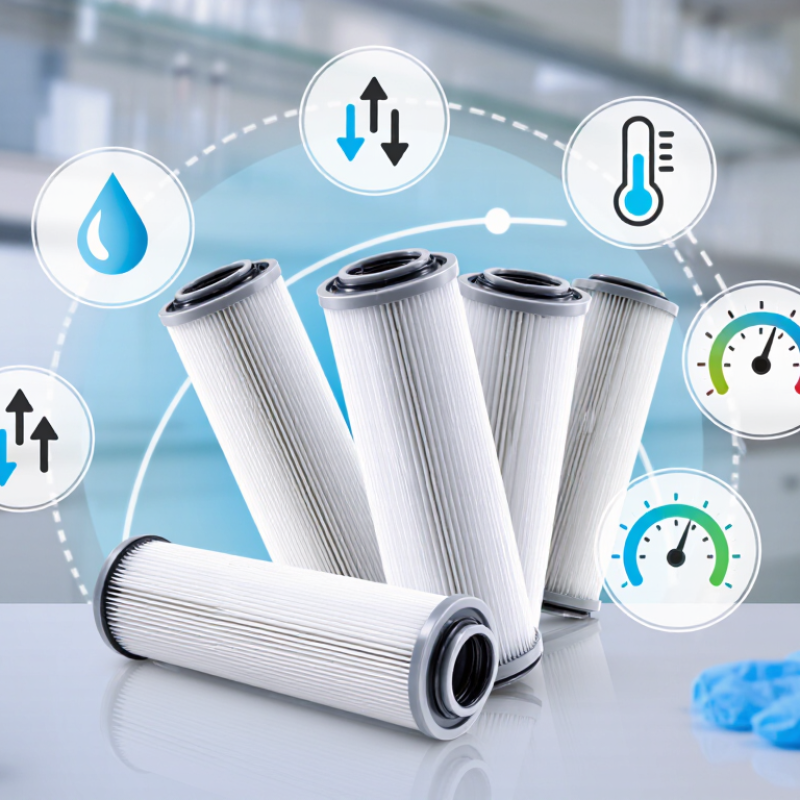
A micron pleated filter cartridge is a replaceable depth or surface filter with folded media inside a protective housing. The pleats create more filtration area than a flat sheet. This design can improve flow while reducing pressure loss. It removes suspended particles such as rust, sediment, and some microbial contaminants, depending on the media and rating. Not merely a sieve.
The micron rating describes the target particle size, but it can be misunderstood. A nominal 5-micron cartridge may capture a percentage of particles near 5 microns. An absolute rating usually indicates tighter, tested retention. ISO 16889 evaluates filter performance through multipass testing and beta ratios. Therefore, a supplier should provide test conditions, not only a number. Rating alone is insufficient. Real systems vary.
This distinction matters in water, food processing, laboratory, and industrial applications. The WHO/UNICEF Joint Monitoring Programme reported that 2.2 billion people lacked safely managed drinking water in 2022. Reliable filtration remains important, but cartridge selection must match the application. Check flow rate, pressure, temperature, chemical compatibility, and service life. For a China-based supplier, request batch traceability, material certificates, integrity-test records, and clear replacement guidance. Field experience shows that oversized cartridges waste money, while undersized ones clog quickly. That trade-off deserves honest review.
How Micron Ratings and Filter Materials Affect Performance
Choosing a top micron pleated filter cartridge supplier requires more than comparing catalog numbers. A 0.2-micron label sounds precise, but it does not fully describe performance. Buyers should ask whether the rating is nominal or absolute, and which test method supports it. The same cartridge may perform differently with clean water, viscous liquid, or gas. Flow rate, pressure drop, temperature, and particle shape also matter. In practical filtration work, a filter that removes fine particles may clog too quickly. That failure is easy to miss during a short laboratory test. Requesting lot-based test data, integrity results, and traceable material records improves purchasing confidence.
Filter material changes the result. Polypropylene offers broad chemical resistance and economical prefiltration. Polyethersulfone can provide fine liquid filtration with strong flow characteristics. PTFE is often selected for demanding chemical compatibility or gas filtration. Nylon may suit specific aqueous applications, but compatibility requires careful checking. Pleat depth and effective surface area influence dirt-holding capacity. A deeper pleat is not automatically better. Poor media support can create uneven flow, especially near the cartridge core. Engineers should compare extractables, temperature limits, sealing design, and pressure-drop curves before approval. I would not rely on a micron rating alone. Real process samples and repeated runs often expose weaknesses that polished specifications hide.
Micron Ratings and Filter Materials Affect Performance
Commonly specified fine-filtration ratings for polymeric filter media. A lower micron rating indicates a finer stated particle or pore-size cutoff, while the material influences chemical compatibility, temperature resistance, strength, and flow behavior.
Typical ratings shown: PTFE 0.20 µm, PES 0.22 µm, PVDF 0.45 µm, nylon 0.45 µm, and polypropylene 1.00 µm. Micron ratings are not directly comparable unless the same test method and rating definition are used; nominal and absolute ratings can produce different real-world retention results.
Key Applications of Pleated Filter Cartridges in China
China Top Micron Pleated Filter Cartridge Supplier?
Key Applications of Pleated Filter Cartridges in China
Pleated filter cartridges support water treatment, food processing, pharmaceuticals, electronics, and industrial fluids. Pore size matters. In China, municipal and industrial systems face high flow rates, variable turbidity, and strict process controls. The China Water Resources Bulletin 2023 recorded approximately 590.7 billion cubic meters of national water use. This scale creates constant demand for reliable prefiltration and polishing stages. Pleated cartridges increase surface area inside compact housings. They can capture suspended solids before membrane systems, filling lines, and precision equipment.
A 5-micron cartridge may protect reverse-osmosis membranes from visible particles. It cannot remove dissolved salts or microorganisms by itself.
In pharmaceutical and food facilities, cartridges often filter process water, cleaning water, and liquid ingredients. Electronics plants need finer filtration for ultrapure-water pretreatment and chemical circulation. Industrial users also apply them to hydraulic oil, cooling water, and compressed-air condensate.
The Ministry of Ecology and Environment reported that 89.4% of monitored national surface-water sections reached Grade I–III quality in 2023. Better source water still requires point-of-use control.
Field experience shows that dirt loading, pressure loss, and cartridge compatibility matter more than micron claims alone. A lower rating is not automatically better. It may increase replacement frequency and operating cost. ISO 16889 testing can help compare filtration performance, but actual plant conditions remain decisive.
How to Evaluate a Top Chinese Filter Cartridge Supplier
How to Evaluate a Top Chinese Filter Cartridge Supplier
Evaluating a top Chinese micron pleated filter cartridge supplier starts with your real process needs. Define pore size, filter media, core material, seals, temperature, and pressure. A capable supplier should explain these choices clearly. It should not only promise a micron rating. Request drawings, material certificates, and batch traceability. Small details matter. Check whether the test method matches your application. A 0.2-micron claim means little without test conditions.
Factory evidence matters more than polished sales language. Consider a site visit or live video audit. Observe assembly areas, material storage, cleanliness controls, and packaging practices. Ask for incoming inspection records, integrity test results, and production samples. The technical team should discuss flow rate, pressure drop, and chemical compatibility. Request calibrated or independent test reports when possible. Conversations reveal expertise. If answers remain vague, pause.
Reliability also includes communication, lead times, corrective actions, and after-sales support. Test samples from several production lots, not just one. Use written specifications and clear acceptance criteria. Ask how the supplier handles leakage, damage, or inconsistent performance. No supplier is flawless. In practical sourcing, an honest limitation is more valuable than an impressive promise. Remote audits cannot reveal every process gap. Start with a controlled pilot order, then record pressure drop, service life, and batch consistency.
