Top 10 Types of Metering Equipment for Buyers
Choosing Metering Equipment is not just a matter of comparing prices or display sizes. The right device must suit the fluid, gas, or energy being measured, along with the expected flow range and site conditions. A meter installed on a vibrating pipe may behave differently from one in a stable test room. Small details matter. Lord Kelvin, a leading authority on measurement, wrote, “When you can measure what you are speaking about, and express it in numbers, you know something about it.” That principle still guides good purchasing decisions. Buyers need readings they can trust, not impressive specifications alone.
This guide introduces ten common types of metering equipment, including water, gas, flow, energy, and batch meters. It outlines where each type is typically used and what buyers should check before selecting one. Consider accuracy, operating range, materials, installation requirements, maintenance access, and data output. Ask suppliers how performance is tested, and request documentation that matches the intended application. A clear answer is useful. A vague promise is not. No single meter fits every process, and a technically strong product can still be a poor choice if it is difficult to maintain. The comparisons ahead offer a practical starting point, not a substitute for site-specific review. Some selection details are easy to overlook; that is exactly why they deserve a second look.
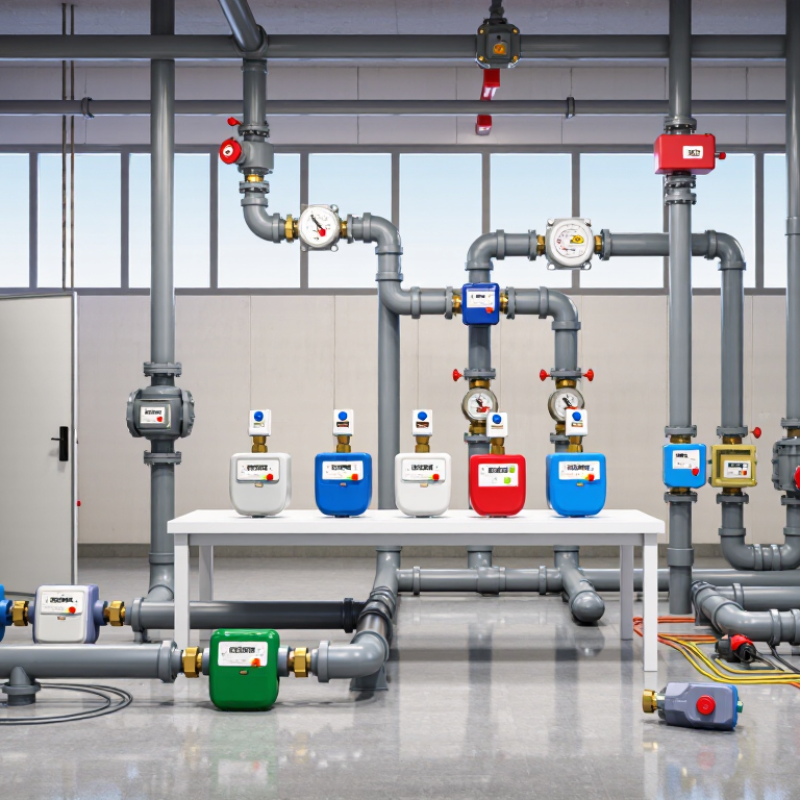
Metering Equipment Fundamentals: Measuring Flow, Volume, Mass, and Energy
Metering starts with a clear question: what quantity must the process control? A flow meter reports volume or mass per unit time; a totalizer accumulates volume. Mass measurement can be useful when fluid density changes, while volumetric readings may be sufficient for stable liquids. That distinction matters. A pipe carrying warm water, for example, may deliver a different mass at the same measured volume as its temperature changes.
Energy measurement combines more than a flow reading. Thermal systems typically use flow and temperature difference, with pressure or fluid properties included where required. The U.S. Energy Information Administration’s Monthly Energy Review reports that industry accounted for about 33% of U.S. energy consumption in 2022, including electricity-system losses. The figure shows why dependable measurement matters, but it does not mean installing a meter automatically reduces energy use. Small errors compound. Calibration, installation conditions, and data checks still matter.
For buyers, match the measurement principle to the fluid, operating range, and required accuracy. A straight pipe run is easy to specify; in a cramped retrofit, it may be impossible. Check whether the device handles bubbles, deposits, vibration, and changing temperatures. Also review uncertainty across the whole measurement chain, not just the sensor’s advertised accuracy. A useful question is whether staff can verify readings in daily operation. Sometimes the neatest specification is not the easiest system to maintain.
How Meter Technologies Work: Mechanical, Ultrasonic, Electromagnetic, and Coriolis
Top 10 Types of Metering Equipment for Buyers
How Meter Technologies Work: Mechanical, Ultrasonic, Electromagnetic, and Coriolis
Mechanical meters count displaced liquid or use a rotor’s speed to estimate volume. Their moving parts make operation easy to understand, but grit and wear can affect readings.
Ultrasonic meters send sound pulses through a pipe and compare their travel times. No moving parts means less routine wear. Still, bubbles, poor installation, or an unsuitable pipe can compromise results. Small details matter.
Electromagnetic meters use Faraday’s law: a conductive liquid moving through a magnetic field generates a voltage related to flow speed. They suit many wastewater and process applications, but not nonconductive fluids.
Coriolis meters measure mass flow by sensing changes in vibrating tubes. They can also provide density data, though cost, pressure loss, and pipe stress deserve attention.
OIML R 49-1:2013 gives class 2 water meters maximum permissible errors of ±5% in the lower flow range and ±2% in the upper range. These limits are useful context, not a guarantee for every installation.
Buyers should compare expected flow, fluid properties, maintenance access, and required accuracy. A perfect meter on paper can still disappoint in a badly arranged pipe run.
Ten Meter Types for Water, Gas, Electricity, Heat, and Industrial Processes
Meter selection starts with the fluid, energy source, and operating conditions. Water systems commonly use positive-displacement meters, which capture fixed volumes, or electromagnetic meters, which measure conductive flow. Ultrasonic meters estimate flow from sound signals and can avoid interrupting a pipe. For clean water, installation details still matter.
Gas service often relies on diaphragm meters for steady, lower-flow use. Rotary meters handle larger flows in compact spaces, while turbine meters suit consistent, higher-speed flow. Electricity is measured by electromechanical meters with rotating discs or digital smart meters that record consumption electronically. Simple, but not interchangeable.
Heat meters combine flow measurement with temperature sensors to calculate thermal energy in heating or cooling circuits. Industrial processes may use Coriolis meters, which measure mass flow and can also indicate fluid density. A meter that works well in a clean line may perform poorly with bubbles, deposits, or changing temperatures. Check pipe size, expected range, pressure, and maintenance access before choosing. Field conditions can be messy. I would not treat any type as universally best; even a precise instrument needs proper installation and periodic verification.
Accuracy and Compliance: IEC 62053 Classes 0.2S–2 and OIML R 49
Metering accuracy starts with choosing the right standard for the measured resource. IEC 62053-21:2020 covers active-energy meters in classes 0.5, 1, and 2; IEC 62053-22:2020 covers classes 0.1S, 0.2S, and 0.5S. The “S” class is designed for transformer-operated meters, often used at commercial and industrial sites. A 0.2S rating is tighter than class 2, but the figures are not interchangeable shortcuts: permissible error depends on test conditions, including current and power factor. Check the relevant standard and meter datasheet.
Details matter. OIML R 49-1:2013 applies to water meters and sets maximum permissible errors across flow ranges. For class 2 meters, the limits are ±5% in the lower flow zone and ±2% in the upper zone for water at or below 30°C. Class 1 limits are tighter: ±3% and ±1%, respectively. Above 30°C, upper-zone limits differ. These are type-test limits, not promises of identical field performance.
At procurement, match the class to the operating profile, then verify calibration records, installation orientation, and the stated flow range. A meter may pass a laboratory test yet perform poorly if installed outside its specified conditions. Easy to overlook. Compare the exact standard edition listed on the certificate; editions and national adoption rules can vary. Sources: IEC 62053-21:2020, IEC 62053-22:2020, and OIML R 49-1:2013.
Buyer Selection: Match Meter Range, Medium, Pressure, and Installation Conditions
Choosing metering equipment starts with the operating point, not the catalogue’s largest range. Record normal, minimum, and peak flow under real process conditions. A meter sized only for peak demand may read poorly at low flow. Check whether the stated range uses volumetric or mass flow, and confirm reference conditions for gas service. Small details matter.
Match the measuring principle and wetted materials to the medium. Clean water, viscous oil, steam, and gas create different demands. Suspended solids can foul some designs, while conductivity affects certain electromagnetic meters. Confirm compatibility with fluid chemistry, temperature, and cleaning routines. Then check working pressure, pressure surges, and expected pressure loss. The rating must cover actual operating conditions, not just a typical shift.
Installation can change performance. Note available straight pipe, orientation, vibration, nearby pumps, and maintenance access. A cramped retrofit with short inlet piping may need a meter less sensitive to disturbed flow. Flow conditioning may help where space allows, but it adds cost and complexity. Check connection size, power, output signals, and calibration access. One judgment call remains: teams often underestimate cleaning access. A precise meter can still be a poor fit if routine service is awkward.
