Connect with us today to learn more about our industrial automation solutions—and how to commission them for your application.
China Top Fuel Tank Manufacturers and Suppliers?
China has become a major sourcing destination for Fuel Tank manufacturers and suppliers. Its industrial network supports truck, bus, agricultural, construction, marine, and generator applications. However, choosing a reliable partner requires more than comparing factory prices.
Experienced buyers usually examine material quality, welding control, leak testing, surface treatment, and production consistency. Steel, aluminum, and engineered plastic tanks may suit different operating conditions. A supplier serving heavy-duty vehicles should understand vibration, pressure changes, corrosion exposure, and limited installation space. These details affect service life.
Look closely.
Leading Chinese manufacturers often provide custom dimensions, mounting brackets, filler necks, sensors, and protective coatings. They may also support prototype development, sample approval, and batch inspection. Yet supplier claims should be verified through factory audits, technical documents, product samples, and customer references. A polished website is not proof of dependable performance.
This guide introduces important manufacturers and suppliers across China. It considers manufacturing experience, engineering capability, quality systems, export support, and communication reliability. Relevant standards and market requirements should be confirmed for the destination country and vehicle application. Documentation may differ between regions. That part is easy to underestimate.
A suitable Fuel Tank supplier should explain design limits clearly. It should also identify risks before production begins. Buyers can request drawings, material certificates, pressure-test records, and traceability information. No supplier is perfect. Delays, inconsistent samples, or unclear responsibilities can still occur. Careful verification helps reduce those problems and supports a more reliable long-term partnership.
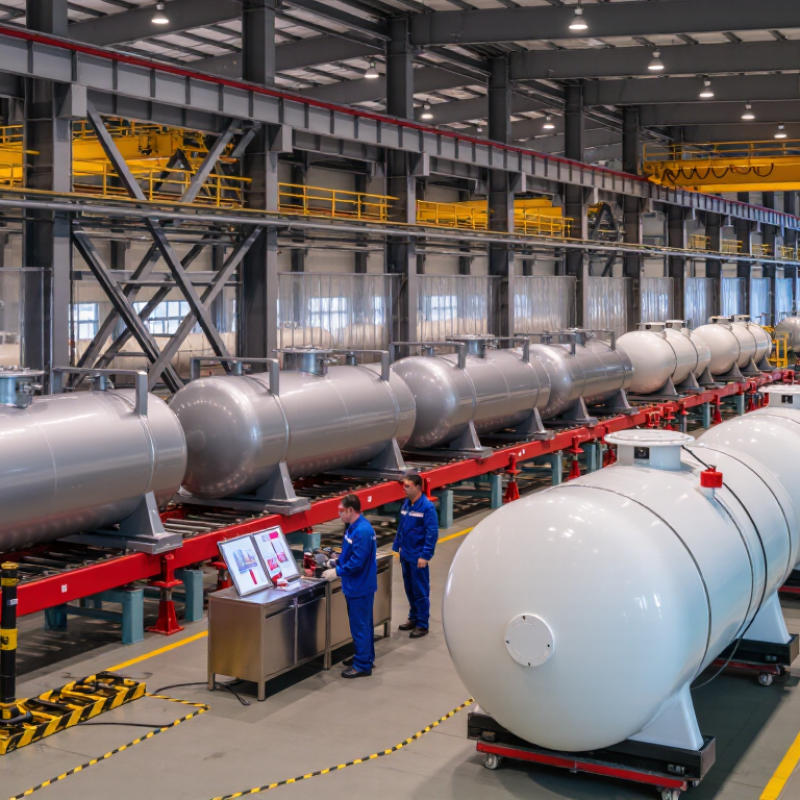
Types of Fuel Tanks Manufactured in China
China manufactures fuel tanks for vehicles, machinery, generators, and industrial equipment. Common options include stamped steel tanks, aluminum tanks, and rotationally molded plastic tanks. Steel models suit trucks and construction machinery because they resist impact. Aluminum tanks reduce weight and handle corrosion well. Plastic tanks offer design flexibility for motorcycles, compact vehicles, and small engines.
Different applications require different internal designs. Heavy-duty tanks may include baffles to reduce fuel movement on rough roads. Some industrial systems use double-wall tanks for added leakage control.
Custom tanks can include filler necks, ventilation ports, level sensors, mounting brackets, and anti-siphon structures. Dimensions often follow the equipment frame, not a standard template. That detail matters.
Manufacturers typically use welding, stamping, CNC cutting, rotational molding, and leak testing. Reliable production records should show material grades, weld inspection results, pressure-test data, and dimensional checks. Buyers should also confirm fuel compatibility, operating temperature, wall thickness, and surface treatment.
A visually clean tank can still have poor weld penetration. That is easy to miss. Sampling only one unit may also hide batch variation, so repeated inspections provide stronger evidence. Good suppliers explain these limits instead of promising perfection. However, some specifications remain unclear until the tank is tested with the customer’s fuel system.
Key Standards for Evaluating Chinese Fuel Tank Suppliers
When assessing Chinese fuel tank manufacturers and suppliers, production scale is only one signal. The China Association of Automobile Manufacturers reported over 30 million vehicles produced in 2023. That volume supports a mature supply base, but it does not guarantee tank quality. I would verify IATF 16949 and ISO 9001 certification directly. The certificate scope must cover the actual factory and product line. A certificate alone is not proof.
Technical evaluation should begin with material traceability and fuel compatibility records. Ask for wall-thickness maps, weld inspection results, leak-testing records, and burst-pressure data. Tanks should also undergo vibration, thermal cycling, corrosion, and dimensional tests. Suppliers using APQP, FMEA, control plans, and PPAP show stronger process discipline. ISO 3834 is useful when welded steel or aluminum tanks are involved. Regional vehicle regulations must still be checked for the final application.
Market changes require extra care. The International Energy Agency reported more than 14 million electric cars sold globally in 2023. Fuel tank demand may shift, yet commercial, agricultural, construction, and specialty vehicles still require dependable systems. A capable supplier should explain its material strategy rather than promise everything. Visit the plant if possible. Review calibration labels, batch records, mold maintenance, and rejected parts on the production floor. I would also request an independent laboratory report. Small gaps often appear there. Supplier selection is never perfectly objective; delivery data, engineering response time, and corrective-action quality deserve equal attention.
Key Standards for Evaluating Chinese Fuel Tank Suppliers
These internationally recognized standards provide a practical framework for reviewing fuel tank suppliers. Quality management, welding quality, environmental management, occupational safety, and automotive production controls should be verified through valid certificates, audit records, traceability documents, and product test reports.
Leading China-Based Fuel Tank Manufacturers by Application
China Top Fuel Tank Manufacturers and Suppliers?
Leading China-Based Fuel Tank Manufacturers by Application
China-based fuel tank manufacturers serve automotive, agricultural, construction, industrial, and marine applications. Each use requires a different tank design. A compact vehicle tank may need molded contours and precise mounting points. A generator tank often needs a sturdy frame, access ports, and clear level measurement.
Experienced suppliers usually work with steel, aluminum, or engineered polymers. Material selection depends on fuel type, operating temperature, vibration, and corrosion exposure. For construction equipment, internal baffles can reduce fuel movement on uneven ground. Agricultural machinery may require reinforced brackets because dust, mud, and field impacts are common. Marine tanks demand careful sealing and corrosion control, especially around welded joints.
Reliable production involves more than cutting and welding. Manufacturers should verify dimensions, seam quality, pressure resistance, and leak performance. Some suppliers also provide surface treatment, sensor openings, and customized outlets for installation. Factory audits, sample inspections, and traceable test records can improve purchasing confidence. Still, a tank that passes a workshop inspection may perform differently after months of vibration. That risk deserves attention. Clear drawings and realistic operating data often prevent costly revisions, although communication gaps can still occur between engineers and buyers. A practical supplier welcomes design review rather than promising that every custom tank will work without adjustment.
China Top Fuel Tank Manufacturers and Suppliers? - Leading China-Based Fuel Tank Manufacturers by Application
| Application | Common Tank Type | Typical Materials | Typical Capacity Range | Common Manufacturing Features | Relevant Standards or Requirements | Key Supplier Verification Points |
|---|---|---|---|---|---|---|
| Passenger Vehicles | Formed automotive fuel tank | High-density polyethylene, coated steel, or stainless steel | Approximately 35–80 L | Deep drawing or blow molding, vapor-control connections, baffle design, rollover protection, leak testing | FMVSS 301 for fuel-system integrity; UNECE Regulation No. 34 for fire risks related to collision | Confirm fuel compatibility, dimensional validation, pressure and leakage test records, and traceability of molded or stamped parts |
| Light Commercial Vehicles | Underbody or frame-mounted fuel tank | Aluminum alloy, coated steel, or high-density polyethylene | Approximately 60–150 L | Reinforced mounting points, internal baffles, corrosion protection, filler-neck integration, vibration testing | FMVSS 301, UNECE Regulation No. 34, and applicable vehicle-specific approval requirements | Review fatigue testing, mounting-load calculations, ground-clearance requirements, and compatibility with diesel or gasoline systems |
| Heavy-Duty Trucks and Buses | External cylindrical or rectangular diesel tank | Aluminum alloy or welded steel | Approximately 150–1,000 L | Welded construction, anti-surge baffles, protective brackets, drain provisions, lockable filler cap options | Vehicle manufacturer specifications, applicable UNECE or regional vehicle regulations, and transport-sector durability requirements | Check weld quality, bracket strength, corrosion resistance, usable-volume accuracy, and resistance to road vibration |
| Construction and Agricultural Machinery | Custom diesel tank for excavators, loaders, tractors, or harvesters | Carbon steel, stainless steel, or aluminum alloy | Approximately 50–600 L | Custom-fabricated geometry, anti-slosh partitions, fuel-level sensors, service openings, heavy-duty mounting structures | OEM equipment specifications, ISO 3834 welding-quality principles where specified, and applicable machinery safety requirements | Verify 3D drawing capability, welding procedure qualification, pressure or leak testing, and resistance to mud, dust, and hydraulic-fluid exposure |
| Diesel Generator Sets | Base-frame, day tank, or external bulk fuel tank | Carbon steel, stainless steel, or double-wall steel | Day tanks: approximately 50–2,000 L; bulk tanks: 2,000 L and above | Level gauges, low-level alarms, overflow protection, fuel-return connections, bunded or double-wall construction | UL 142 for certain aboveground shop-fabricated steel tanks; local fire, electrical, and environmental regulations | Confirm usable capacity, secondary containment, nozzle layout, alarm interfaces, coating system, and local installation approvals |
| Marine and Workboats | Integrated or separate marine fuel tank | Marine-grade aluminum, stainless steel, or approved polyethylene | Approximately 50–5,000 L | Vented construction, inspection openings, anti-slosh baffling, corrosion-resistant fittings, secure hull or deck mounting | ISO 21487 for certain small-craft petrol and diesel fuel tanks; classification-society or flag-state rules for larger vessels | Check material suitability for marine environments, vent and fill-pipe design, pressure testing, galvanic-corrosion control, and inspection access |
| Railway Equipment | Underframe or locomotive fuel tank | Welded carbon steel, stainless steel, or aluminum alloy | Approximately 1,000–10,000 L | High-strength brackets, crash protection, internal baffles, fuel monitoring, impact and vibration resistance | Railway authority requirements, project-specific rolling-stock standards, and fire-protection specifications | Request fatigue-life calculations, impact protection evidence, weld inspection reports, coating details, and railway-project references without relying on brand claims |
| Aviation Ground Support Equipment | Compact diesel or gasoline equipment tank | Aluminum alloy, stainless steel, or coated steel | Approximately 30–500 L | Lightweight construction, vibration-resistant fittings, grounding provisions, access covers, and precise fuel-level indication | Airport operator requirements, equipment-specific specifications, and applicable fire-safety regulations | Verify grounding and bonding provisions, fuel compatibility, non-sparking design where required, leak testing, and documentation control |
| Industrial Process and Heating Systems | Atmospheric or low-pressure day tank | Carbon steel, stainless steel, or coated steel | Approximately 500–20,000 L | Level instruments, venting, overflow lines, access manways, drain connections, and optional secondary containment | Local pressure-vessel and fire-code requirements; API 650 may apply to certain larger welded storage tanks | Confirm design pressure, operating temperature, corrosion allowance, inspection class, coating specification, and foundation loads |
| Portable Fuel Storage | Portable metal or molded plastic fuel container | High-density polyethylene, aluminum, or steel | Approximately 5–200 L | Carrying handles, secure caps, flexible or fixed spouts, vapor management, stackable or transportable design | Applicable UN transport certification, regional flammable-liquid regulations, and product-specific safety requirements | Check certification markings, drop-test results, closure performance, chemical compatibility, and clear operating instructions |
| Underground Fuel Storage | Single-wall or double-wall underground storage tank | Fiberglass-reinforced plastic or coated steel | Approximately 10,000–100,000 L | Leak monitoring, corrosion protection, manways, fittings, anchoring systems, and compatible piping connections | Local environmental and petroleum-storage regulations; applicable UL, EN, or regional underground-tank standards | Verify interstitial monitoring, permeability resistance, buoyancy calculations, installation method, warranty terms, and environmental compliance documents |
| Custom OEM Fuel Systems | Application-specific welded, molded, or hybrid tank | Material selected according to fuel type, temperature, pressure, weight, and installation space | From less than 20 L to more than 100,000 L | Prototype development, CAD-based customization, integrated sensors, special coatings, automated welding, and inspection plans | Customer drawings, regional regulatory approvals, material standards, and application-specific testing protocols | Evaluate engineering support, prototype-to-production controls, inspection equipment, change-management procedures, and export documentation |
Materials, Design Features, and Production Capabilities
Choosing among China’s top fuel tank manufacturers and suppliers requires more than comparing prices. Material selection should match the fuel, temperature range, vibration, and installation space. Carbon steel provides strength and economical production, while aluminum reduces weight and resists corrosion. Polyethylene tanks offer design flexibility through rotational or blow molding. Material choice matters greatly.
Experienced suppliers usually integrate baffles, rollover protection, drain points, mounting brackets, and accurate filler-neck positions. Internal coatings may improve corrosion resistance, but they need documented compatibility testing. Weld quality also deserves close attention. Small pinholes can create serious reliability problems. No design is perfect.
Production capability separates a dependable manufacturer from a trading company. Look for laser cutting, stamping, CNC forming, robotic welding, rotational molding, and controlled assembly lines. Useful quality evidence includes dimensional inspection reports, leak testing, pressure cycling, salt-spray results, and material traceability records. A supplier should explain its prototype process and revision control clearly. I would question any factory that promises unlimited customization without reviewing drawings or operating conditions. Another common weakness is weak batch documentation, which makes later fault analysis difficult. Factory audits, sample testing, and clear acceptance standards provide stronger evidence than polished catalog images.
How to Select a Reliable Chinese Fuel Tank Supplier
Selecting a reliable Chinese fuel tank supplier requires more than comparing quotations. The China Association of Automobile Manufacturers reported 30.16 million vehicles produced in China in 2023. This scale shows strong manufacturing capacity, but it does not prove every factory can deliver safe tanks. Request factory registration, production scope, and audited quality certificates, including ISO 9001 or IATF 16949 where applicable.
Ask for material certificates, welding procedures, dimensional records, and serial-number traceability. For vehicle tanks, verify testing against the applicable GB 18296 requirements and your destination-market regulations. A dependable supplier should provide leak, pressure, vibration, corrosion, and fuel-compatibility test reports. Check whether laboratories are independent and whether reports identify the exact sample batch. Details matter.
Inspect a pilot batch before approving mass production. Measure tank walls, fittings, mounting points, and sealing surfaces with recorded equipment. Review PPAP documents, corrective-action history, and engineering-change controls. The ISO Survey of Management System Standard Certifications shows that certification is widely used, yet certification alone cannot replace process evidence. A polished factory tour can still hide weak records. I would not treat a perfect audit score as final proof. Ask difficult questions, repeat critical tests, and keep written acceptance criteria. Supplier reliability grows from visible evidence, not confident promises.