Top Electromagnetic Clutch Brake Suppliers Worldwide?

Choosing among the top electromagnetic clutch brake suppliers worldwide requires more than comparing catalog prices. These components control motion, stopping time, and production continuity. In packaging lines, machine tools, elevators, and automated conveyors, a small clutch or brake may face thousands of engagement cycles daily. Heat, dust, misalignment, and emergency stops can expose weak designs quickly.

Industry data shows why supplier capability matters. The International Federation of Robotics reported 541,302 industrial robots installed globally in 2023. That expanding automation base increases demand for reliable motion-control components. The U.S. Department of Energy also notes that motor-driven systems consume a major share of industrial electricity. Efficient torque transmission and controlled stopping can therefore support wider energy-management goals. These reports do not measure the electromagnetic clutch brake market directly. That limitation should be recognized.

A credible supplier should provide measured torque curves, response-time data, friction-material details, and thermal ratings. ISO 9001 certification can indicate controlled processes, but it cannot replace product testing. Buyers should examine IEC-related practices, inspection records, warranty terms, and field-service coverage. A brake that performs well in a clean laboratory may behave differently beside oily stamping equipment. No supplier is perfect. That caveat matters. This guide evaluates leading manufacturers through engineering depth, customization, delivery reliability, documented testing, and application experience. It also considers practical details, such as bore tolerances, mounting space, noise, backlash, and fail-safe operation. The strongest choice is not always the largest brand. It is the supplier that can prove consistent performance under the buyer’s real load, speed, temperature, and duty cycle.

Top Electromagnetic Clutch Brake Suppliers Worldwide?

What Are Electromagnetic Clutch Brakes and How Do They Work?

Electromagnetic clutch brakes combine two functions in one compact assembly: transmitting rotation and stopping it. They are common in packaging machines, conveyors, printing equipment, and indexing systems. A clutch connects a motor shaft to the driven load. A brake holds or stops that load when motion must end.

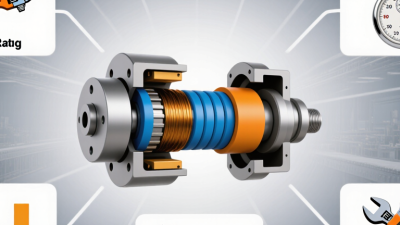
Their operation depends on an electromagnetic coil. When current reaches the coil, it creates a magnetic field and attracts an armature. Friction discs then engage, transferring torque through the clutch. In a brake section, the magnetic force releases the friction surfaces, allowing the shaft to rotate. When power is removed, springs usually press the brake surfaces together. This arrangement provides a fail-safe stopping action in many applications. Some designs reverse this sequence, so engineers must check the actual circuit.

Torque, speed, stopping frequency, and heat determine the correct size. A unit rated for high torque may still overheat during rapid cycling. That gap matters. Engineers should examine thermal capacity, response time, shaft alignment, bore dimensions, and allowable backlash. Testing at the real load is more reliable than selecting from a catalog alone. During supplier evaluation, request torque curves, duty-cycle data, inspection records, and clearly defined tolerances. A common mistake is focusing only on static torque. Dynamic stopping energy can be the harder problem. Heat changes everything. Even a well-designed clutch brake can perform poorly when ventilation, mounting, or maintenance is overlooked.

Which Criteria Define the Top Global Electromagnetic Clutch Brake Suppliers?

Top Electromagnetic Clutch Brake Suppliers Worldwide?

The strongest suppliers are judged by evidence, not catalog language. The International Federation of Robotics reported 541,302 industrial robot installations worldwide in 2023. This growth increases demand for precise, repeatable motion control. A capable supplier should publish torque curves, response times, thermal limits, and wear data. Vague ratings deserve caution.

Engineering depth matters. Buyers should compare holding torque, engagement speed, allowable slip, and coil power at real operating temperatures. ISO 9001 certification supports process control, but it does not prove product performance. Independent endurance testing provides stronger evidence. Ask for test conditions, sample sizes, and failure criteria. Small details reveal credibility.

Supply reliability also defines a top global supplier. The company should offer traceable materials, documented change control, and realistic lead times. Regional technical support can reduce downtime during commissioning.

According to the International Federation of Robotics, Asia accounted for most new robot installations in 2023, making local service capacity especially important. Customization helps, but excessive customization may increase risk and cost. That trade-off is often overlooked. No supplier passes every test. A serious evaluation should include field references, lifecycle estimates, spare-part availability, and clear warranty terms.

How Do Leading Suppliers Compare by Products, Industries, and Regions?

Top Electromagnetic Clutch Brake Suppliers Worldwide?

Leading suppliers differ less by catalog size than by application depth. Most offer electromagnetic clutches, spring-applied brakes, tooth clutches, and combined clutch-brake units. Clutch-brake combinations suit indexing equipment and high-speed packaging lines. Servo-compatible models support robotics and precision machine tools. Basic friction units often serve conveyors, pumps, and material-handling systems. Fit matters. Engineers should compare torque ratings, response time, bore sizes, voltage options, and allowable heat.

Industry experience changes the evaluation. Printing machinery needs repeatable stopping and low backlash. Packaging equipment values compact designs and quick cycling. Machine tools demand stable torque during frequent starts and stops. Wind and lifting equipment usually require fail-safe braking and careful thermal calculations. A supplier with testing records, application drawings, and accessible technical staff usually reduces commissioning risk. However, published torque figures may assume ideal cooling. Real factories are rarely ideal.

Regional strengths also vary. North American suppliers often emphasize replacement support and flexible customization. European suppliers commonly focus on precision, efficiency, and documented engineering standards. Asian suppliers may provide broad production capacity and competitive lead times, especially for standard components. These patterns are useful, but not absolute. Local service quality can matter more than factory location. Ask for sample test data, warranty terms, spare-part availability, and delivery history. No comparison is perfect. A cheaper unit can become expensive after alignment problems, heat damage, or delayed support.

What Certifications and Technical Services Should Buyers Expect?

When evaluating electromagnetic clutch brake suppliers, buyers should examine certifications beyond a displayed logo. ISO 9001 indicates controlled quality processes, but it does not prove every unit will fit your machine. Ask for current certificates, scope statements, and independent test records. Depending on the destination market, CE documentation, UL or CSA recognition, RoHS compliance, and REACH declarations may also matter. Material traceability is valuable, especially for friction linings, coils, springs, and machined hubs.

Technical support often reveals more than paperwork. A capable supplier should provide torque ratings, speed limits, response times, heat calculations, and allowable inertia data. Request dimensional drawings with tolerances, wiring details, mounting guidance, and recommended air gaps. Application engineers should review duty cycles, stopping frequency, ambient temperature, shaft loading, and moisture exposure. Prototype samples and inspection reports can reduce costly installation surprises.

Do not accept vague performance claims. Ask how static torque was measured, at what temperature, and after how many cycles. Testing conditions matter. A supplier should explain noise levels, wear limits, replacement procedures, and expected service intervals. Responsive after-sales support is equally important, including troubleshooting, spare-part identification, and failure analysis. Even experienced buyers can overlook thermal buildup during repeated braking. That mistake is easy to make. Certification creates confidence, but transparent engineering evidence creates dependable purchasing decisions.

How Can Businesses Select the Right Electromagnetic Clutch Brake Supplier?

Selecting an electromagnetic clutch brake supplier requires more than comparing catalog prices. The U.S. Department of Energy reports that motor-driven equipment consumes more than half of industrial electricity in American manufacturing. Small efficiency losses can therefore become expensive over long production cycles. Request measured torque, slip speed, coil power, response time, thermal limits, and stopping accuracy under your actual load.

Production scale also matters. The International Federation of Robotics recorded 541,302 industrial robot installations worldwide in 2023, according to its World Robotics 2024 report. These systems demand repeatable braking and quick engagement. A capable supplier should provide endurance-test results, dimensional drawings, material traceability, and failure-analysis records. Check whether its quality system follows ISO 9001, but do not treat certification alone as proof of performance. Ask for recent test data.

Visit the factory, if possible. Inspect winding protection, friction-surface finishing, assembly controls, and spare-parts storage. Test it hot. A brake that performs well at room temperature may lose torque after repeated cycles. Confirm engineering support, warranty boundaries, lead times, and replacement compatibility before signing. Price remains important, but the cheapest unit may create costly downtime. I would also challenge my own assumptions: a larger torque rating is not always safer, because excess inertia can increase stopping distance and machine stress. Supplier selection should match the complete duty cycle, not one attractive specification.

Top Electromagnetic Clutch Brake Suppliers Worldwide? - How Can Businesses Select the Right Electromagnetic Clutch Brake Supplier?

Selection Dimension Recommended Weight What to Compare Objective Verification Data Key Buyer Question
Torque Capacity 20% Rated, peak, static-holding, and braking torque; service factor; torque consistency Published torque-speed curves, test reports, friction-material data, and application calculations Does the rated torque remain adequate after considering acceleration, shock loads, inertia, and wear?
Electrical Compatibility 12% Coil voltage, current, power consumption, resistance, polarity, and control method Coil specification sheet, tolerance range, insulation rating, and compatibility confirmation with the control system Can the coil operate reliably at the machine’s actual voltage tolerance and switching frequency?
Speed and Response Time 10% Maximum rotational speed, engagement time, release time, and permissible cycling frequency Dynamic test results at the intended voltage, speed, temperature, and switching frequency Are engagement and release times measured under the same operating conditions as the final equipment?
Thermal Performance 10% Coil temperature rise, frictional heat, duty cycle, ambient temperature, and cooling requirements Thermal test report, duty-cycle limits, temperature-rise data, and derating curves What continuous or intermittent duty cycle is supported without exceeding component temperature limits?
Mechanical Integration 10% Bore, shaft fit, mounting pattern, allowable misalignment, axial clearance, and overall envelope Dimensioned drawings, GD&T information, installation instructions, and sample inspection records Can the component be installed without redesigning the shaft, housing, or mounting structure?
Durability and Wear Life 12% Expected operating cycles, friction-surface wear, air-gap adjustment, bearing life, and maintenance needs Endurance-test methodology, cycle count, failure criteria, wear measurements, and maintenance schedule How was service life tested, and were the test loads and cycling conditions representative of the application?
Environmental Protection 8% Ingress protection, humidity, dust, vibration, shock, corrosion exposure, and operating temperature IP rating tested under IEC 60529, environmental test reports, and material or coating specifications Is the stated protection level certified for the actual installation environment?
Quality Management 8% Process control, traceability, inspection, corrective action, and change management Valid ISO 9001 certificate, control plan, inspection records, lot traceability, and nonconformance process Can every delivered lot be traced to its materials, production records, and final inspection results?
Regulatory and Material Compliance 5% Restricted substances, chemical disclosure, product labeling, and market-specific requirements RoHS Directive 2011/65/EU declaration, REACH Regulation (EC) No. 1907/2006 statement, and material declarations Are compliance documents current and applicable to the exact part number and revision supplied?
Supply Capability 3% Minimum order quantity, standard and custom production capacity, lead time, packaging, and logistics support Capacity statement, production schedule, sample lead time, approved packaging specification, and delivery performance records Can supply remain stable during demand changes, engineering revisions, and replenishment cycles?
Commercial and Technical Support 2% Application engineering, customization, warranty terms, spare parts, communication, and after-sales response Technical support procedure, warranty conditions, response-time commitment, and documented engineering-change process Who will support sizing, troubleshooting, field failures, and future product modifications?
Total Evaluation Weight 100% Use a documented scoring system, validate technical claims with samples and test evidence, and approve suppliers only after application-level verification.

Learn More

Connect with us today to learn more about our industrial automation solutions—and how to commission them for your application.