What Are the Top CNC Swiss Lathe Machines?
A Cnc Swiss Lathe Machine earns its place on the shop floor through small details: a guide bushing supporting slender stock, a steady stream of chips, and a spindle holding tight tolerances across long production runs. These machines suit complex, high-volume parts, including connectors, medical components, and precision fasteners. Yet “top” depends on the job. Bar capacity, axis configuration, tooling, control system, service access, and operator experience all matter.
The market is moving, but broad CNC figures need careful interpretation. Grand View Research estimated the global CNC machine market at USD 101.22 billion in 2023 and projected a 9.5% compound annual growth rate from 2024 to 2030. That report covers CNC machines generally, not Swiss-type lathes alone. Buyers should treat it as context, not proof that any one machine will pay for itself. Real evidence comes from cycle-time trials, sample-part inspection, uptime records, and local service response.
A useful buying question is simple: can the machine repeatedly make your hardest part, not just its easiest one? Ask suppliers to demonstrate your material, tooling, and tolerances. Check the finished surface under proper inspection, then review setup time and chip control. Small differences add up.
I have not included a named expert’s quotation because I cannot verify a verbatim, Swiss-lathe-specific statement against an original source. Inventing one would weaken the reliability this guide aims to provide. The machine shortlist should instead compare documented specifications, production evidence, and support terms.
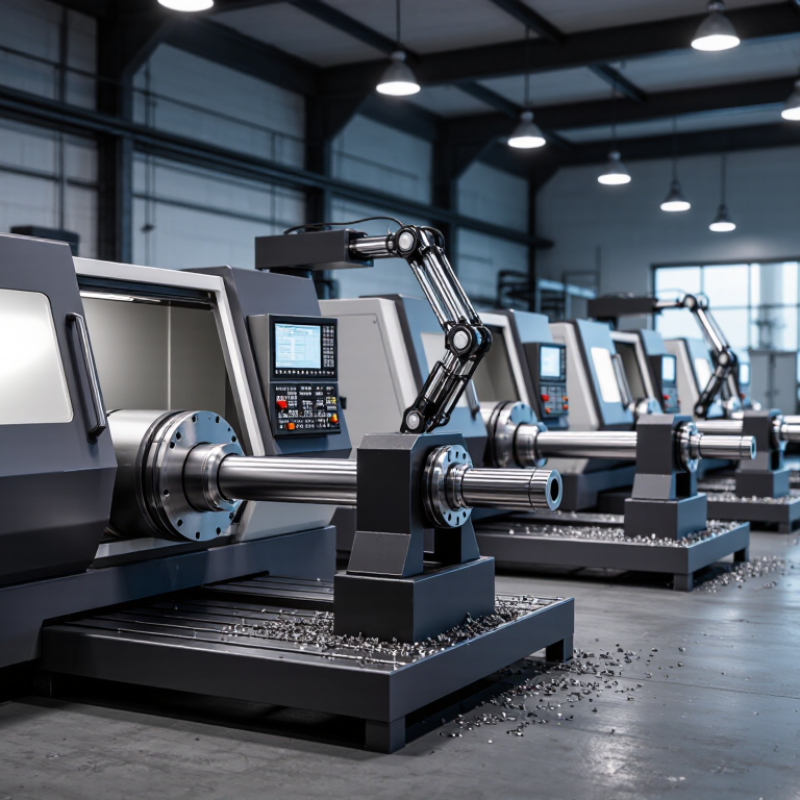
What Defines a CNC Swiss Lathe Machine?
A CNC Swiss lathe is defined by how it supports and moves the workpiece. A sliding headstock feeds bar stock through a guide bushing, keeping the exposed cutting area close to its support. This reduces deflection when machining long, slender parts. The cutting tools work near the bushing, while CNC control coordinates feed, spindle speed, and tool motion. That support is the key distinction.
Swiss-type machines often combine several tools and operations in one setup. A part may be turned, drilled, and milled as the bar advances. The arrangement suits small, precise components, such as pins, connectors, and medical-device parts. It is not magic. Bar quality, tool condition, and bushing clearance still affect results. A poor setup can leave chatter or inconsistent dimensions.
The broader market reflects growing CNC adoption, but it does not measure Swiss-lathe use alone. Grand View Research estimated the global CNC machine market at USD 83.99 billion in 2023 and projected 5.5% annual growth from 2024 to 2030. That context helps explain investment in automated machining, not which machine fits every job. For short, thick parts, a Swiss lathe may offer little advantage; process needs matter more than the label.
How Swiss-Type CNC Lathes Perform Precision Machining
Swiss-type CNC lathes support precision machining by holding slender bar stock close to the cutting zone. A guide bushing steadies the material as it rotates, reducing deflection during cuts on long, narrow parts. This support is useful for components such as pins, miniature shafts, and small threaded fittings.
The machine feeds the bar through the bushing while tools work near its face. Multiple tools can perform turning, drilling, and threading in a coordinated cycle. For example, a part may be drilled and turned before cutoff, without repeated manual repositioning. That can improve consistency across a production run. But precision still depends on setup. Tool offsets, bar quality, spindle alignment, and temperature changes all matter. Small errors add up.
Coolant helps control heat and carry chips away, though it cannot fix a worn tool or a poorly chosen cutting condition. Operators check dimensions with suitable measuring equipment and adjust offsets when readings drift. A Swiss-type lathe is not automatically the best choice for every job. Short, thick parts may not need its sliding-headstock arrangement. Still, it is easy to overstate the advantage: careful setup and inspection remain essential. No machine makes every part perfect.
Which CNC Swiss Lathe Machines Lead the Industry?
Which CNC Swiss lathe machines lead the industry? The strongest contenders are not defined by one headline speed. They combine stable turning, reliable bar feeding, and quick changeovers. For small medical, electronics, and precision fasteners, look for a machine that holds tight tolerances across long production runs. A sub-spindle can finish both ends in one cycle. A guide bushing supports slender stock, though it adds setup work and material constraints.
Market data offers context, not a machine ranking. Grand View Research estimated the global CNC machine market at USD 101.22 billion in 2023, with continued growth projected through 2030. That broad category includes many machine types, so it cannot prove which Swiss lathe leads. For a practical comparison, assess cycle time, scrap rate, uptime, and changeover hours on the same part. Ask for a production trial. Measure the finished components, not just the brochure claims.
Details matter. Watch for heat buildup near the spindle after repeated cycles, and check chip evacuation around small bores. A high-speed machine may still disappoint if tool access is awkward. There is no universal winner. Tooling, operator skill, bar quality, and part geometry can shift results considerably. One limitation: published comparisons rarely use identical materials and test conditions.
How to Compare Swiss Lathe Capabilities and Specifications
What Are the Top CNC Swiss Lathe Machines? Comparing Swiss lathe capabilities means looking beyond spindle speed. Check bar capacity, number of tool stations, simultaneous axes, and sub-spindle capability against the parts you actually make. Gardner Intelligence’s 2024 World Machine Tool Survey estimated global machine-tool consumption at about $83.9 billion in 2023, a reminder that these machines serve varied production needs. That market figure does not identify the right lathe for your shop. Part geometry does.
Read specifications in context. A high maximum spindle speed may help with small-diameter parts, but it cannot compensate for limited rigidity or poor chip evacuation. Compare stated positioning performance using consistent test conditions; ISO 230-2 sets out methods for testing numerically controlled machine-tool positioning accuracy and repeatability. Ask for measured results, not just a catalog figure. Also check the usable bar diameter, tool-change time, coolant delivery, and how easily operators can reach wear parts. Tiny details count.
Tips: Bring a representative part drawing and material sample to a machine trial. Track cycle time, surface finish, and setup effort. A spreadsheet can still mislead you; real cutting tests may reveal vibration, tangled chips, or awkward tool access. That is worth checking before purchase.
What Are the Top CNC Swiss Lathe Machines?
Comparing Representative Swiss Lathe Bar-Capacity Classes
Typical Swiss lathe bar capacities range from around 16 mm for compact applications to about 38 mm for higher-capacity work. These are representative class values, not specifications for particular machines; actual capacity depends on the machine configuration and material. Check the manufacturer’s specifications when comparing models.
