What Are the Top Aluminum Profile Manufacturers in China?

Choosing among China’s top Aluminum Profile manufacturers takes more than comparing prices. A polished catalog can look convincing. The real test is whether the supplier can hold dimensions across repeat orders, document alloy grades, and explain how profiles are inspected. A drawing, a sample, and a production record reveal more than slogans.

John Weritz, an aluminum-industry standards specialist, offers a useful lens through his work on material standards and performance. The following is a paraphrase, not a verbatim quotation: “Reliable profiles depend on consistent materials, controlled processes, and measurable quality checks.” That principle helps buyers assess manufacturers beyond their websites. Ask about extrusion capacity, die management, surface treatment, testing methods, and traceability. Then compare answers against your application, whether it needs a clean architectural finish or tight-fitting industrial components.

Details matter. A batch certificate should match the requested alloy. A sample should fit the drawing without extra adjustments. Inspection results should be available, not merely promised. Some suppliers may excel at custom shapes but have longer lead times. Others may offer fast standard production, yet provide less flexibility. There is no perfect supplier for every project.

This guide compares leading Chinese manufacturers through practical criteria, including product range, production capability, quality systems, export experience, and communication. Treat rankings as a starting point, not a substitute for verification. Even a strong manufacturer can be the wrong fit.
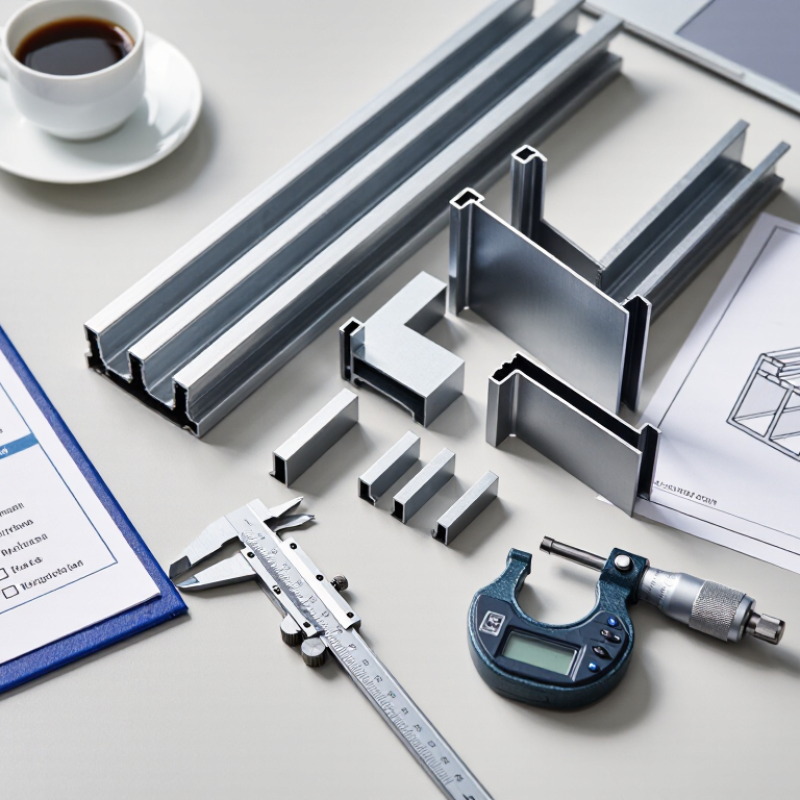
What Are the Top Aluminum Profile Manufacturers in China?

Understanding Aluminum Profiles and Their Main Applications

Aluminum profiles are long sections made by forcing heated alloy through a shaped die. Their cross-sections can include grooves, hollow chambers, or mounting slots. These details affect strength, weight, and how easily parts connect. Small detail: a T-slot profile can hold a bracket without drilling a new hole. Common alloys balance formability, strength, and corrosion resistance, but the right choice depends on the load and surroundings. A profile used indoors may not need the same surface protection as one exposed to rain.

Applications range from window frames and curtain walls to machine guards, shelving, and lightweight equipment frames. In buildings, profiles help support glazing while keeping frames relatively slim. In factories, modular sections let technicians reposition sensors or guards as layouts change. Fit matters. Buyers should check dimensions, wall thickness, straightness, finish, and the consistency of the supplied batch. A profile that looks sturdy in a catalog can still flex across a wide span; that is easy to overlook. For projects in China, ask manufacturers for drawings, material specifications, and sample measurements before approving production. Anodizing or powder coating may improve surface durability, though neither can compensate for a poorly matched design. The practical choice is rarely the thickest profile. It is the one that meets the actual load and assembly needs without adding needless weight.

Criteria for Evaluating Chinese Aluminum Profile Manufacturers

When evaluating Chinese aluminum profile manufacturers, look beyond polished catalogs. Ask which alloys and tempers they process, and whether each batch can be traced to inspection records. Numbers matter. Compare stated tolerances with the drawings for your project, not just a general product sheet. Request a sample cut from regular production; a specially prepared piece may not represent later orders. Check the finish. Look closely at corners, color consistency, and coating thickness, then ask how defects are recorded and corrected.

Production capacity also deserves evidence. Discuss tooling maintenance, minimum order quantities, lead times, and how schedule changes are handled. If profiles require anodizing or powder coating, clarify whether these steps happen in-house or through qualified partners. Ask for relevant quality certificates and recent test reports, then confirm that the documents match the product and facility being quoted. A tidy sample can still hide uneven production. A factory visit or independent inspection may reveal more, though neither guarantees every shipment will be perfect. Clear technical replies matter too: reliable teams explain limits, flag drawing conflicts, and put agreed specifications in writing. Compare those details alongside price, because a low quote can leave costly gaps.

Leading Aluminum Profile Manufacturers in China

China’s leading aluminum profile manufacturers compete through process control, not simply large extrusion presses. The U.S. Geological Survey’s Mineral Commodity Summaries 2025 estimates China produced 43 million metric tons of primary aluminum in 2024. That figure describes upstream metal, not finished profiles. Still, it signals the depth of the domestic supply base for billet, extrusion, and finishing operations.

For buyers, compare manufacturers by alloy consistency, dimensional tolerances, and documented testing. Ask how they control billet temperature, die wear, and quenching; each can affect strength and surface quality. A reliable supplier should provide material certificates, inspection records, and clear packaging details. Check samples for straightness, sharp edges, coating uniformity, and fit with the intended assembly. Small flaws become expensive when a profile runs through a long production line.

Capacity alone is not proof of quality. Request a trial order and confirm that the quoted tolerances match the drawing, especially for complex cross-sections. Review anodizing or powder-coating specifications, too, since color and coating thickness can vary between batches. One detail is easy to miss: lead times may exclude tool development and sample approval. I would verify those dates in writing; procurement schedules can be less tidy than brochures suggest.

Comparing Product Ranges, Production Capacity, and Certifications

Choosing an aluminum profile manufacturer in China requires more than comparing catalog size. A broad range may include standard T-slots, window and door sections, heat sinks, and custom extrusions. Ask for actual drawings, alloy grades, temper options, and surface-finish samples. A polished catalog is useful, but it cannot show how tightly a profile holds its dimensions after production.

Production capacity should match the order, not just impress on paper. Check the number and size range of extrusion presses, die-making support, finishing lines, and typical lead times. Ask how the factory handles a sudden increase in volume and whether sample runs use the same process as mass production. Details matter. A large stated capacity does not guarantee steady delivery; that distinction is easy to miss.

Certifications can help assess process controls, but verify their scope, validity, and issuing body. Quality systems, environmental management, and product-specific documentation answer different questions. Request inspection records for dimensional tolerances, alloy composition, and coating thickness, plus a clear method for handling rejected batches. Certifications are evidence, not a substitute for inspection. Even experienced buyers sometimes focus too heavily on certificates and overlook packaging or communication delays. That is worth reconsidering before committing to a long production schedule.

What Are the Top Aluminum Profile Manufacturers in China? - Comparing Product Ranges, Production Capacity, and Certifications

A neutral comparison guide to product scope, capacity evidence, and certification checks. No manufacturer-specific figures are presented.

Comparison Dimension Reliable Industry Context Evidence to Request from Each Supplier
Product range Aluminum extrusion suppliers may serve architectural, industrial, transport, solar, and consumer-product applications. Actual ranges differ by tooling, alloy, and finishing capability. Current product catalogue, application references, available profile drawings, and confirmation of in-house versus outsourced processes.
Alloys and tempers Common extrusion alloys include 6063, 6061, and 6082. Alloy and temper selection affects strength, formability, corrosion performance, and suitability for machining or finishing. Alloy and temper options, mill test certificates, applicable material standard, and traceability from billet to finished product.
Production capacity Annual output is not directly comparable unless the reporting period, product mix, and definition of capacity are consistent. Press force, often stated in tonnes, is equipment capacity—not annual production volume. Declared annual capacity and recent actual output, extrusion-press list and force, shift pattern, utilization assumptions, and capacity available for the requested profile.
Extrusion and tooling Extrusion capability depends on press size, billet and profile dimensions, die design, and process controls. A press-force figure alone does not establish that a supplier can make a particular section. Maximum profile envelope, wall-thickness limits, die-development process, tooling ownership terms, and sample or trial-production procedure.
Surface finishing Common options include anodizing, powder coating, and mechanical finishing. Appearance, coating thickness, pretreatment, and test requirements depend on the specification and application. In-house or subcontracted finishing details, finish specifications, sample approvals, inspection records, and relevant test reports.
Standards and tolerances Standards such as GB/T 5237 for architectural aluminum alloy profiles and EN 755-9 for extruded rod, bar, tube, and profiles may be relevant, depending on the product and destination market. The exact standard and edition stated in the purchase specification, dimensional inspection method, tolerance report, and any required third-party test results.
Management certifications ISO 9001 concerns quality-management systems; ISO 14001 concerns environmental-management systems. Certification is site- and scope-specific and does not by itself certify every product. Current certificate, issuing and accreditation details, covered legal entity and production site, scope, and expiry date.
Product or process approvals Some markets and applications require additional product, process, or coating approvals. Requirements vary; a general management certificate is not a substitute for an application-specific approval. Approval documents matching the product, finish, facility, and target market; confirm validity directly with the relevant scheme or certification body.
Quality control and traceability A meaningful comparison should cover incoming-material checks, extrusion and heat-treatment controls, dimensional inspection, finishing checks, and lot traceability. Quality-control plan, sample inspection report, non-conformance process, batch identification method, and record-retention policy.
How to compare suppliers fairly There is no reliable supplier ranking from product range, stated capacity, or certificate count alone. Comparisons require current, like-for-like evidence for the required profile and market. Use the same technical specification, annual-volume assumptions, delivery terms, quality criteria, and document checks for every quotation.

Note: The information above describes general industry considerations, not verified claims about any particular manufacturer. Confirm current specifications, capacity, and certificates with the supplier before making a purchasing decision.

Matching Manufacturers to Project Requirements

Matching an aluminum profile manufacturer to a project starts with the drawing, not a supplier ranking. Define the alloy, temper, cross-section, tolerances, finish, and expected annual volume. A narrow slot for a sliding insert may need tighter control than a simple frame. Small details matter.

Ask how the factory handles die design, trial runs, and dimensional inspection. Request sample profiles and check them against the drawing with calipers; inspect corners, wall thickness, and surface consistency under ordinary light. For anodized or coated finishes, confirm the specified color range and test criteria in writing. A polished sample is useful, but it cannot prove every production batch will match.

Capacity should fit the order. A large plant may suit repeat volumes, while a smaller operation may offer more flexibility for custom sections. Neither is automatically better. Compare lead times, minimum quantities, packaging, and responses to technical questions.

Slow replies are a warning, though not always a deal-breaker. If the profile supports a load or must mate with other components, have a qualified engineer review the design before tooling begins. This can feel like extra work. It may prevent costly revisions later.

Learn More

Connect with us today to learn more about our industrial automation solutions—and how to commission them for your application.