Top 10 High Silicon Steel Manufacturers for Global Buyers?
High Silicon Steel is valued for its high electrical resistivity, which can help reduce core losses in demanding magnetic applications. Yet buying decisions rarely hinge on silicon content alone. A coil’s thickness, insulation, magnetic performance, processing requirements, and delivery consistency all matter. A useful paraphrase of Professor George E. Dieter’s materials-selection approach—not a verbatim quotation—is: “Choose the material for the job, not the label.” That principle is especially relevant when comparing suppliers across regions.
This guide examines ten High Silicon Steel manufacturers for global buyers. It considers product range, technical documentation, customization, quality controls, production capacity, and export experience. A specification sheet can look convincing; the real test is whether the steel performs consistently in the buyer’s process. Ask for traceable test data, clear tolerances, and samples that match the intended application. Check how each supplier handles forming, cutting, and edge quality, too. Small differences can matter on a production line.
There is no universal winner. Some buyers need established grades and dependable volume. Others prioritize thinner material, specialized processing, or responsive technical support. Public information may not reveal every limitation, and supplier claims deserve verification. This comparison is a starting point, not a substitute for qualification trials. Look closely. Compare evidence. Then confirm performance under your own operating conditions.
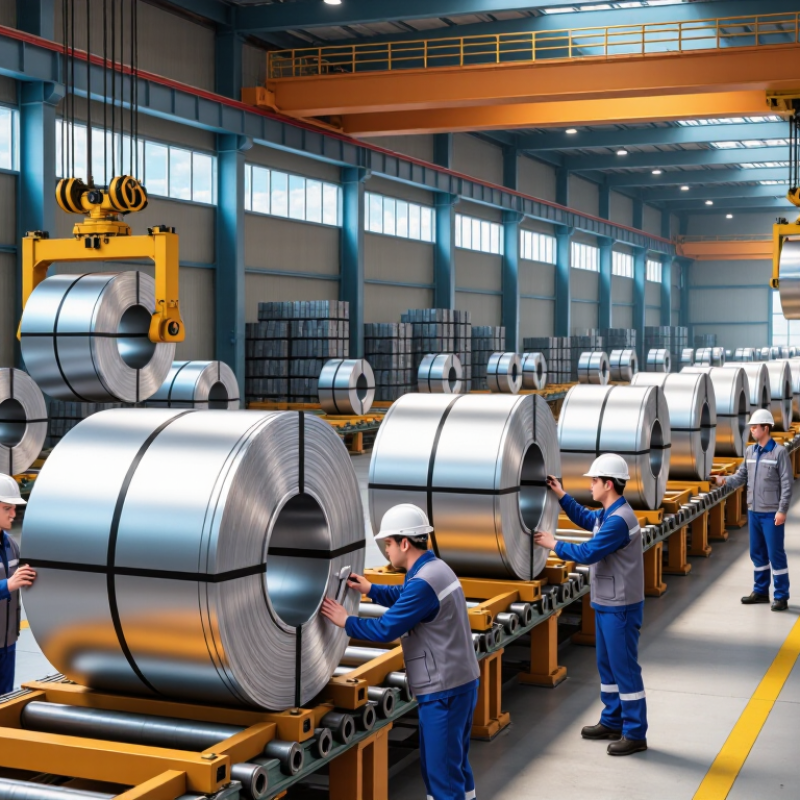
What High-Silicon Steel Is and Where It Is Used
High-silicon steel is an iron alloy with added silicon, often supplied as thin electrical steel sheet. Silicon raises electrical resistivity, helping reduce eddy-current losses when magnetic fields change. The exact magnetic performance depends on composition, processing, sheet thickness, and direction of measurement. Many electrical grades contain roughly 2% to 3.5% silicon; some specialized grades approach 6.5%. The trade-off is real. Higher silicon content can make the material more brittle and difficult to roll, punch, or form. A grade name alone may not reveal how it will perform in a finished core.
This steel is used in transformer cores, motor and generator laminations, and other magnetic components. Grain-oriented grades suit transformer cores, where magnetic flux follows a preferred direction. Non-oriented grades are common in rotating machines, where flux changes direction as the rotor turns. That distinction matters. Buyers typically compare core loss, magnetic permeability, operating frequency, sheet thickness, and insulation coating, rather than silicon content alone. A thin sheet with suitable insulation can help limit losses between stacked layers. It is easy to focus on the alloy percentage and overlook processing; that can lead to a poor fit for the actual equipment.
How to Assess High-Silicon Steel Manufacturers
When assessing high-silicon steel manufacturers, start with the material data, not broad claims about efficiency. Ask for silicon content, thickness tolerance, magnetic properties, and core-loss figures measured under stated conditions. A loss value without test frequency, flux density, and sample details is hard to compare. Details matter.
Check whether test reports match the actual production lot. Request a sample with traceable batch records, then compare its dimensions and coating with the purchase specification. If your process includes cutting or stamping, discuss edge quality and brittleness; higher silicon content can make processing more demanding. A useful supplier will explain limitations, not just quote ideal performance. Ask how defects are handled and whether production checks are documented.
Capacity deserves a practical review, too. Confirm available widths, minimum order quantities, lead times, and how the manufacturer manages variation between batches. For transformer or motor applications, involve your engineering team when reviewing magnetic data and processing trials. A polished certificate is helpful, but it cannot replace a representative sample. One thing is easy to miss: communication during a technical problem often reveals more than a sales presentation. I would still verify every critical claim against your own requirements.
Assessing High-Silicon Steel Manufacturers: Electrical Resistivity Benchmark
Representative room-temperature electrical resistivity values increase with silicon content. Use these material benchmarks to guide supplier discussions—not as guaranteed product specifications or a ranking of manufacturers. Ask suppliers to verify composition and measured properties for the specific product and processing route.
Values are approximate representative literature values in μΩ·cm; actual results vary with composition, temperature, and processing. Request test reports and mill certificates for the material being quoted.
Ten High-Silicon Steel Manufacturers Serving Global Buyers
Ten high-silicon steel manufacturers serve buyers with different production needs, from electrical steel strip to precision-cut laminations. Comparing them requires more than checking silicon content. Ask about grade tolerances, thickness consistency, magnetic properties, and available testing records. A coil intended for a compact transformer may need different characteristics from material used in a high-speed motor. Small variations matter.
Manufacturing capability also affects delivery and processing. Some producers offer conventional rolling, while others use specialized routes for higher silicon levels, where steel can become brittle and harder to form. Check minimum order quantities, sample availability, packaging, and lead times for your destination. Request recent test data for the exact grade and thickness, not a general product brochure. Supplier claims deserve verification.
Tip: Send a clear specification with target thickness, width, magnetic requirements, and intended application. Ask how the supplier controls edge quality and flatness. If possible, test a small batch before committing to production. This step takes time, but it can reveal handling problems that a datasheet will not show.
Comparing Product Grades, Quality Standards, and Supply Capabilities
Choosing a high-silicon steel supplier requires more than comparing quoted prices. Start with the grade and intended use. Silicon content, thickness, coating, and magnetic performance can affect core losses, handling, and production yield. Ask manufacturers for current data sheets and test results tied to the specific product grade, not general product-family claims. Small details matter.
Quality checks should cover dimensional tolerance, surface condition, and consistency between batches. Request inspection records and clarify which test methods the supplier uses. A certificate alone may not show how reliably a mill controls variation. Review sample results, then confirm whether production-scale material matches them. I would not treat one strong sample as proof of steady quality.
Supply capability matters just as much. Compare standard lead times, minimum order quantities, available widths, packaging, and support for repeat orders. Ask how the supplier handles production delays or changes in specifications. A low price is less useful if the required gauge is unavailable when your line needs it.
Tips: Send the same specification sheet to each candidate. Compare like with like, and record grade, thickness, test evidence, lead time, and order conditions. If a response is vague, ask again; unclear answers deserve a second look.
How Buyers Can Verify and Select a Suitable Manufacturer
Selecting a high-silicon steel manufacturer starts with a precise grade and application, not a glossy catalogue. Define the silicon range, thickness, width, coating, and required magnetic performance. Ask for test results at the frequency and flux density your design actually uses. Details matter.
Request a recent mill test certificate linked to the coil or batch number. Check chemistry, dimensions, mechanical properties, and core-loss figures against your drawing and purchase specification. Ask how measurements are taken and whether calibration records are current. Then compare a production sample with an independent laboratory test, especially for loss and permeability. One sample is not enough.
Review traceability from melt to finished strip, along with controls for slitting, edge quality, and packaging. Inspect sample edges for burrs, waviness, and surface damage; these can complicate stacking and insulation. Confirm realistic capacity, lead time, minimum order, and procedures for nonconforming material. Speak with technical staff, not only sales. Ask for a trial lot. Keep records. A responsive supplier is useful, but responsiveness cannot replace repeatable data. I would still leave room for doubt: a neat report may not represent every coil, and buyers sometimes overlook their own measurement errors. Verify the process, then reassess.