Top 10 Flat Lock Manufacturers for Global Buyers?
Flat Lock manufacturing sits at the meeting point of seam strength, operator skill, and garment comfort. Global buyers now expect more than attractive machine specifications. They want stable stitching, accessible parts, responsive service, and measurable production value.
The Research and Markets Industrial Sewing Machine Global Market Report 2024 indicates continued growth in industrial sewing equipment, supported by apparel demand and factory modernization. Textile Exchange’s 2024 Materials Market Report also recorded 124 million tonnes of global fiber production in 2023. That volume creates pressure for better durability, lower waste, and longer garment life. Flat Lock equipment can support these goals when its stitch formation matches the fabric and application. Small details matter. A needle skips on stretch jersey. A loose thread appears after washing. A poorly aligned folder slows the entire line.
Claire Bergkamp, a respected textile-industry expert and former Textile Exchange executive, has said, “We need to move from a linear to a circular system.” Her statement is not specifically about Flat Lock machines, but it remains highly relevant. Buyers should examine energy use, repairability, spare-part availability, and operator training before comparing prices. The cheapest machine may become expensive beside a silent service department.
This guide reviews ten Flat Lock manufacturers for global buyers. It considers machine consistency, seam applications, technical support, customization, and international distribution. No ranking is flawless. Factory conditions differ. A strong choice for sportswear may disappoint a small knitwear workshop. Buyers should test real fabric samples, request maintenance records, and question optimistic claims. Reliable purchasing begins with evidence, not polished brochures.
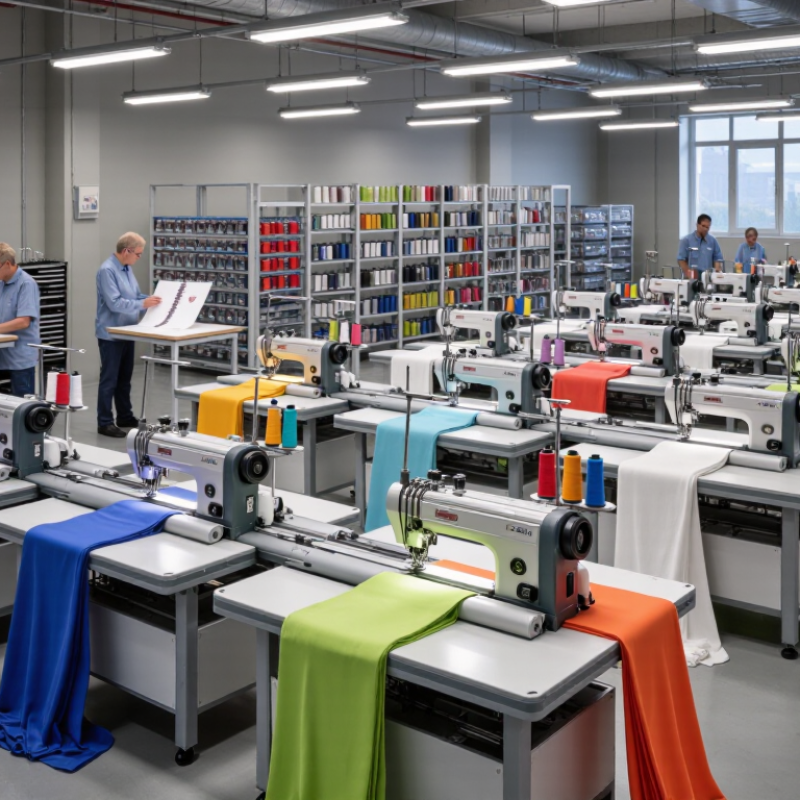
What Is a Flat Lock Machine and Where Is It Used?
A flat lock machine creates low-profile seams by joining fabric edges with interlooped threads. The seam feels smooth against the skin. This matters in sportswear, underwear, sleepwear, children’s clothing, and stretch garments. Some models also create decorative flat seams on the outer surface. Their needle and looper arrangements support clean stitching across elastic knits, rib fabrics, and lightweight jersey. Heavy materials may require a different machine setup.
Global buyers often compare the top 10 flat lock manufacturers by stitch quality, machine stability, spare-part access, and technical support. In real production, speed alone is not enough. A fast machine can waste fabric when thread tension changes during long runs. Ask for samples using your actual fabric, thread, and seam width. Check skipped stitches, puckering, noise, and operator comfort. A perfect sample can still hide maintenance problems. That deserves attention.
Tips: Confirm the required stitch class, needle gauge, differential feed, and motor compatibility before ordering. Request a clear parts list and service schedule. Test the machine for several hours, not only five minutes. Consider local training and repair response times. Cheap equipment may look practical, but downtime can become the higher cost. I would also leave room for adjustment, because fabric behavior is rarely identical between suppliers.
How to Evaluate Flat Lock Manufacturers for Global Sourcing
Choosing among the top 10 flat lock manufacturers requires more than comparing catalog prices. A dependable supplier should show stable stitch quality, accurate seam width, and clean thread tension on different fabrics. Request sewn samples using lightweight jersey, fleece, and stretch materials. Inspect the underside carefully. Uneven loops often reveal poor calibration.
Factory evidence matters. Ask for production records, inspection procedures, and equipment maintenance logs. A professional manufacturer should explain needle selection, lubrication intervals, and operator training in clear language. Video calls can help, but an independent factory audit offers stronger evidence. Check whether testing covers vibration, electrical safety, noise, and continuous operation. Avoid vague claims about “premium quality.”
Commercial details also deserve close attention. Compare minimum order quantities, spare-part availability, lead times, warranty terms, and technical response hours. Ask for a sample machine before placing a large order, when practical. Measure stitch formation after several hours of operation, not only during a short demonstration. That small test can expose heat buildup or inconsistent feeding.
A polished showroom may still hide weak after-sales support. This is where sourcing decisions often become uncomfortable. Lower prices look attractive, but delayed parts can stop an entire sewing line. Documentation should include operating instructions, packing details, serial records, and service contacts. Some evaluation methods remain imperfect, especially when factory data is self-reported. Keep written evidence, verify critical claims, and leave room for a second inspection.
Top 10 Flat Lock Manufacturers and Their Key Strengths
Top 10 Flat Lock Manufacturers and Their Key Strengths
Global buyers often compare the top ten flat lock manufacturers by practical strengths, not advertising claims. The strongest suppliers typically offer stable stitch formation, high-speed production, and adjustable differential feed. Others focus on lightweight fabrics, sportswear seams, or heavy knitted materials. Some provide automated thread trimming and programmable controls. That matters when operators repeat thousands of seams daily. Spare-parts availability is equally important. A cheaper machine can become expensive after one idle week.
Industry data supports this demand. Statista Consumer Market Insights projects global apparel revenue above US$1.7 trillion in 2025. Meanwhile, the McKinsey State of Fashion 2025 report expects low single-digit fashion growth, increasing pressure on factory productivity. Leading manufacturers respond with lower vibration, reduced oil use, and easier maintenance. Several suppliers also provide operator training, export documentation, and regional service teams. These strengths reduce setup errors, especially for factories hiring inexperienced workers.
However, rankings are not permanent. A supplier excellent for athleticwear may perform poorly on delicate jersey. Buyers should test actual fabric rolls before signing large orders. The ITMF Global Textile Industry Survey has repeatedly highlighted weak confidence and cautious investment across textile manufacturing. That makes total ownership cost more useful than catalog speed. Warranty terms, delivery reliability, energy consumption, and local technician access deserve equal attention. I would also question unverified efficiency claims. Numbers without test conditions can mislead.
How to Compare Quality, Pricing, Capacity, and Certifications
Top 10 Flat Lock Manufacturers for Global Buyers?
Comparing flat lock manufacturers requires more than reading a product catalog. Inspect stitch samples under different fabric weights, from thin jersey to layered fleece. Check seam elasticity, thread trimming, needle heating, vibration, and noise after continuous operation. A reliable supplier should explain its testing process and provide measurable tolerances. Ask for production videos, inspection records, and references from similar buyers. Small details matter.
Pricing can mislead. Compare the complete cost, including attachments, spare parts, packaging, training, shipping, warranty, and expected maintenance. A cheaper machine may need frequent adjustments or create more fabric waste. Request a written quotation with identical specifications from every manufacturer. Then compare payment terms and lead times. Capacity also needs evidence. Review monthly output, component availability, sample-order handling, and peak-season production plans. Ask whether the quoted capacity applies to your exact model.
Certifications deserve careful checking. Confirm the certificate number, issuing body, validity period, and product scope. Requirements may differ across importing countries, so verify them with a qualified local compliance professional. ISO 9001 can indicate controlled processes, but it does not guarantee perfect machines. CE or other market marks should match the actual equipment configuration. I have found that supplier claims sometimes sound stronger than the documents support. That is a warning. Use third-party factory inspections when the order is substantial, and keep every technical promise in the contract.
Top 10 Flat Lock Manufacturers for Global Buyers
Benchmark comparison of quality, pricing, production capacity, and certification readiness
How to read this chart: Scores are normalized from 0 to 100 using common global-buyer criteria. Quality reflects stitch consistency, machine durability, and after-sales support; pricing reflects value relative to comparable flat lock specifications; capacity reflects production scale, lead-time capability, and spare-parts availability; certification readiness reflects the availability of commonly requested compliance documentation such as CE and ISO 9001. Higher scores indicate stronger procurement suitability. The comparison is presented as an anonymous market benchmark and does not disclose company or brand names.
What Global Buyers Should Check Before Placing an Order
When comparing flat lock manufacturers, global buyers should inspect more than a polished catalog. Request machine specifications, stitch types, sewing speed, needle systems, fabric ranges, and power requirements. A suitable machine should handle your actual materials, from lightweight jersey to dense technical fabric.
See the seam first.
Ask each manufacturer for recent production samples. Check seam flatness, thread tension, skipped stitches, edge control, and finishing quality under repeated washing. Request factory videos or a live inspection when possible. Practical audits should include assembly areas, testing records, operator training, and final inspection procedures.
Details matter.
Confirm certifications, electrical compliance, packaging standards, spare-part availability, warranty coverage, and service response times. A low price may become expensive when a sensor fails or replacement parts arrive late. Clarify minimum order quantities, lead times, payment stages, and responsibility for shipping damage. Do not rely only on a sales representative’s promise; place key terms in the contract. Ask whether quality checks are documented for every unit or only for sample machines. That difference can be uncomfortable, but it matters. Buyers should also test a pilot order before committing to large volumes. A perfect sample does not always represent routine production. Some factories may resist deeper questions, and that itself deserves careful reflection.