
China Top 10 Drywall Steel Profile Manufacturers

China’s drywall industry includes manufacturers serving residential, commercial, and industrial projects. This guide introduces ten Chinese suppliers of Drywall Steel Profiles, including metal studs, tracks, furring channels, and ceiling components. These profiles shape partition walls and suspended ceilings. Their dimensions, steel thickness, coating, and forming consistency can affect installation and long-term performance.

A useful supplier comparison goes beyond product photos. Buyers should review technical data sheets, sample pieces, production capabilities, quality-control procedures, and export packaging. Check whether stud and track dimensions match the project specification. Ask about coating details and tolerances. Small differences matter.

The list is intended as a starting point, not a universal ranking. Manufacturer capabilities and market conditions can change, and public information may not reveal every production detail. That is a limitation worth noting. Before placing an order, confirm current specifications, sample quality, lead times, and shipment arrangements directly with the supplier. Clear questions often reveal more than polished catalogs.
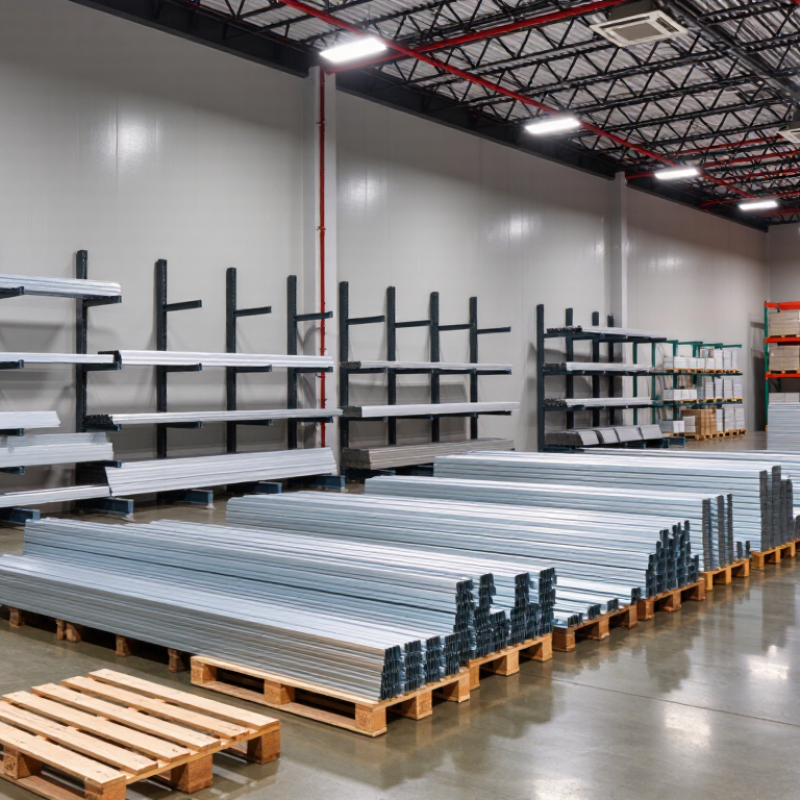
China Top 10 Drywall Steel Profile Manufacturers

What Drywall Steel Profiles Are and How They Are Used

Drywall steel profiles are cold-formed metal sections that create the frame behind plasterboard.

Common parts include vertical studs, horizontal tracks, ceiling channels, and furring channels. Studs fit inside tracks to form partition walls, while channels support suspended ceilings or wall-lining systems. Plasterboard is then fixed to the frame with suitable screws. A straight, securely anchored frame helps limit uneven joints and movement. Small details matter. Profile dimensions, steel thickness, and protective coating should suit the wall height, stud spacing, moisture exposure, and expected loads. Not every profile is interchangeable.

On site, installers mark floor and ceiling lines, attach tracks, and place studs at the specified centers. Door openings need appropriate framing, and service routes are best planned before boards cover the cavity. Ceiling supports must match the span and board layout, not merely appear level. That distinction is easy to miss. In damp areas, a corrosion-resistant finish may be suitable, subject to project specifications and site conditions. Check alignment with a level, and tighten fixings without bending the thin steel flanges. In practice, walls are rarely perfect. A rushed adjustment can leave a slight bow that shows under side lighting, so careful checks during framing can save rework later.

How China’s Drywall Steel Profile Industry Is Structured

China Top 10 Drywall Steel Profile Manufacturers

How China’s Drywall Steel Profile Industry Is Structured

China’s drywall steel profile industry is not a single-factory business. It connects steel coil suppliers, coating and slitting processors, roll-forming plants, accessory makers, and distributors. Smaller workshops may focus on standard studs and tracks, while larger facilities often manage more sizes, packaging, and export orders. The distinction matters. A reliable profile starts before forming.

At the production stage, galvanized coil passes through rollers that shape C-studs, U-tracks, furring channels, and ceiling members. Operators check flange width, web depth, thickness, and straightness; small deviations can complicate installation. Some producers buy pre-treated coil, while others arrange coating and cutting through partner plants. That can make lead times uneven. Not every supplier controls each step.

Beyond the factory, regional distributors stock common sizes and deliver bundles to job sites, where damp storage can affect surface quality. Export-focused suppliers may add labels, pallet protection, and document checks. Buyers can ask for coil specifications, sample sections, inspection records, and realistic schedules. On paper, capacity looks simple. Mixed-size orders can still slow a production line.

Criteria for Selecting Leading Chinese Manufacturers

Choosing a leading Chinese drywall steel profile manufacturer starts with the project, not a ranking. Define the profile shape, dimensions, steel thickness, coating, and intended wall or ceiling use before comparing quotations. Ask for mill certificates and inspection records that match the offered production batch. Useful checks include thickness readings, coating consistency, straightness, hole placement, and fit with compatible tracks. Small deviations matter. A warped stud or uneven flange can slow installation and affect board support. Request samples, then compare their measured dimensions with the approved drawings.

Review production capacity, delivery schedules, packaging, and procedures for handling damaged bundles. Factory audits or live production checks can show whether quality inspections happen during forming, rather than only before dispatch. Ask how operators adjust roll-forming equipment and separate products that fail inspection. Test reports should identify the methods used, dates, and products covered. Paperwork has limits. A certificate alone cannot confirm that every shipment matches the stated specification. Compare total delivered cost, but examine material details behind unusually low quotations. No checklist catches every problem; even careful sample checks may not reveal variation across a full production run. Keep agreed tolerances and inspection requirements in writing before placing an order.

China Top 10 Drywall Steel Profile Manufacturers — Criteria for Selecting Leading Chinese Manufacturers

Galvanized Steel Benchmark: Zinc Coating Mass

Zinc coating mass is one useful material-quality check when evaluating drywall steel profiles. The Z designations shown are coating classes under EN 10346; their values indicate nominal total coating mass on both sides, in grams per square metre. Confirm the specified coating class and applicable standard for each product.

Profiles of Ten Notable Drywall Steel Profile Manufacturers in China

China’s drywall steel profile manufacturers serve projects that need straight studs, clean track edges, and consistent screw engagement. The World Steel Association reported China produced 1,005.1 million tonnes of crude steel in 2024. This scale provides useful industrial context, but it does not prove that any mill makes drywall-grade profiles. Product-level evidence matters.

A careful set of ten manufacturer profiles should compare practical strengths, not repeat sales claims. Look for documented profile sizes, steel thickness ranges, coating specifications, roll-forming capacity, and quality-control procedures. Some producers focus on standard C-studs and U-tracks; others offer custom lengths or project-specific punching. Ask how they check dimensions and coating consistency across batches. Small differences can complicate site installation.

Export experience, sample availability, and clear technical drawings also help distinguish suppliers. Industry directories can identify candidates, but their listings may be incomplete or outdated. That is a real limitation. Verify production details directly, and treat broad capacity figures with caution unless the supplier explains what equipment and product lines they cover.

China Top 10 Drywall Steel Profile Manufacturers - Profiles of Ten Notable Drywall Steel Profile Manufacturers in China

This is a non-ranked overview of ten common drywall steel profile product families, not a company-by-company manufacturer directory. Dimensions and thicknesses are indicative market ranges; actual specifications vary by project, applicable standard, and supplier.

No. Profile Type Typical Cross-Section Common Indicative Dimensions Typical Material and Finish Common Application
1 Drywall Stud C-shaped channel Web: approximately 50–100 mm; thickness: approximately 0.4–1.0 mm Cold-formed galvanized steel Vertical framing for non-load-bearing partition walls and wall linings.
2 Track or Runner U-shaped channel Width selected to match the stud; thickness commonly around 0.4–1.0 mm Cold-formed galvanized steel Horizontal floor and ceiling framing that receives the ends of wall studs.
3 Furring Channel Shallow hat or channel section Face width commonly around 35–60 mm; thickness varies by system Galvanized steel; supplied in system-specific gauges Provides a fixing surface for gypsum board on walls or ceilings.
4 Hat Channel Hat-shaped section Overall width and depth vary by system; thickness commonly around 0.4–1.0 mm Cold-formed galvanized steel Furring and secondary framing for board attachment or surface leveling.
5 Ceiling Channel Channel section designed for ceiling framing Section size and thickness depend on the ceiling system and span requirements Galvanized steel Supports gypsum board in suspended or directly fixed ceiling assemblies.
6 Main Carrying Channel Primary ceiling-support channel Profile geometry and thickness are system-specific Galvanized steel Forms the primary grid or support line in compatible suspended ceiling systems.
7 Angle Bead Perforated L-shaped profile Common leg sizes are approximately 20–30 mm; thickness varies by product Galvanized steel or other corrosion-resistant metal Protects and reinforces external corners finished with plaster or joint compound.
8 Resilient Channel Shallow resilient mounting channel Profile dimensions and steel thickness vary by tested wall or ceiling assembly Cold-formed galvanized steel Provides a resilient fixing layer intended to reduce direct vibration transfer in specified assemblies.
9 Z-Furring Channel Z-shaped section Depth and flange widths are selected for the lining or insulation build-up Galvanized steel Creates a furring cavity and fixing surface for wall linings, including some insulation assemblies.
10 Deflection Track Deep-leg or slotted U-shaped track Leg height, slot configuration, and thickness depend on the wall design Galvanized steel Used at partition head details where the wall assembly is designed to accommodate vertical movement.

How to Compare Manufacturers by Quality, Capacity, and Service

When comparing drywall steel profile manufacturers, test three claims: quality, capacity, and service. ASTM C645-18 specifies requirements for nonstructural steel framing members; AISI S220-20 covers nonstructural cold-formed steel framing. Ask for mill certificates, coating records, and inspection results. Measure sample profiles for thickness, web depth, flange width, and straightness. Check more than one production batch. Small deviations can complicate installation.

World Steel Association’s World Steel in Figures 2025 reports 1,882.6 million tonnes of crude steel production in 2024. That scale does not prove a factory can deliver consistent profiles on schedule. Request actual monthly output, operating shifts, line availability, and recent on-time delivery records. A brochure is tempting, but weak evidence. Proof beats promises.

Service deserves the same scrutiny. Ask how quickly the supplier answers technical questions, handles drawing revisions, and replaces damaged bundles. Confirm packaging details, lead times, and who tracks orders after production. Compare written commitments, not friendly assurances. I would still inspect a trial shipment; paperwork cannot reveal every handling problem. A short trial run may expose issues before a large order.

Learn More

Connect with us today to learn more about our industrial automation solutions—and how to commission them for your application.