
What Is Mirrored Stainless Steel and How Is It Made?

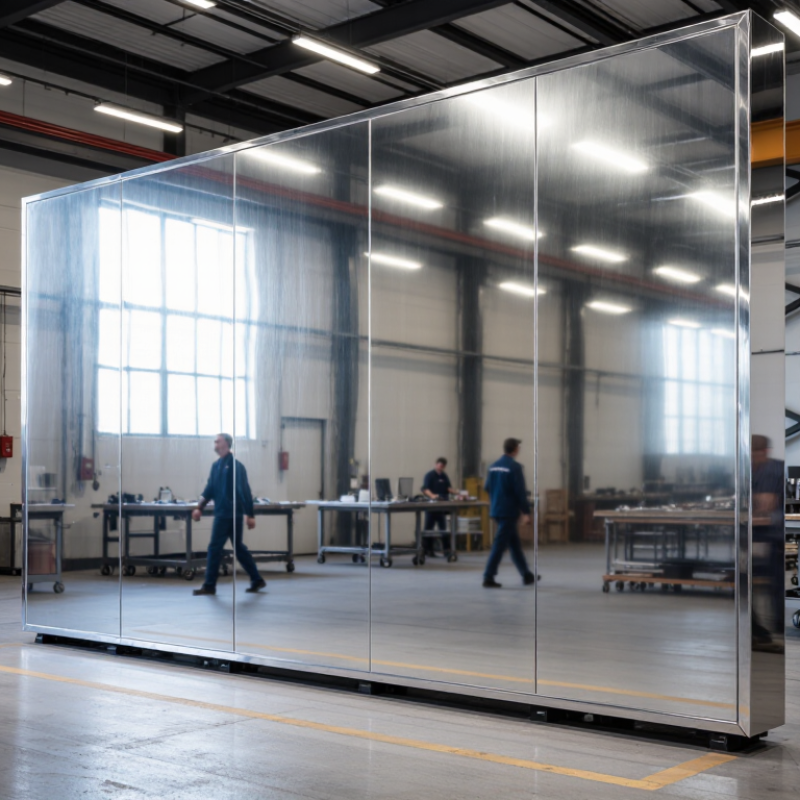
Mirrored Stainless Steel is not a separate metal grade. It is stainless steel finished to a highly reflective surface, usually through grinding, polishing, and careful cleaning. The base material may be 304 or 316 stainless steel, depending on corrosion exposure and project requirements. Under workshop lighting, a properly finished panel can reflect window frames, tools, and moving workers with surprising clarity.

The market context is substantial. World Stainless reported approximately 58.4 million tonnes of global stainless crude steel production in 2023. That scale supports broad architectural, commercial, transport, and interior applications. However, production volume does not guarantee surface quality. A mirror finish depends on alloy selection, flatness, abrasive sequence, polishing pressure, and contamination control. Tiny scratches become obvious beside a bright ceiling light. Fingerprints can remain visible after installation.

Manufacturers commonly begin with cold-rolled sheet, then remove surface marks through progressively finer abrasives. Buffing compounds create the final reflective appearance. Some projects add electropolishing or protective films, although these processes do not replace proper preparation. ASTM A480/A480M provides widely used requirements for stainless steel plate, sheet, and strip finishes, while EN 10088-2 helps classify European stainless products and surface conditions. These standards improve communication, but they cannot describe every visual expectation.

This article examines how Mirrored Stainless Steel is made, specified, inspected, and maintained. It also considers a practical limitation: “mirror” is not always a single, universal appearance. Lighting, viewing distance, and fabrication quality can change the result. That detail deserves more attention.
What Is Mirrored Stainless Steel and How Is It Made?

What Mirrored Stainless Steel Is and How It Differs from Other Finishes

Mirrored stainless steel is a highly reflective surface, usually produced as an ASTM No. 8 finish. It begins with stainless sheet that is cold-rolled, annealed, and cleaned. Mechanical polishing then removes fine surface lines. Buffing creates the mirror-like reflection.

It is not the same as every bright-looking finish. A 2B finish is smooth and slightly reflective, but it remains visibly gray. A BA finish can appear brighter because it is bright-annealed, often with a cleaner metallic sheen. No. 4 stainless steel has directional brushed lines, while No. 8 aims for a near-continuous reflection. The difference becomes obvious under showroom lighting or beside a dark window.

The International Stainless Steel Forum reported global stainless crude steel production of about 58.4 million tonnes in 2023. That scale supports wide use in architecture, food equipment, elevators, and interior panels. ASTM A480 also treats surface finish as a defined specification, not merely a visual description. In practical fabrication, mirror quality depends on the alloy, sheet flatness, polishing abrasives, and handling. Even a small dent can distort reflected lines. Fingerprints show quickly. Cleaning helps, but it cannot repair a damaged polish. This is where descriptions can become too optimistic: “mirror finish” does not always mean a perfect optical mirror. Viewing distance, lighting, and inspection standards still matter.

Which Stainless Steel Grades Are Used for Mirror Finishing

What Is Mirrored Stainless Steel and How Is It Made?

Which Stainless Steel Grades Are Used for Mirror Finishing

Mirror stainless steel is polished until its surface reflects light like glass. It is usually produced through grinding, buffing, cleaning, and protective-film application. The familiar No. 8 finish can show fingerprints, fine scratches, and waviness under strong lighting. A mirror surface is not a steel grade.

Grade selection affects both appearance and service life. According to ASTM A240 and EN 10088, 304 is a common austenitic choice for indoor panels, kitchens, elevators, and decorative equipment. Its chromium and nickel content support good corrosion resistance and forming performance. It is practical, but not universal.

Use 316 where chlorides, coastal air, or cleaning chemicals create greater risk. Its molybdenum content improves resistance to localized corrosion. The difference matters near swimming pools and marine buildings. Ferritic 430 is magnetic and often costs less, making it suitable for dry interiors and appliance surfaces. However, it generally offers lower corrosion resistance than 304.

Some fabricators also use 201 for budget-sensitive decorative work. Its reduced nickel content can affect corrosion performance and consistency. That choice deserves caution. A brighter polish cannot repair an unsuitable alloy.

World Stainless reported global crude stainless steel production of about 58.4 million metric tons in 2023. This scale reflects broad material demand, not proof that every grade suits mirror finishing. In practice, surface preparation, heat treatment, welding marks, and polishing skill can influence the final reflection as much as the alloy itself. Specification sheets should name the grade, finish, thickness, and inspection method.

How the Surface Is Prepared Before Polishing

What Is Mirrored Stainless Steel and How Is It Made?

A mirror finish begins with surface preparation, not the final polishing wheel. Stainless steel sheets arrive with mill scale, rolling marks, oil, burrs, or handling scratches. These defects become more visible after polishing. Fabricators therefore inspect the sheet under angled light and remove contaminants with a compatible alkaline cleaner. The surface must be dry and free from embedded iron particles.

Abrasive preparation follows a controlled sequence. Coarse abrasives level weld discoloration and deep scratches, while finer grades reduce visible lines. Each step should cross the previous scratch pattern slightly. Skipping a grade saves little time and often creates ghost marks beneath the reflective finish. ASTM A480/A480M describes No. 8 finish as a highly reflective surface produced through progressively finer polishing and buffing. It is not simply “shiny metal.”

The process demands discipline. Excessive pressure can generate heat, distortion, or uneven brightness. Stainless steel also conducts heat differently from carbon steel, so operators must monitor friction and loading on the abrasive. A 2024 statistical report from the International Stainless Steel Forum recorded approximately 58.4 million tonnes of global crude stainless steel production in 2023. That scale increases the importance of repeatable preparation methods. Still, inspection remains partly judgment-based. A surface can look perfect in one light and reveal haze in another. Cleaning, final buffing, and careful handling decide whether the mirror effect survives installation.

How Stainless Steel Is Mechanically Polished to a Mirror Finish

What Is Mirrored Stainless Steel and How Is It Made?

Mirrored stainless steel is not covered with a reflective film. It is stainless steel refined through mechanical polishing until its surface reflects light clearly. The finish depends on the steel grade, surface condition, and polishing method. A smooth base usually produces a cleaner result.

How Stainless Steel Is Mechanically Polished to a Mirror Finish

The process begins with inspection and cleaning. Weld marks, dents, and rough mill lines must be removed carefully. Technicians then use abrasive belts or discs, often moving from coarse grit to finer grit. Each stage should erase the scratches from the previous stage. Skipping a grit can leave visible lines under bright lighting.

The final stages use fine compounds and soft buffing wheels. Pressure, speed, and heat require close control. Too much pressure may create waves, discoloration, or rounded edges. The process is not perfectly linear. A small scratch can force an earlier polishing stage to be repeated. Even experienced polishers sometimes overwork corners, so inspection remains essential. Surface lighting, clean gloves, and angled viewing help reveal defects that normal light can hide.

Tips: Keep the work area free from dust and steel particles. Use separate tools for stainless steel to prevent contamination. Avoid dragging sharp parts across the finished surface. Define the required mirror level before production, because “mirror finish” can mean different visual standards. A practical sample panel can prevent costly misunderstandings.

What Is Mirrored Stainless Steel and How Is It Made? - How Stainless Steel Is Mechanically Polished to a Mirror Finish
Data Dimension Typical Specification or Range How It Relates to a Mirror Finish Important Process Notes
Material Definition Stainless steel with a highly smooth, reflective surface produced by progressive mechanical polishing The surface reflects light clearly instead of scattering it across visible scratches, pits, or grinding marks “Mirror finish” describes surface appearance and condition rather than a separate type of stainless steel
Common Stainless Steel Grades 304 and 316 are widely used; ferritic grades such as 430 can also be polished Polishability depends on the alloy, starting surface, hardness, inclusions, and fabrication history Grade selection should be based on corrosion resistance, forming requirements, service temperature, and intended environment
Typical Finish Designations Commercial specifications commonly identify bright polished surfaces as No. 8 or equivalent highly reflective finishes Higher finish designations generally indicate greater reflectivity and fewer visible surface imperfections Finish names and acceptance criteria can vary by standard, supplier, and project specification
Starting Surface Cold-rolled, hot-rolled, or previously ground sheet; the starting roughness must be suitable for the target finish A rough or damaged substrate requires more material removal and more polishing stages Deep dents, weld discoloration, scale, and embedded iron should be removed before fine polishing begins
Stage 1: Cleaning and Inspection Degreasing, removal of dirt and shop contaminants, followed by visual inspection Clean metal allows abrasives to cut consistently and prevents contamination from being dragged across the surface Protective films and residues are normally removed or managed according to the fabrication procedure
Stage 2: Defect Removal Coarse abrasive work is selected according to the depth of scratches, weld marks, or oxidation All deep defects must be blended below the final surface level before fine polishing can produce uniform reflection Excessive grinding can create flat spots, gouges, heat tint, or dimensional loss
Stage 3: Progressive Abrasive Polishing Typical abrasive progression: approximately P80–P120, P180–P240, P320–P400, then finer grades such as P600 and above Each finer abrasive removes the directional scratches left by the preceding coarser abrasive The exact sequence depends on the initial condition, geometry, abrasive type, and required appearance
Abrasive Direction Each polishing stage is often performed at a different direction or angle to the previous scratch pattern Changing direction makes remaining coarse scratches easier to identify and remove Consistent movement and pressure help prevent random swirl marks and uneven brightness
Stage 4: Fine Polishing Fine abrasive belts, discs, or compounds are used after the visible coarse scratch pattern has been eliminated Fine polishing reduces surface roughness and creates the low-scattering surface needed for clear reflection Pressure, speed, lubrication, and tool condition must be controlled to avoid overheating and smearing
Stage 5: Buffing Soft cloth or fiber wheels with a suitable polishing compound may be used for final brightening Buffing can increase brightness and improve visual uniformity after abrasive refinement Buffing is not a substitute for removing deep scratches; it may hide defects temporarily rather than eliminate them
Surface Roughness Mirror-polished surfaces are commonly specified by a low Ra value; exact limits depend on the project requirement Lower average roughness generally supports sharper reflection, although waviness and visible defects also affect appearance Typical values may be specified around Ra 0.1–0.2 µm for highly polished surfaces
Heat Control Moderate tool pressure, suitable speed, and intermittent cooling or lubrication where appropriate Excessive heat can discolor the surface, alter the finish, and make polishing marks more difficult to remove Abrasive loading and friction should be monitored throughout the operation
Edge and Weld Treatment Edges are blended and weld areas are ground progressively before fine polishing Differences in height, hardness, or texture can remain visible even when the surrounding sheet is reflective Weld heat tint should be removed using an appropriate cleaning or finishing method before final polishing
Cleaning After Polishing Removal of abrasive residue, compound, oil, and metal particles using a compatible cleaning process Cleanliness preserves optical clarity and prevents stains or particles from appearing as surface defects Chloride-containing cleaners and embedded carbon-steel particles should be avoided because they may promote corrosion
Passivation Consideration Passivation may be specified after fabrication and cleaning when restoration of the passive chromium-oxide layer is required Passivation supports corrosion resistance but does not replace mechanical polishing or correct scratches The treatment must be compatible with the stainless steel grade and the required surface appearance
Quality Checks Visual inspection, reflected-image inspection, scratch-pattern review, and roughness measurement when specified Checks confirm that the surface is uniform, free from visible defects, and within the agreed appearance criteria Inspection should use consistent lighting, viewing distance, sample orientation, and acceptance standards
Typical Applications Decorative panels, architectural trim, interior fixtures, elevator surfaces, food-service equipment, and hygienic installations The reflective appearance provides an attractive finish and a smooth surface that is relatively easy to wipe clean Highly reflective surfaces can show fingerprints, dust, waviness, and scratches more readily than satin finishes
Surface Protection Temporary protective film, clean handling gloves, separators, and careful packaging are commonly used Protection prevents scratches and contamination after the final polishing operation The surface should be protected from abrasive dust, carbon-steel contact, moisture, and rough handling during transport and installation

Where Mirrored Stainless Steel Is Commonly Used

Mirrored stainless steel is stainless sheet polished until its surface reflects light like glass. The finish is usually called No. 8, or a mirror finish. Manufacturers level the sheet, grind it, polish it with progressively finer abrasives, and clean it carefully. Some projects add a colored coating, but the reflective effect comes mainly from mechanical polishing, not ordinary paint.

Its strongest applications are architectural and public-facing spaces. Elevator doors, hotel reception walls, retail columns, and airport interiors use it to make narrow areas look brighter and larger. It also suits restaurant backsplashes, commercial kitchens, washrooms, and decorative ceilings. The smooth surface resists moisture and does not easily trap dirt, which supports frequent cleaning. However, fingerprints appear quickly. It is not maintenance-free, despite the sales language.

World Stainless reported approximately 58.4 million tonnes of stainless steel crude production in 2023, showing the material’s substantial industrial scale. Its sustainability reports also note that stainless steel has a high end-of-life recovery rate, often exceeding 80% in established markets. That matters for large building projects, where panels may eventually be removed or remade. In healthcare settings, polished surfaces can simplify visual inspection, but designers must avoid excessive glare near patient beds. A mirror finish can look impressive. It can also reveal every scratch, uneven joint, and careless cleaning mark.

What Is Mirrored Stainless Steel and How Is It Made?

Mirrored stainless steel is stainless sheet polished to a highly reflective surface, commonly produced from grades such as 304, 316, 430, and 201. The chart compares representative chromium and nickel contents of these grades, which influence corrosion resistance, appearance, and cost. Mirrored finishes are commonly used for architectural panels, elevators, kitchen equipment, decorative interiors, and transport components.

Values are representative nominal alloy contents expressed as percentages by mass. Actual specifications vary by standard and product grade. Chromium supports corrosion resistance, while nickel improves formability and resistance in many environments.

Learn More

Connect with us today to learn more about our industrial automation solutions—and how to commission them for your application.