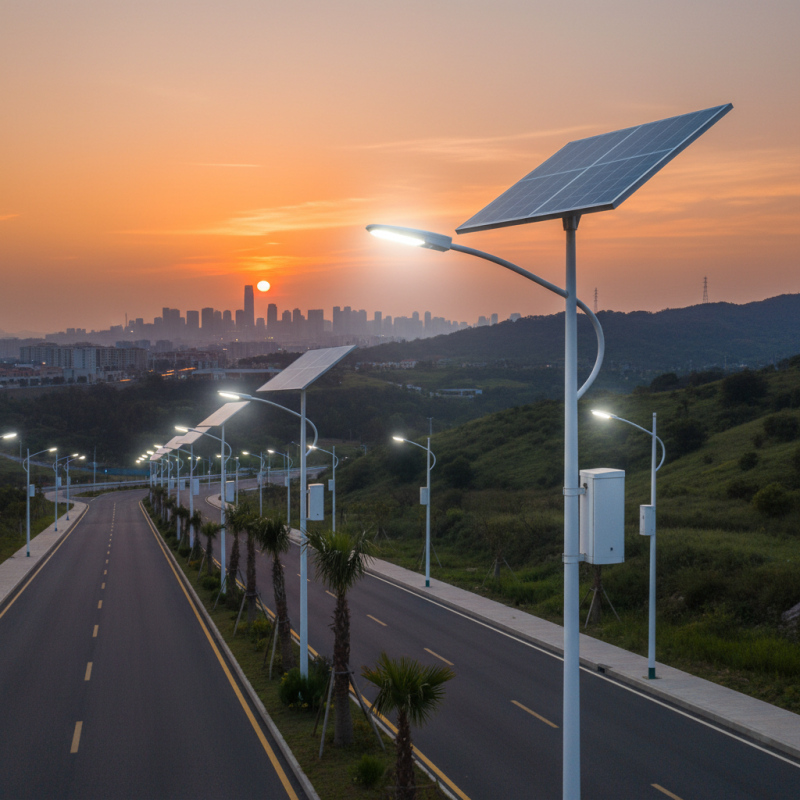
What is a LED Solar Street Light and How Does It Work?
In recent years, the demand for sustainable lighting solutions has surged. A leading option is the led solar street light. This innovative technology harnesses solar energy to provide illumination. Many cities are now adopting this eco-friendly alternative.
The design of the LED solar street light typically features solar panels, batteries, and LED bulbs. Solar panels capture sunlight during the day, storing energy in batteries. As darkness falls, the LED bulbs illuminate streets efficiently. This system not only reduces carbon footprints but also cuts down on energy costs.
Despite its advantages, challenges still exist. Installation can be costly, leading to budget concerns. Additionally, weather conditions can affect performance. These factors warrant careful consideration for municipalities. Striking a balance between cost and sustainability is essential for making informed decisions.
What is a LED Solar Street Light?
LED solar street lights are innovative lighting solutions that harness solar energy. These lights have solar panels that absorb sunlight during the day. This energy is stored in batteries. At night, the stored energy powers the LED lights, illuminating streets and pathways.
One of the main benefits of LED solar street lights is their energy efficiency. LEDs consume less power than traditional bulbs. They also have a longer lifespan, reducing the need for frequent replacements. Moreover, these lights are environmentally friendly. They minimize carbon emissions and rely on renewable energy.
However, there are challenges. The performance of solar lights can decrease in areas with limited sunlight. Additionally, battery life can be affected by extreme weather conditions.
LED solar street lights offer many advantages. Yet, proper installation and maintenance are crucial. Regular checks can ensure they function optimally. Understanding the pros and cons helps communities make informed decisions. This technology shows promise, but there is always room for improvement. Exploring user experiences can reveal insights into effective solutions.
Components of a LED Solar Street Light
LED solar street lights are innovative solutions that harness solar energy for street lighting. The design combines several key components, each playing a crucial role in the system's functionality. Understanding these components is essential for appreciating how these lights work in various outdoor settings.
The solar panel is a critical element, converting sunlight into electricity. Typically mounted on top, it absorbs sunlight during the day. A battery stores this energy for nighttime use. The battery’s capacity affects how long the lights can run after sunset. Often, these batteries require occasional maintenance, which can be overlooked in some installations.
Another essential component is the LED light fixture, known for its energy efficiency and long lifespan. LEDs emit bright light while consuming less power than traditional bulbs. However, poor fixture placement can lead to uneven lighting. The integrated controller manages power distribution, ensuring optimal performance. Sometimes, errors in programming can lead to inconsistent operation. Despite these challenges, the combination of these components reflects a growing trend toward sustainable outdoor lighting solutions.
How Does a LED Solar Street Light Operate?
LED solar street lights operate by leveraging renewable solar energy for their functionality. These lights incorporate photovoltaic panels that capture sunlight during the day. The stored energy powers the LED light at night, ensuring consistent illumination. According to industry reports, street lights can reduce energy costs by up to 75% when compared to traditional street lighting solutions.
The efficiency of LED solar street lights is impressive, with more than 90% of their electricity converted into light. This efficiency is crucial for areas that lack grid power. As a result, these lights enhance safety and visibility while minimizing environmental impact. However, local environmental conditions can affect solar panel performance. Regions with limited sunshine may see reduced efficiency, highlighting a consideration for deployment strategies.
Furthermore, battery technology plays a vital role in the operation of LED solar street lights. Lithium-ion batteries are increasingly favored for their longevity and reliability. Improvements in battery technology have extended operational lifespans, yet issues such as battery degradation over time need careful evaluation. Overall, the integration of solar and LED technologies presents new challenges, emphasizing the need for continuous innovation in design and application.
Benefits of Using LED Solar Street Lights
LED solar street lights provide a sustainable solution for urban illumination. By capturing sunlight during the day, these lights store energy in built-in batteries. At night, they use this energy to illuminate streets efficiently. According to the Global Solar Street Lighting Market Report 2023, the adoption of solar street lights can reduce energy costs by up to 75%. Such savings make a compelling case for municipalities and urban planners.
Additionally, LED solar street lights offer enhanced safety. They ensure better visibility in streets, which can lower crime rates. A study from the International Council on Local Environmental Initiatives found that well-lit areas experience a 25% decrease in crime. More light means more safety for pedestrians and cyclists. Cities aiming for smarter, safer environments should consider these data points.
However, there are challenges. Initial installation costs can be high. Moreover, inconsistent sunlight in certain regions may affect performance. Addressing these issues requires careful planning and consideration. Urban areas with frequent cloudy weather might not see as much benefit. Balancing these factors is crucial for successful implementation.
Common Applications and Installations of LED Solar Street Lights
LED solar street lights are increasingly popular for various applications. They are used in parks, residential areas, and commercial spaces. Installation is straightforward and often requires minimal groundwork. These lights operate efficiently by harnessing solar energy, which makes them particularly suitable for remote locations.
One common challenge is ensuring the solar panels receive enough sunlight. In areas with trees or buildings, shadows can reduce efficiency. Appropriate positioning is essential for maximizing performance. Another consideration is battery life. In regions with prolonged cloudy days, additional energy storage may be necessary. Users often face these practical hurdles, which require careful planning and adjustments.
Local governments and communities are adopting these lights more frequently. They provide a sustainable lighting solution that reduces energy costs. However, not all setups have been perfect. Some installations have encountered issues with durability in harsh weather. Ongoing maintenance is crucial to keep these systems functional.