
Connect with us today to learn more about our industrial automation solutions—and how to commission them for your application.
Why Is a Cold Room Essential for Flower Storage?
In the flower industry, maintaining quality during storage is crucial. A Cold Room For Flower Storage is not just beneficial; it is essential. Studies show that reducing storage temperatures can significantly extend the vase life of flowers. For instance, a temperature drop from 20°C to 0°C can increase the longevity of some blooms by up to 50%.
Temperature control slows down the respiration rate of flowers. This helps in preserving their freshness and vibrant colors. Flowers are sensitive to environmental changes. Without proper cold storage, they can wilt and decay quickly. The right conditions in a cold room help mitigate these risks.
However, maintaining these cold environments isn’t simple. Power outages or equipment failures can lead to catastrophic losses. Proper monitoring systems and regular maintenance are vital. These practices ensure that the cold room operates effectively. Flower growers and distributors must prioritize quality storage solutions to enhance their bottom line. Investing in a cold room for flower storage is not just a choice; it’s a necessity for success in the floral trade.
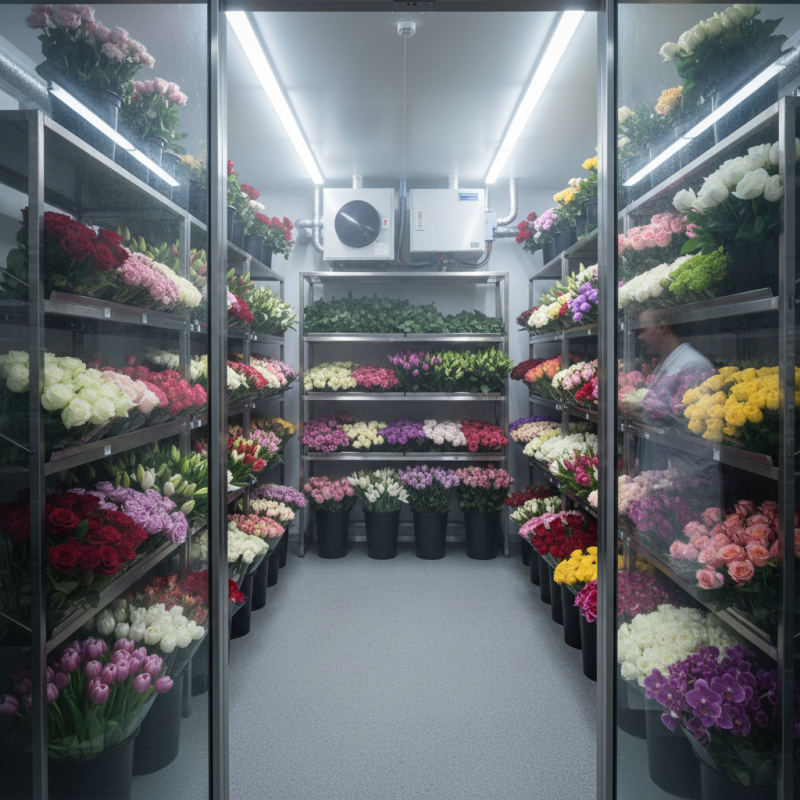
The Importance of Temperature Control in Flower Storage
Temperature control plays a vital role in flower storage. Flowers are living organisms that continue to respond to their environment even after being cut. A cold room helps slow down their metabolism. This preserves freshness and extends their lifespan. The ideal temperature for storing most flowers lies between 33°F and 38°F (around 1°C to 3°C). Deviating from this range can cause wilting or premature decay.
Humidity also matters. It should be controlled alongside temperature. High humidity can lead to mold growth, while low humidity can cause flowers to dry out. A balanced environment boosts the quality and longevity of the blooms. Unfortunately, many individuals overlook these factors. Improper storage may lead to a loss of vibrancy and beauty.
Creating the perfect cold room requires careful planning. It’s not just about refrigeration; it’s about the entire atmosphere. Regular checks on temperature and humidity levels should be a routine. Even minor fluctuations can have significant impacts. Remember, a flower’s delicate nature demands respect and attention to detail. This understanding aids in better flower care.
Optimal Cold Room Conditions for Extending Flower Longevity
Keeping flowers fresh requires careful consideration of storage conditions. Optimal cold room settings play a significant role in extending flower longevity. The ideal temperature for flower storage generally falls between 34°F and 38°F. This range helps maintain cellular integrity, slowing down the aging process. Too cold, and flowers can suffer from cold damage; too warm, and they wilt quickly.
Humidity levels are equally important. A relative humidity of 90% to 95% keeps flowers hydrated without fostering mold. Flowers such as roses and tulips thrive under these conditions. Investing in equipment that maintains stable humidity is often worthwhile.
**Tips:** Use a hygrometer to gauge humidity levels accurately. Regularly check temperature settings to ensure optimal conditions are maintained. Don't forget to inspect flowers for signs of decay. Some can spoil quickly, affecting others nearby. Keeping flowers in the right cold room can be the difference between vibrant blooms and wilted petals.
Why Is a Cold Room Essential for Flower Storage? - Optimal Cold Room Conditions for Extending Flower Longevity
| Flower Type | Optimal Temperature (°C) | Humidity Level (%) | Ideal Storage Duration (Days) | Recommended Practices |
|---|---|---|---|---|
| Roses | 1 - 4 | 90 - 95 | 7 - 14 | Keep stems in water; avoid ethylene exposure |
| Tulips | 0 - 2 | 85 - 90 | 10 - 14 | Store upright and ensure high humidity |
| Lilies | 2 - 5 | 70 - 80 | 5 - 12 | Remove pollen to prolong vase life |
| Carnations | 0 - 2 | 90 - 95 | 7 - 10 | Keep in water; avoid temperature fluctuations |
Industry Standards for Cold Storage Temperatures in Floral Preservation
Proper temperature control is crucial for flower storage. The industry standard for cold storage temperatures typically ranges from 34°F to 36°F (1°C to 2°C). Maintaining these temperatures slows down respiration and decay, significantly prolonging floral life. Research shows that flowers stored in cooler conditions can last up to 50% longer than those at room temperature.
Humidity also plays an essential role in floral preservation. An ideal relative humidity level is between 85% and 90%. This level helps prevent wilting and dehydration. However, excessive humidity can lead to mold growth, impacting flower quality. Balancing these factors can be challenging.
Failing to adhere to these standards can compromise flower freshness. Inadequate cooling may result in a steep decline in flower quality within days, affecting their market value. According to industry studies, up to 30% of flowers are wasted each year due to poor storage practices. This statistic highlights the importance of proper cold storage and its direct impact on the floral industry.
Impact of Humidity Levels on Flower Quality in Cold Environments
When storing flowers, humidity plays a crucial role in maintaining their freshness and aesthetic quality. In cold environments, an ideal humidity level can dramatically extend the lifespan of blooms. High humidity prevents dehydration, keeping petals plump and vibrant. Flowers thrive when moisture is balanced, allowing them to absorb nutrients efficiently. A well-maintained cold room can help achieve this balance, creating an optimal microclimate for various floral species.
However, excessive humidity can lead to problems. It may promote mold growth and decay, ultimately harming the flowers. Finding that sweet spot between too dry and too moist is essential. Florists and growers must regularly monitor humidity levels to prevent any negative impact on the flowers' quality. In practice, they often experiment with different settings to determine what works best for specific types of flowers.
Cold storage conditions can vary widely, and not all environments will yield the same results. Some flowers might need slightly different humidity levels to stay healthy. Observing how flowers react to these conditions can lead to better storage practices. This trial-and-error approach can bring knowledge to the forefront, underscoring the importance of adapting techniques based on observation and experience. Each batch of flowers may present unique challenges, prompting continuous learning and adjustments.
Impact of Humidity Levels on Flower Quality in Cold Environments
Storage Duration and Quality Retention: Cold Room vs. Ambient Conditions
Cold rooms play a crucial role in flower storage. They help maintain optimal temperatures. Proper temperature control significantly extends storage duration. Flowers stored in cold rooms stay fresh longer than those kept in ambient conditions. This difference can influence market quality and customer satisfaction.
In ambient conditions, flowers often wilt quickly. The natural aging process is accelerated without cooler temperatures. Ambient air can cause dehydration. Cold storage helps combat this by reducing respiration rates. As a result, the flowers retain their beauty and fragrance for an extended period. It’s essential to understand the science behind this preservation method.
However, not all cold storage methods are perfect. Variations in humidity and temperature can affect flower quality. It’s important to monitor these conditions closely. Flowers that are handled poorly or stored incorrectly can still lose their charm. Relying solely on cold storage isn’t enough. Continuous evaluation of conditions ensures the best outcomes for flower storage.