
Connect with us today to learn more about our industrial automation solutions—and how to commission them for your application.
How to Choose a Vertical Cartoning Machine?
Choosing a Vertical Cartoning Machine is not just a matter of matching a quoted speed to your production target. The right choice depends on the product, carton design, available floor space, and how reliably the machine can handle normal variations. A small bottle, a sachet, and a tray may each need different feeding, loading, and closing arrangements. Small details matter.
Start by describing the real job. Note product dimensions, carton size, packaging material, required output, and planned shifts. Ask suppliers how they verify performance with your actual product and cartons, not only with a sample setup. A machine that runs smoothly during a short demonstration may behave differently during a full shift. That deserves a closer look.
This guide outlines the practical factors to compare, including loading method, changeover time, controls, safety features, and integration with upstream and downstream equipment. It also explains what to check in service support, spare-parts access, and operator training. Request clear information about tested speeds, operating limits, and routine maintenance. Do not assume every specification will translate directly to your line.
A careful evaluation should include a site review and, where possible, a product trial. Watch how cartons are fed, opened, loaded, and closed. Consider cleaning access and the time needed to change formats. The cheapest option may not be the simplest to run, while a highly automated model can be more than a modest line needs. There is no universal best machine. A sound decision comes from matching documented requirements with observed performance—and acknowledging what remains uncertain.
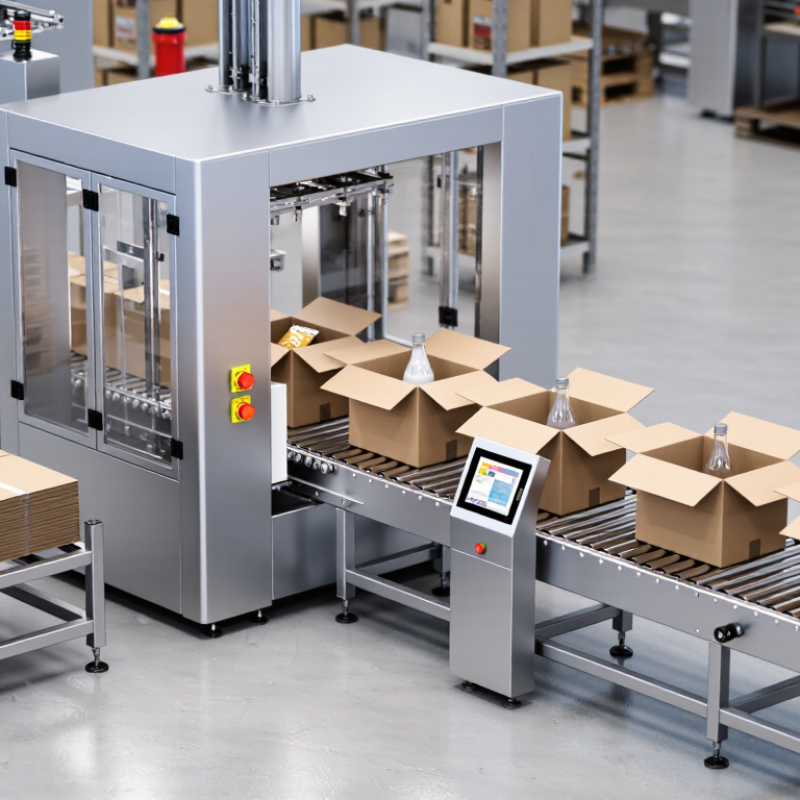
Define the Product and Carton Requirements
A vertical cartoning machine should be selected around the product and carton, not a headline speed. Record each product’s dimensions, weight, orientation, and permitted variation. Include the awkward cases: a flexible pouch that bulges, a bottle cap that shifts, or a tray with a fragile rim. Measure actual production samples, not just drawings. A small tolerance can affect feeding and carton closure.
Specify carton style, board thickness, crease quality, coating, and closure method. Then test cartons from different production lots. Smithers’ The Future of Folding Cartons to 2028 forecasts the global folding-carton market will reach about $205 billion by 2028, reflecting the format’s broad use. PMMI’s 2024 State of the Industry report estimates U.S. packaging machinery shipments reached $10.9 billion in 2023, up 5.8% year over year. These figures show a substantial, evolving sector; they do not determine the right machine for your line. Ask suppliers to run representative products and cartons, including the least consistent samples. Check changeover access, jam clearance, and whether cartons open cleanly without crushed corners. A detail is easy to miss. Teams sometimes prioritize maximum speed before confirming carton fit. That can be an expensive assumption.
Estimate Production Capacity and Required Automation
How to Choose a Vertical Cartoning Machine?
Estimate Production Capacity and Required Automation
Begin with the number of cartons your operation must produce, not the machine’s advertised top speed. If a shift needs 12,000 cartons and has seven productive hours, the average requirement is about 29 cartons per minute. Add realistic allowance for breaks, changeovers, cleaning, and minor stoppages. Peak days matter. Check that upstream equipment can keep pace, too; a fast cartoner cannot fix a slow product feeder.
Then decide which tasks need automation. Consider carton erection, product loading, leaflet insertion, coding, and carton closing. A small team may benefit from automatic feeding, while simpler operations may prefer manual loading and fewer adjustments. Count operator interventions during changeovers, not just during steady running. A machine that meets the target but needs constant attention may reduce actual output.
Test the real product. Provide sample cartons and products, including variations in size or stiffness. Request a sustained production run, and record jams, rejects, and operator interventions. A brief speed demonstration is not enough. Forecasts are imperfect, and my first estimate may miss seasonal peaks or awkward packaging. Revisit the numbers after trials, then choose capacity based on measured performance rather than a hopeful target.
Compare Carton Feeding, Forming, Loading, and Closing Options
How to Choose a Vertical Cartoning Machine?
Compare Carton Feeding, Forming, Loading, and Closing Options
A vertical cartoner’s real fit depends on how each station handles your product and carton. Start with feeding: a magazine feeder suits orderly, flat blanks, while inconsistent blanks can cause misfeeds and downtime. Check how quickly operators can refill it. Small detail.
For forming, inspect the carton opening and squareness at your actual speed. A carton that springs closed may slow loading, even when the machine runs well with samples.
PMMI’s 2023 State of the Industry report estimated North American packaging machinery shipments at about $10.9 billion in 2022. That figure signals a substantial equipment market, but it does not tell you which configuration suits your line.
Loading options should match product shape, fragility, and orientation. Hand loading may work for varied products; automated pick-and-place can improve consistency, but needs reliable product presentation. Test real products, including awkward sizes.
Closing is another trade-off: tuck-in flaps avoid adhesive, while glue can secure cartons that resist staying shut. Yet glue temperature, application, and compression need control. Ask suppliers to demonstrate changeovers across your common carton sizes, not just the easiest one.
Record jams, damaged cartons, and time needed to clear faults. I would not choose from rated speed alone; it can hide frequent stops.
One missed point: operators may value easy access more than a slightly faster cycle. Include them in the trial.
Evaluate Changeover, Controls, Safety, and Factory-Space Needs
How to Choose a Vertical Cartoning Machine?
Changeover speed matters when carton sizes or products vary across a shift. Ask operators to demonstrate a full changeover using your actual cartons, inserts, and product dimensions. Watch for tool-free adjustments, clearly marked settings, and recipes that reduce manual entry. Then record the time and note every adjustment. A short demonstration can hide awkward steps. Deloitte and the Manufacturing Institute’s 2024 study estimated that 1.9 million U.S. manufacturing jobs could go unfilled by 2033. That labor outlook makes simple, repeatable changeovers especially valuable.
Controls should show faults in plain language and let trained staff adjust settings without navigating confusing menus. For safety, inspect guard interlocks, emergency-stop access, and safe procedures for clearing jams. Ask how operators isolate energy before maintenance, and have qualified personnel verify the machine’s safeguards. Small details matter. Factory space needs more than the machine’s footprint: include carton storage, operator access, electrical panels, and room to remove parts. Tape the proposed layout on the floor and walk through a changeover and routine cleaning. Measure twice. I would still test the layout with real carts and people; a neat drawing can miss a blocked aisle or a door that cannot open fully.
| Evaluation Area | What to Assess | Practical Planning Guide | Evidence to Request or Verify |
|---|---|---|---|
| Product and carton compatibility | Product dimensions, carton style, tuck or glue closure, leaflet requirements, and product orientation. | Confirm the machine’s specified minimum and maximum carton dimensions and product range. Allow for carton-board variation and product tolerances. | Written format range, carton drawings, product samples, and a trial using the actual product and packaging materials. |
| Required output | Target good cartons per minute, operating shifts, and expected time lost to replenishment, cleaning, and changeovers. | Compare the required sustained output with the rated speed. Rated speed is not the same as overall line output; confirm performance using the intended pack and production conditions. | Factory acceptance test results, agreed speed and reject criteria, and a production-rate test with representative materials. |
| Changeover time | Number of carton sizes and product formats, adjustment points, tooling changes, and changeover frequency. | Set a site-specific changeover target. Ask which parts require tools, which adjustments are recipe-driven, and whether changeover time includes verification and restart. | Timed changeover demonstration between two of your formats, change-part list, adjustment instructions, and spare-part pricing. |
| Controls and recipes | Operator interface, format storage, alarms, access levels, production data, and communication with upstream or downstream equipment. | Check that operators can select validated format settings and that alarms clearly identify the affected station. Define required network and data interfaces before purchase. | Controls specification, sample alarm list, recipe-management demonstration, electrical drawings, and interface protocol details. |
| Safety and access | Fixed guards, access doors, interlocks, emergency stops, safe jam-clearing, and isolation for maintenance. | Review the machine’s risk assessment against applicable local requirements. Confirm that access for cleaning and fault recovery does not require bypassing safeguards. | Risk assessment, safety-device list, safety-circuit documentation, operating instructions, and a site safety review. |
| Factory-space needs | Machine footprint, operator position, material-loading points, service access, guarding, and line connections. | Use the supplier’s general arrangement drawing rather than the base footprint alone. Include space for access, maintenance, utilities, and connected conveyors. | Dimensioned layout, door and aisle clearances, maintenance-access requirements, and a site layout review before installation. |
| Utilities and installation | Electrical supply, compressed air, extraction if applicable, floor conditions, and connection points. | Compare the machine’s stated utility requirements with available site capacity. Confirm voltage, air pressure and consumption, and installation responsibilities. | Utility schedule, foundation or floor-loading information, installation plan, and commissioning checklist. |
| Reliability and support | Routine maintenance tasks, wear parts, fault recovery, training, and access to technical support. | Review maintenance intervals and identify critical parts to stock on site. Clarify response arrangements and the scope of operator and maintenance training. | Maintenance schedule, recommended spare-parts list, training plan, warranty terms, and service escalation process. |
| Acceptance criteria | Product quality, carton integrity, coding or leaflet checks, rejects, and sustained production performance. | Agree measurable acceptance criteria before ordering, including test duration, sample formats, material conditions, and how downtime and rejects are recorded. | Signed factory and site acceptance test protocols with documented results and corrective-action responsibilities. |
| Planning note: Performance, changeover time, utilities, and clearances depend on the machine design, carton format, product, and site conditions. Treat supplier figures as application-specific and verify them with trials and a site review. | |||
Assess Total Cost, Supplier Support, and Machine Validation
A vertical cartoning machine should be judged by more than its purchase price. Estimate the full cost over several years, including tooling, change parts, operator training, planned maintenance, utilities, and downtime. Ask how often carton formats are expected to change. A size difference that looks minor on paper may require new guides or longer changeovers. Small details matter.
Before purchasing, clarify supplier response times, spare-parts availability, and who handles installation and operator training. Request sample service records and a list of critical wear parts. If production runs overnight, a delayed response can turn a small fault into a costly shift interruption. Support promises sound reassuring, but verify what is included in writing. That takes time.
Validate the machine using your actual cartons, product dimensions, and intended production speed. Run repeated trials and record carton erection, product insertion, closure quality, reject rates, and stoppages. Include less-than-perfect conditions, such as slightly warped cartons or a full hopper after a brief pause. Results from ideal samples may not reflect daily production. Some settings may need adjustment after commissioning, so avoid treating a successful first run as complete proof. Documented results give the team a clearer basis for acceptance and future troubleshooting.
How to Choose a Vertical Cartoning Machine?
Assess total cost, supplier support, and machine validation before making a decision.
Example buyer-defined decision weights—not industry benchmarks. Total cost of ownership includes purchase, installation, operation, maintenance, and changeover costs. Check supplier service coverage and spare-parts availability, and request validation documentation appropriate to your process. Adjust the weights to reflect your project priorities.