
How to Choose the Right Non Telecentric Lens for Your Needs?

Choosing the right Non Telecentric Lens can significantly impact your optical projects. This decision requires careful consideration of various factors. A non telecentric lens offers distinct advantages for specific applications, like photography or industrial inspection.

Understanding the unique specifications of a non telecentric lens is essential. You need to evaluate parameters such as magnification, working distance, and resolution. These factors vary widely among different lens types. The ideal lens should align with your specific requirements while providing reliable performance.

It's important to recognize that not all non telecentric lenses are created equal. Some may excel in certain applications but fall short in others. This means you might need to experiment. Gathering feedback from professionals can help inform your choice. Always prioritize quality and precision in your selection process.
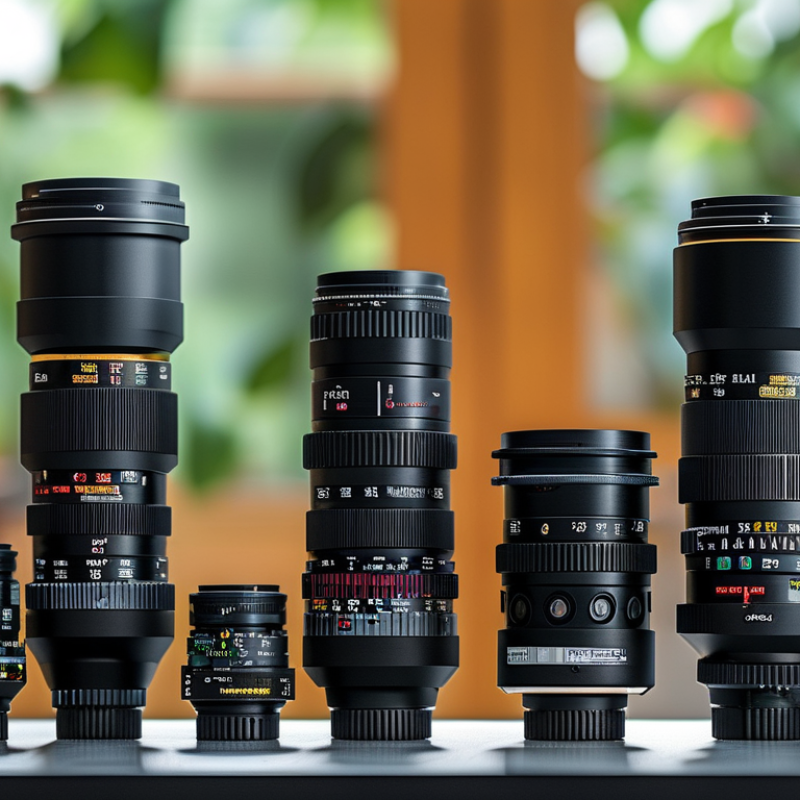
How to Choose the Right Non Telecentric Lens for Your Needs?

Understanding Non-Telecentric Lenses and Their Applications

Non-Telecentric Lenses are essential tools in various fields, including machine vision and microscopy. Unlike telecentric lenses, which maintain a constant magnification, non-telecentric lenses can provide greater flexibility in imaging. They excel in situations where space is limited, or when working with complex geometries. Their ability to capture light from various angles allows for a broader range of applications.

In applications like 3D scanning, non-telecentric lenses can introduce distortion. This might lead to inaccuracies in measurements. It's crucial to understand the trade-offs when selecting these lenses. Sometimes, a small distortion is acceptable depending on the task at hand. In high-speed manufacturing, for instance, non-telecentric lenses offer speed advantages. Yet, one must ensure that the performance aligns with the project's specific needs.

When choosing a non-telecentric lens, consider factors like the working distance and the sensor size. Each application has unique requirements. Exploring these details helps in making an informed decision. A wrong choice can affect the outcome. Reflecting on previous experiences with non-telecentric lenses can help improve future selections. Understanding their limitations enhances their effective use in your projects.

Evaluating Key Specifications for Non-Telecentric Lenses

When selecting a non-telecentric lens, understanding key specifications is crucial. The focal length determines how much the lens can magnify objects. If your application requires a specific working distance, this is essential. Lenses with shorter focal lengths are more compact. However, they may provide less detail for larger subjects.

Another significant specification is the field of view. This affects how much of the scene is captured. A wider field allows you to see more, but this may also reduce detail. Consider your project requirements to find the right balance. Resolution is also vital; higher resolution can lead to clearer images but may require more sophisticated sensors to match.

Reflection is necessary when evaluating these features. It’s easy to get caught up in technical specs. However, real-world performance can vary. Testing lenses in context will offer insights you can’t glean from numbers alone. Sometimes, what looks perfect on paper may not meet practical needs. Therefore, hands-on experience is invaluable in making a well-informed decision.

Assessing Your Project Requirements and Environmental Factors

When selecting a non-telecentric lens, understanding your project requirements is crucial. The purpose of your application directly influences lens choice. For instance, if precision measurement is essential, a lens with minimal distortion is necessary. According to a recent industry report, 72% of image distortion can impact the accuracy of measurements significantly. This is especially evident in applications like 3D scanning or quality inspection.

Environmental factors also play a critical role. Consider lighting conditions, temperature variations, and dust exposure. In controlled environments, a high-quality lens might suffice. However, in harsher settings, protective features are vital. An environmental analysis from the Optical Society noted that 60% of lens failure originates from unsuitable environmental conditions. Therefore, evaluating these factors ensures longevity and performance.

Reflection is key. Initially, one might overlook surface coatings or numerical apertures. However, these facets can determine image clarity and depth of field. Taking time to assess these details can make a significant difference in overall outcomes. Regularly revisit your choices as technology evolves. What worked previously may not be optimal now.

Comparing Different Non-Telecentric Lens Designs and Options

When considering non-telecentric lens designs, it's essential to compare various options based on your specific requirements. Non-telecentric lenses are widely used in applications like machine vision, robotics, and optical metrology. They enable flexibility in imaging, but compromises may arise in image quality and depth of field.

Different types of non-telecentric lenses exist, each suited for unique tasks. For instance, standard lenses offer a broader field of view but can suffer from significant perspective distortion. In contrast, aspheric lenses minimize aberrations, providing sharper images. Industry reports indicate that aspheric designs can enhance image quality by up to 30%. However, this improvement often comes at higher costs.

Furthermore, careful consideration must be given to the working distance and intended sensor size. A mismatch can lead to significant impact on the system's performance. Light transmission is another critical element. While some designs focus on maximizing light throughput, others might prioritize specific wavelength sensitivity. Balancing these factors is vital. Choosing incorrectly may result in insufficient imaging clarity. Evaluating both technical specifications and real-world performance data is necessary when making an informed decision.

Comparison of Different Non-Telecentric Lens Designs

This chart illustrates the key features score of various non-telecentric lens designs, which helps in understanding their suitability for different applications. The scores are based on aspects such as image quality, field of view, and versatility.

Finding the Right Vendor and Ensuring Product Quality

Choosing the right non-telecentric lens requires more than just understanding specifications. The vendor’s credibility is crucial. A reputable vendor should prioritize quality control and have ISO certifications, ensuring compliance with industry standards. According to industry reports, 67% of lens performance issues stem from inadequate vendor practices. Seeking a vendor that values transparency can mitigate risks associated with purchasing faulty products.

Tips: Look for vendors with comprehensive product warranties. This can indicate their confidence in product quality. Investigate their customer service responsiveness. A knowledgeable team demonstrates reliability.

Assessing reviews from previous customers can provide insight into a vendor's reputation. A survey revealed that 58% of professionals base their purchases on peer feedback. While having advanced technology is important, it is equally vital to consider the vendor’s experience in the field. Engaging with vendors who have a solid track record can enhance your purchasing confidence.

Tips: Request sample lenses to test performance before committing. This hands-on approach can reveal practical insights. Ensure that your chosen lens meets specific application requirements for optimal results.

How to Choose the Right Non Telecentric Lens for Your Needs?

Parameter Description Importance Recommended Specifications
Focal Length The distance from the lens to the sensor when the subject is in focus. Crucial for achieving desired field of view. 35mm - 100mm
Aperture The opening that controls the amount of light entering the lens. Affects depth of field and low-light performance. f/2.8 - f/8
Working Distance The distance between the lens and the object being imaged. Essential for setup in specific applications. 150mm - 300mm
Field of View The extent of the observable world seen at any given moment. Affects the overall imaging system's performance. Diagonal: 50° - 90°
Resolution The ability to distinguish between two closely spaced objects. Critical for high precision applications. > 100 lp/mm
Product Quality Includes build quality, reliability and optical performance. Directly impacts image quality and lifespan. Manufactured under ISO standards.

Learn More

Connect with us today to learn more about our industrial automation solutions—and how to commission them for your application.