Connect with us today to learn more about our industrial automation solutions—and how to commission them for your application.
How to Choose the Best Yogurt Packing Machine?
Choosing the right Yogurt Packing Machine can shape product quality, production speed, and daily operating costs. A suitable machine must handle yogurt’s smooth texture, temperature, viscosity, and packaging format without creating unnecessary waste. It should also protect the product from contamination during filling and sealing.
“Reliable packaging begins with controlled filling, not maximum speed,” says Dr. Richard Coles, a dairy-packaging consultant with experience in automated filling systems. His view reflects an important reality: a fast machine can still be a poor investment if it produces leaking cups, uneven portions, or frequent stoppages.
Look closely at the details.
A practical evaluation starts with your yogurt type and output target. Thick Greek yogurt may need a stronger dosing system than drinkable yogurt. Fruit pieces can require wider product channels and gentler pumps. Cup size, sealing film, cleaning access, and changeover time also deserve attention. These features affect real production days, not just brochure claims.
Operators should inspect the machine in person whenever possible. Watch how the filler behaves after several hours of operation. Check whether yogurt collects around the nozzle. Notice how easily workers remove and clean contact parts. Small design flaws can become expensive routines.
Energy use matters too. So does after-sales support. A machine with a lower purchase price may demand more labor and maintenance later. That is easy to underestimate. No single model suits every dairy business. The best choice usually balances hygiene, accuracy, flexibility, service availability, and future capacity. Even experienced buyers can misjudge demand. A careful trial run can reveal more than a polished specification sheet.
What Is a Yogurt Packing Machine and How Does It Work?
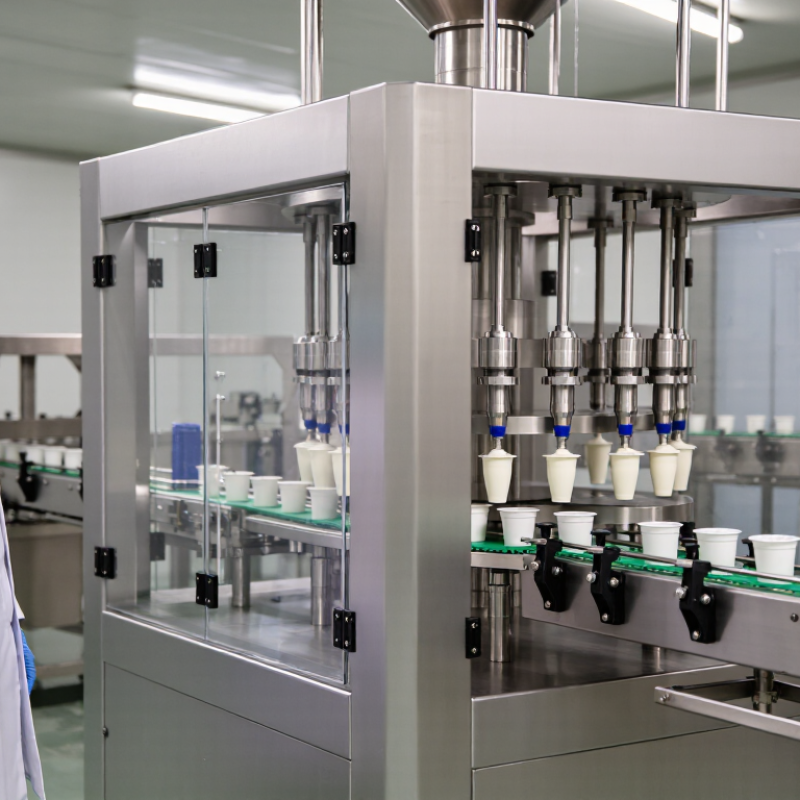
A yogurt packing machine fills, seals, codes, and discharges yogurt cups or larger containers. It usually begins with an automatic cup-feeding station. A dosing system then releases a measured volume of yogurt into each cup. The sealing unit applies foil or film, often using controlled heat and pressure. A conveyor moves finished cups toward inspection and carton packing.
Some machines use piston fillers for thick yogurt. Others use flow meters for smoother products. Accuracy matters because a small overfill becomes costly at high output. Grand View Research estimated the global yogurt market at about USD 141 billion in 2023, showing why stable, hygienic packing systems matter. The figure varies between reports, though. Market definitions are not always consistent.
Choosing a machine requires more than checking its speed. Review the product viscosity, cup diameter, filling range, sealing material, and cleaning method. PMMI industry reports identify labor availability and automation as important packaging investment drivers. A practical line may include automatic cup detection, fill-level checks, seal inspection, and date coding. Ask for a real product trial. It can reveal splashing, uneven seals, or difficult cleaning points. No machine is perfect.
A useful comparison includes output per minute, changeover time, compressed-air use, and product loss. Stainless-steel contact parts should support thorough sanitation. Operators also need clear controls and safe access. Cheap equipment may appear efficient, but long changeovers can quietly reduce daily production.
Which Yogurt Packaging Format Best Fits Your Product?
Choosing the best yogurt packing machine starts with the packaging format, not the machine itself. Cups suit spoonable yogurt, layered products, and multi-flavor retail packs. Bottles work better for drinkable yogurt and frequent on-the-go use. Pouches reduce material use, but they demand accurate filling and strong seal control. Small errors become visible quickly.
Market data supports this format-led approach. Mordor Intelligence estimates the global yogurt market will grow from about USD 123.9 billion in 2025 to USD 156.8 billion by 2030. Meanwhile, Future Market Insights projects the yogurt packaging market to expand at roughly 5.8% annually through 2033. These figures suggest rising demand, but they do not identify one universal package. Product texture, serving size, shelf life, and retail channel still decide the correct solution.
For thick yogurt, a cup filler with servo-driven dosing can improve portion consistency. Liquid yogurt may need a bottle line with gentler product handling. High-speed machines often reach 100 to 600 packs per minute, depending on format and sealing method. PMMI reports that automation and flexible production remain major packaging investment priorities. I would test viscosity at chilled and warm conditions before choosing equipment. That step is easy to skip. It should not be. A cheaper machine may appear efficient, yet frequent seal failures, difficult cleaning, or format changes can erase the savings. The best choice is the format that your product can fill, seal, store, and sell reliably.
How to Choose the Best Yogurt Packing Machine?
Which yogurt packaging format best fits your product?
The chart compares representative commercial fill sizes commonly used for yogurt packaging. Cups are suitable for single-serve products, pouches support convenient portable formats, bottles work well for drinkable yogurt, and tubs are preferred for family-size products. Select a packing machine according to the required fill volume, product viscosity, sealing method, production speed, and packaging material.
How to Compare Filling Accuracy, Speed, and Machine Capacity
How to Choose the Best Yogurt Packing Machine?
Filling accuracy should be measured before production speed. Yogurt viscosity changes with temperature, culture, and fruit content. These factors can affect every portion. During equipment trials, I recommend testing at the actual product temperature and target cup size. Check at least 30 consecutive cups, then compare their weights. A small average error may still hide occasional overfills. That can increase product costs and create uneven shelf presentation. Servo-controlled filling systems often provide better adjustment, but operators still need clear calibration procedures.
Speed must match the complete production line, not only the filler. Consider cup loading, sealing, coding, and discharge time. A machine rated for 120 cups per minute may run slower with thick yogurt or frequent size changes. Capacity also includes the hopper, conveyor, and cleaning access. A large hopper sounds useful, but it may increase product waste during changeovers. Measure usable capacity, not the advertised volume. Plan for future demand, while avoiding equipment that remains half-empty every day.
Tips: Ask for a live filling test. Record speed, weight variation, changeover time, and cleaning duration. Inspect several samples, not one perfect cup. Leave some capacity for growth, but question every extra feature. A cheaper machine may cost more through waste, downtime, or difficult maintenance. Review the results with production and quality teams before choosing.
What Materials and Sealing Features Should You Evaluate?
Choosing a yogurt packing machine starts with the cup and lid, not the speed setting. Polypropylene cups tolerate hot filling, chilled storage, and impact during transport. High-density polyethylene offers toughness, but it may provide less stiffness for thin-wall designs. For the lid, use a structure matched to the cup: aluminum foil with a heat-seal coating gives strong light and oxygen protection, while PET-based laminates can improve print stability. Smithers’ 2024 flexible packaging report places global flexible packaging demand above 30 million tonnes annually, showing the scale of material choices. However, large-volume data does not replace plant trials.
Sealing performance deserves closer attention. Ask suppliers to document sealing temperature, pressure, dwell time, peel force, and leak-test results. A clean flange matters. Tiny yogurt droplets can create channels under the lid. The machine should control film tension and temperature across every sealing head. ASTM F1929 and ASTM F2096 provide useful methods for detecting leaks in flexible packages. The seal should open smoothly, without tearing the foil or leaving sharp edges. I would not trust a perfect laboratory seal alone; cold-chain vibration may expose weaknesses.
Tips: Test the actual yogurt recipe, cup resin, lid coating, and storage temperature together. Include overfilled cups and slightly misaligned lids. Review results after 24 and 72 hours. PMMI industry reports repeatedly identify changeover time, sanitation, and labor efficiency as major packaging concerns. Choose tool-less cleaning where possible. Still, faster is not always better. A machine that saves ten seconds may create more rejects. Track seal failures per 10,000 cups before approving the final configuration.
How to Check Hygiene, Automation, Maintenance, and Total Cost?
How to Choose the Best Yogurt Packing Machine?
Hygiene should be checked before production speed. Inspect food-contact surfaces, welds, seals, and corners closely. They should be smooth, accessible, and easy to clean. A practical test involves removing covers and checking for trapped yogurt behind them. The machine should support validated cleaning procedures and clear drainage. Ask for material certificates and documented sanitation instructions. Do not rely only on attractive stainless-steel panels.
Automation affects consistency, labor, and product waste. Check whether filling volume, lid placement, and sealing pressure can be adjusted precisely. Sensors should detect missing cups and stop faulty cycles. A clear control panel helps operators respond quickly. Data recording can reveal repeated underfilling or temperature changes. However, excessive automation may confuse an inexperienced team. Run a real yogurt trial, not only an empty-machine demonstration.
Maintenance determines the machine’s useful life. Examine access to pumps, valves, heaters, and sealing tools. Tool-free parts are helpful, but they can also feel less secure if poorly designed. Request a maintenance schedule, spare-part list, and response process. Calculate total cost using energy, cleaning chemicals, labor, waste, repairs, and downtime. The cheapest purchase price may hide expensive interruptions. Leave room for uncertainty; actual costs often change after installation.