
How to Choose Grinding Steel Balls in 2026?

Choosing a Grinding Steel Ball in 2026 is not a matter of picking the hardest option on a supplier’s chart. The right choice depends on ore abrasiveness, mill speed, impact energy, feed size, and the operating cost of downtime. A ball that lasts longer in one mill may perform poorly in another. Details matter.

A practical selection principle is: “Judge grinding media by measured performance in your own mill, not by hardness alone.” No source article or verifiable expert quotation was provided, so this is an editorial principle, not a quote attributed to a named person. For a publishable expert attribution, verify the speaker and wording against a reliable source. That distinction matters.

The guide will compare alloy and manufacturing options, then examine hardness, toughness, wear rate, and breakage risk. It will also show which supplier questions deserve clear answers: What test conditions produced the wear data? How consistent are ball sizes and chemistry between batches? Can the supplier provide traceable quality records? Requesting samples and tracking consumption per tonne can reveal more than a polished brochure. Yet even a controlled trial has limits; ore blends and mill conditions change. Keep records, review the results, and be ready to revise the choice.
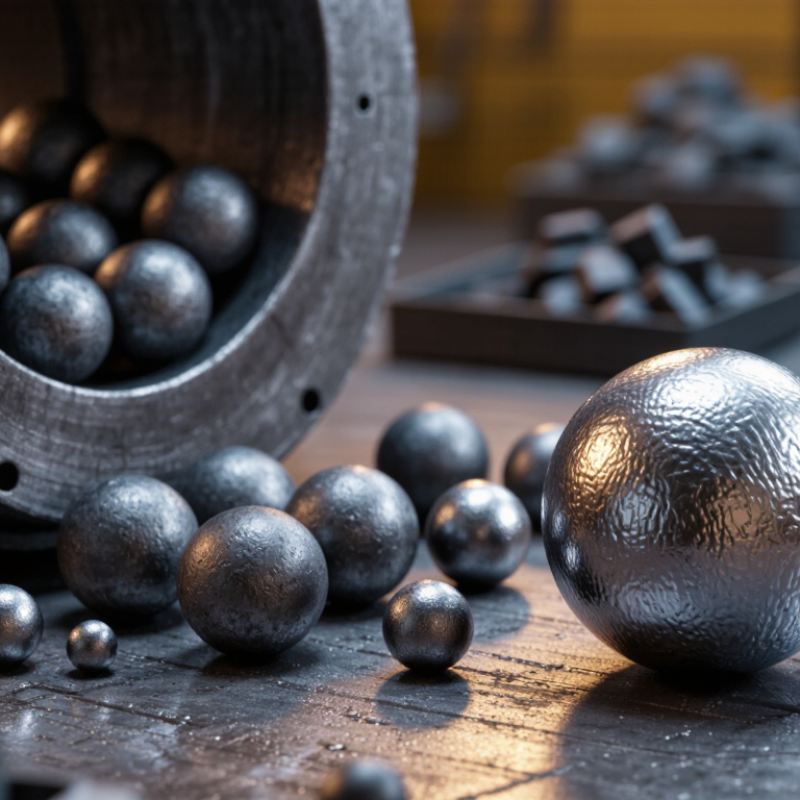
How to Choose Grinding Steel Balls in 2026?

Understanding Grinding Conditions and Performance Requirements

How to Choose Grinding Steel Balls in 2026?
Understanding Grinding Conditions and Performance Requirements

Choose grinding steel balls for the mill’s actual duty, not a single hardness figure. Record mill type, diameter, speed, feed size, ore hardness, and pulp density. These conditions influence whether balls mainly break particles through impact or wear them down through abrasion. Coarse, hard feed may call for larger balls, while finer feed can benefit from smaller balls and more contact points. This is a useful starting point, not a fixed rule. Liner design and ball loading can change the outcome.

Balance wear resistance with toughness. Very hard balls may resist abrasion, but inadequate toughness can lead to cracking or spalling. In wet mills, slurry chemistry and corrosion may also affect wear. Compare ball consumption, product size, power draw, and liner condition across similar operating periods. Change one variable at a time where practical. Plant data is rarely perfect, so record unusual feed changes and maintenance interruptions before drawing conclusions.

Tips: Keep a simple trial log. Note ball size, charge additions, operating hours, and product fineness. Small differences matter. Review the figures with operators before adjusting the charge again.

Comparing Steel Ball Materials and Manufacturing Methods

How to Choose Grinding Steel Balls in 2026?

Choosing grinding balls means comparing material and manufacturing method, not just purchase price. The World Steel Association’s World Steel in Figures 2025 reports 1,882.6 million tonnes of crude steel production in 2024. That figure reflects industry scale, not the quality of finished grinding media. Ball performance still depends on alloy chemistry, heat treatment, and quality control.

Forged balls are shaped under pressure and are commonly selected for high-impact applications, where toughness helps limit breakage.

Cast high-chromium balls can offer strong wear resistance in suitable conditions, but performance varies with ore abrasiveness and mill operation.

Neither method wins in every circuit. A hardness certificate alone is incomplete; request impact and wear-test results, plus details on sampling. For a fair comparison, test balls in the same mill and operating conditions.

Tips: Match the ball to the mill’s impact level and ore chemistry. Check hardness from surface to core, not only at one point. Record wear and breakage during a controlled trial. Real plant conditions can be messy, so treat laboratory results as guidance, not a guarantee.

Selecting Ball Diameter, Hardness, and Wear Resistance

How to Choose Grinding Steel Balls in 2026?

Ball diameter should match the feed size, target grind, and mill conditions. Larger balls deliver stronger impacts on coarse, hard particles; smaller balls provide more contact points for fine grinding. Avoid choosing by mill diameter alone. Record feed size, product size, throughput, and power draw during a controlled trial. The Global Mining Guidelines Group’s 2016 guideline, Determining the Bond Efficiency of Industrial Grinding Circuits, uses circuit survey data and specific energy to assess grinding performance. Compare energy use in kWh per tonne across test conditions, not just tonnes processed. Small test. Clear answer.

Hardness and wear resistance must be balanced. Very hard balls can resist abrasion, yet excessive brittleness risks chipping or breakage, especially with impact-heavy feed. Softer media may wear faster and add iron to the pulp. Ask suppliers for verified hardness measurements, chemistry, and impact-test results, then check those claims against your own ore. ASTM E10 describes the Brinell hardness test; use the same test method when comparing samples. Track ball consumption in grams per tonne, size loss, and mill-liner wear over a representative run. Bond’s 1952 work-index method also helps characterize ore grindability, but it does not prescribe one ideal ball size. I would not trust a single hardness number to settle the choice. Real mill data can disagree with a tidy laboratory result.

Matching Grinding Balls to Mill Type and Ore Characteristics

Choosing grinding steel balls in 2026 starts with mill action, not a catalog number. In a conventional ball mill, the charge lifts and drops, so impact resistance matters alongside wear life. Fine grinding often benefits from smaller balls because they create more contact points. Too small, though, and they may not break coarse particles efficiently. Small details matter.

Ore characteristics change the choice. Hard, angular feed can increase impact and ball breakage, while abrasive minerals may accelerate wear. Softer ore may allow a different balance between ball size and consumption. Feed size, slurry density, and target grind also affect performance. A practical trial beats a guess. Track ball consumption per tonne, mill power, and product size under stable operating conditions, then compare results.

Mill design matters too. A semi-autogenous mill uses balls as supplementary media, and its larger impacts can demand different toughness than a fine-grinding ball mill. Check ball diameter against mill size, liner profile, and operating speed. There is no perfect match on paper; operating data can challenge even a careful estimate. That part is easy to overlook. Avoid changing several variables at once, or the cause of a performance shift may remain unclear.

How to Choose Grinding Steel Balls in 2026? - Matching Grinding Balls to Mill Type and Ore Characteristics

Mill Type or Ore Condition Typical Operating Challenge Suitable Ball Selection to Evaluate Starting Size Guidance Key Selection Considerations What to Monitor in a Plant Trial
SAG mill Large feed particles and high-impact collisions can cause breakage as well as wear. Impact-resistant forged or otherwise impact-tough steel balls are commonly evaluated. Large media are often used; approximately 100–150 mm is a common evaluation range, subject to mill design and feed conditions. Check ball breakage resistance, impact toughness, ball charge, mill speed, and the largest feed size. Ball breakage, ball consumption, mill throughput, power draw, and product size.
Conventional ball mill Grinding relies on repeated impact and abrasion; the required media size changes with feed size and target product size. Forged or cast steel balls can be considered. Compare wear performance and breakage risk under actual operating conditions. Sizes commonly range from about 25–100 mm; the appropriate size depends on feed, mill dimensions, and grinding duty. Use larger balls when stronger impact is needed for coarse feed; smaller balls provide more contact points for finer grinding. Product size distribution, specific energy, media consumption, and changes in mill load.
Fine-grinding duty Small particles require frequent contact, while excessive media size may reduce grinding efficiency. Smaller-diameter media may be tested; high-chromium cast balls are one option in suitable, lower-impact duties. Often below the size used for coarse grinding; determine the range through a controlled trial rather than a fixed rule. Consider media size distribution, required product fineness, liner condition, and whether impact levels suit the ball material. Final grind size, classification performance, media wear rate, and energy use per tonne.
Coarse, hard ore Hard feed can demand strong grinding impacts and may increase media wear or breakage. Evaluate tough steel balls with sufficient diameter and impact resistance; avoid selecting on hardness alone. Start with a size suited to the feed top size and mill design, then adjust based on grinding results. Review ore competency, feed-size distribution, mill speed, and the balance between surface hardness and core toughness. Breakage frequency, media consumption, throughput, and the rate of feed-size reduction.
Highly abrasive, quartz-rich ore Abrasive minerals can accelerate surface wear and shorten media service life. Compare wear-resistant steel-ball options in an operating trial; confirm that the selected balls also meet impact requirements. Size selection should follow the mill duty and feed size; abrasion alone does not determine ball diameter. Assess mineralogy, ore hardness, media hardness, and the actual wear mechanism in the mill. Ball wear rate, media consumption per tonne, ball size distribution, and changes in product size.
Sulfide ore or corrosive process water Corrosion can contribute to media loss alongside mechanical wear, depending on water chemistry and ore minerals. Test candidate media under representative process-water and ore conditions; do not assume mechanical wear data alone will predict performance. Select size according to the grinding duty and evaluate corrosion effects separately from size choice. Check water chemistry, dissolved oxygen, pH, process reagents, and interactions between media and sulfide minerals. Media consumption, corrosion indicators, pulp chemistry, metal contamination, and metallurgical recovery.
Mixed ore hardness or variable feed size Changing feed conditions can make a single ball size or material perform inconsistently. Consider a controlled mix of ball sizes or a revised media grading; validate the mix in the mill. Base the initial size distribution on the expected feed range and current mill performance. Review feed variability, grinding circuit constraints, ball addition practice, and the rate at which worn balls leave the mill. Throughput stability, product size, mill power, ball-size distribution, and consumption across operating periods.

Selection note: Ball-size ranges and material choices are starting points, not universal specifications. Confirm them using mill dimensions, feed and product size data, ore mineralogy, process-water conditions, and a controlled plant trial.

Evaluating Quality Standards, Cost, and Supplier Reliability

How to Choose Grinding Steel Balls in 2026?

Choosing grinding steel balls means balancing verified quality, lifecycle cost, and supplier reliability—not just price per tonne. The USGS Mineral Commodity Summaries 2025 estimated global copper mine production at about 23 million metric tons in 2024. That scale highlights how wear, downtime, and inconsistent replenishment can affect operating costs. Mill conditions vary, though. One hardness target will not suit every operation.

Request mill certificates showing chemical composition, hardness, and batch traceability. Check hardness at several points, including the surface and core, and ask how impact toughness and dimensional consistency are tested. An independent laboratory can verify representative samples. Compare wear rate, breakage, and energy use per tonne during a controlled trial. Also review production capacity, lead times, packaging, and the supplier’s process for handling quality complaints. A low quote may prove costly when deliveries are late or batches vary. Small details matter.

Tips: Define acceptance limits before ordering. Keep trial records, including ball size, feed conditions, and replacement frequency. Results are imperfect, but they make supplier comparisons more useful.

How to Choose Grinding Steel Balls in 2026?

Reference nominal diameters converted from inches to millimeters (1 inch = exactly 25.4 mm).

Use mill size, feed size, ore characteristics, and target grind to determine the appropriate ball diameter. These values are unit conversions, not product specifications or a recommendation for a particular mill.

Learn More

Connect with us today to learn more about our industrial automation solutions—and how to commission them for your application.