
Connect with us today to learn more about our industrial automation solutions—and how to commission them for your application.
Why Choose a 90° Long Radius Elbow?
A 90° Long Radius Elbow changes a pipeline’s direction through a gradual curve rather than a tight turn. That geometry can help reduce flow disturbance and pressure loss compared with a short-radius elbow, although actual performance depends on flow rate, fluid properties, surface condition, and the full piping layout. The difference matters in practice. A pump may sound steady while a poorly considered fitting quietly adds resistance.
Two established references help frame the choice. ASME B16.9 specifies dimensions and tolerances for factory-made wrought butt-welding fittings, while Crane Technical Paper No. 410 provides engineering methods and fitting-loss data for fluid-flow calculations. These references support a more reliable comparison than choosing by appearance alone. They do not promise one pressure-drop value for every installation; engineers must assess the operating conditions and verify the applicable design requirements.
For many process and utility lines, the longer curve offers a useful balance of flow behavior, space, and maintainability. But it is not automatically the right choice. Tight equipment layouts, support locations, material selection, and inspection access can change the decision. A named expert quotation cannot be responsibly attributed without a verifiable source, and none was provided. That gap deserves attention: sound engineering content should distinguish documented evidence from convenient claims.
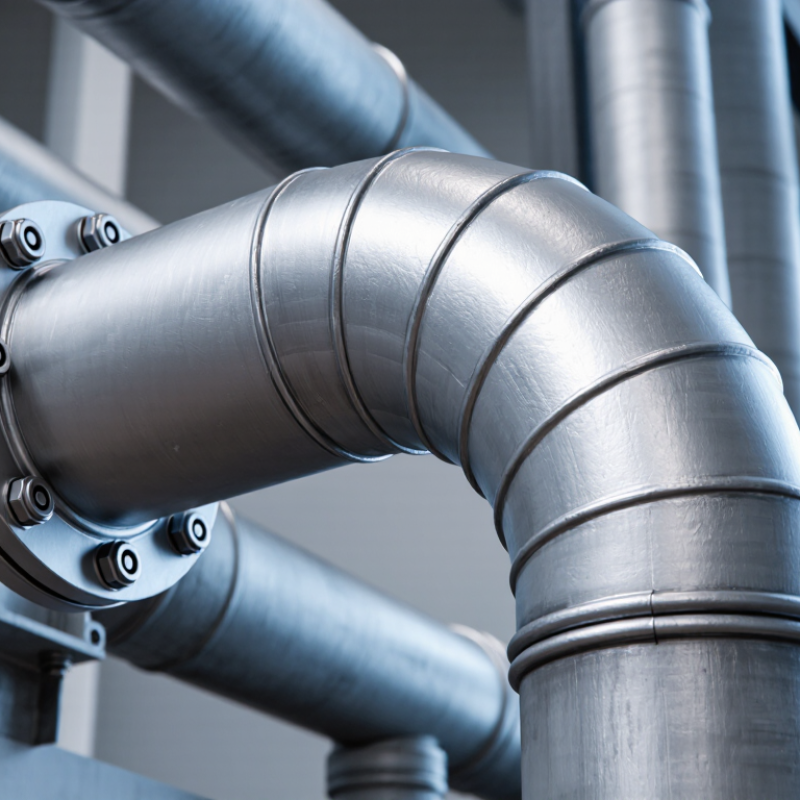
What a 90° Long Radius Elbow Is
A 90° long radius elbow is a pipe fitting that redirects flow through a quarter turn. Its centerline radius is commonly 1.5 times the nominal pipe size, though dimensions can vary by standard and design. That larger curve distinguishes it from a short radius elbow. The change is gradual, not abrupt.
Picture water moving through a pipe and turning around a broad bend instead of a tight corner. This geometry can reduce turbulence and pressure loss compared with a sharper elbow, but the actual result depends on flow rate, fluid properties, and the rest of the piping system. That distinction matters. Engineers also check end connections, wall thickness, material compatibility, and available space before selecting a fitting. A long radius elbow needs more room to install, which can complicate a crowded pipe rack. “Long radius” is not a guarantee of better performance in every layout. It is a useful description of shape, not a substitute for checking the system’s operating conditions and applicable dimensional requirements. A small detail can change the choice.
How Its Geometry Changes the Direction of Flow
A 90-degree long-radius elbow changes flow direction over a broader curve. Its centerline radius is commonly about 1.5 times the pipe diameter, though specifications can vary. Compared with a tighter bend, the flow meets less abrupt redirection. That usually limits separation and strong turbulence near the outer wall. The velocity profile still shifts through the turn, and secondary swirls can form.
Not entirely. A gentler curve often means lower pressure loss than a short-radius elbow under similar conditions. But flow rate, surface condition, and fluid properties matter.
When a pump pushes water through a pipe, that difference can affect the pressure available downstream. In a compressed-air line, losses may influence equipment response, especially across several fittings. The longer curve also needs more installation space.
Space matters. I would check the fitting radius, pipe diameter, and design flow before choosing one.
A rough estimate from a generic chart may not represent a real system, particularly with viscous fluids or uneven upstream flow. Measure pressure where performance matters. Even a well-chosen elbow can disappoint if nearby valves or reducers disturb the incoming stream.
How It Affects Pressure Loss and Flow Performance
A 90-degree long-radius elbow turns flow along a wider, gentler curve, commonly with a centerline radius around 1.5 times the pipe diameter. This gradual change can reduce flow separation and turbulence compared with a tighter elbow. That matters. Less disturbance at the bend often means a lower pressure loss, especially where flow rates are high or several fittings sit close together.
Engineers estimate fitting losses using factors such as the elbow’s loss coefficient, fluid velocity, and pipe diameter. In practical terms, a smaller loss can help maintain pressure at downstream equipment and reduce the energy a pump must supply. But the elbow alone does not determine performance. Surface roughness, flow conditions, nearby valves, and installation quality all affect the result. A poorly aligned joint can undermine the benefit.
There is a trade-off. Long-radius elbows need more space, which may complicate tight layouts. And their pressure-loss advantage is not identical in every system; calculations or measured data are better than assuming a fixed saving. Bigger is not always better. It is worth checking the full route, since even a good elbow may have little impact when other losses dominate.
Materials, Dimensions, and Ratings to Consider
A 90° long radius elbow changes direction with a gentler curve than a short radius fitting. That geometry can reduce abrupt flow changes, but material choice still matters. Carbon steel is common in general industrial service, while stainless steel may suit wet or corrosive environments. More aggressive fluids or temperatures may call for a specific alloy. Check compatibility with the actual process fluid, temperature range, and cleaning conditions; a material name alone does not confirm suitability.
Dimensions need careful attention. A long radius elbow commonly has a centerline radius of 1.5 times the nominal pipe size, though the governing standard and product specification should confirm this. Match the nominal size, outside diameter, wall thickness or schedule, and end preparation to the connecting pipe. A small mismatch can complicate welding and alignment. Measure twice. In practice, drawings and supplier data may use different conventions, so verify the dimension reference before ordering.
Ratings are not determined by the elbow angle or radius alone. Pressure capacity depends on material, wall thickness, operating temperature, manufacturing details, and the applicable piping standard. Confirm the fitting’s stated standard and rating against the project design conditions, including any temperature-related reduction. Do not assume a pressure class transfers directly between materials or schedules. It is easy to focus on the headline rating and overlook the operating temperature; that deserves a second look.
| Consideration | Typical specification or example | Why it matters |
|---|---|---|
| Key selection factors | ||
| Elbow geometry | 90° long-radius (LR); center-to-end dimension is generally 1.5 times the nominal pipe size for larger sizes, subject to standard dimensions. | The gradual change in direction can reduce flow disturbance and pressure loss compared with a short-radius elbow. Actual performance depends on flow conditions and system design. |
| Dimensional standard | ASME B16.9 covers factory-made wrought butt-welding fittings, including dimensions and tolerances. | Confirm the fitting standard and end preparation match the piping design and connecting components. |
| Pipe-size reference | NPS is a nominal designation; it is not generally the measured outside diameter. | Use the applicable dimensional standard when checking fit-up, wall thickness, and clearance. |
| Wall thickness | Specify the required schedule or fitting wall thickness to match the piping system design. | Pressure capacity depends on material, wall thickness, temperature, corrosion allowance, and governing code—not on the elbow angle alone. |
| Illustrative standard dimensions | ||
| NPS | Outside diameter (mm) | 90° LR center-to-end, A (mm) |
| 1/2 | 21.3 | 38 |
| 1 | 33.4 | 38 |
| 2 | 60.3 | 76 |
| 4 | 114.3 | 152 |
| 6 | 168.3 | 229 |
| 8 | 219.1 | 305 |
| 12 | 323.9 | 457 |
| Common material options and rating checks | ||
| Material family | Common fitting specification example | Rating and service considerations |
| Carbon steel | ASTM A234 WPB | Common for many process and utility piping applications. Verify allowable pressure and temperature under the applicable piping code and material requirements. |
| Austenitic stainless steel | ASTM A403 WP304/304L or WP316/316L | Choose the grade based on corrosion environment, temperature, and project requirements. Stainless steel is not automatically suitable for every corrosive service. |
| Low-temperature carbon steel | ASTM A420 WPL6 | Used where low-temperature toughness requirements apply; confirm the required impact testing and design conditions. |
| Pressure-temperature rating | Determine from material properties, fitting and pipe wall thickness, design temperature, and the applicable piping code (for example, ASME B31.3 where applicable). | Do not treat a butt-welding elbow as having a universal pressure class. The allowable rating must be established for the complete piping system and its design conditions. |
| End connection | Butt-weld ends; end preparation requirements are commonly addressed by ASME B16.25. | Check bevel, wall-thickness match, weld procedure, and inspection requirements before installation. |
| Note: Dimensions shown are representative ASME B16.9 nominal-size values in metric units. Confirm the latest applicable standard edition, tolerance requirements, material certificate, schedule, and project specifications before procurement or fabrication. | ||
Common Applications and Selection Factors
Why Choose a 90° Long Radius Elbow?
Common Applications and Selection Factors
A 90° long radius elbow redirects flow gradually, making it useful where sharp changes could increase turbulence or pressure loss. It is common in water lines, HVAC systems, and industrial process piping. The broader curve can also help reduce wear when a system carries suspended particles. Results depend on flow conditions, though; an elbow alone cannot fix poor pipe sizing.
Space still matters. A long radius fitting needs more room than a short radius elbow, especially near pumps, walls, or equipment connections. Check the available centerline dimensions against the piping layout before ordering. Also confirm the pipe outside diameter, wall thickness, connection type, and applicable dimensional standard. “Long radius” often refers to a radius near 1.5 times the nominal pipe size, but dimensions can vary. Verify the drawing.
Material selection deserves equal attention. Match the elbow material to the fluid, operating temperature, pressure, and surrounding environment. For abrasive or corrosive service, ask a qualified piping professional to review the conditions and expected maintenance needs. Sounds straightforward, but field measurements are sometimes imperfect. A small mismatch can complicate installation or create stress at nearby joints, so compare the fitting dimensions with the actual line before fabrication.