
How to Choose the Right Battery Connector for Your Needs?

Choosing the right Battery Connector can be overwhelming. With numerous options available, understanding your specific needs is crucial. James Wilson, an industry expert in battery technology, once stated, "The wrong connector can lead to failure in critical applications." This highlights the importance of making informed decisions.

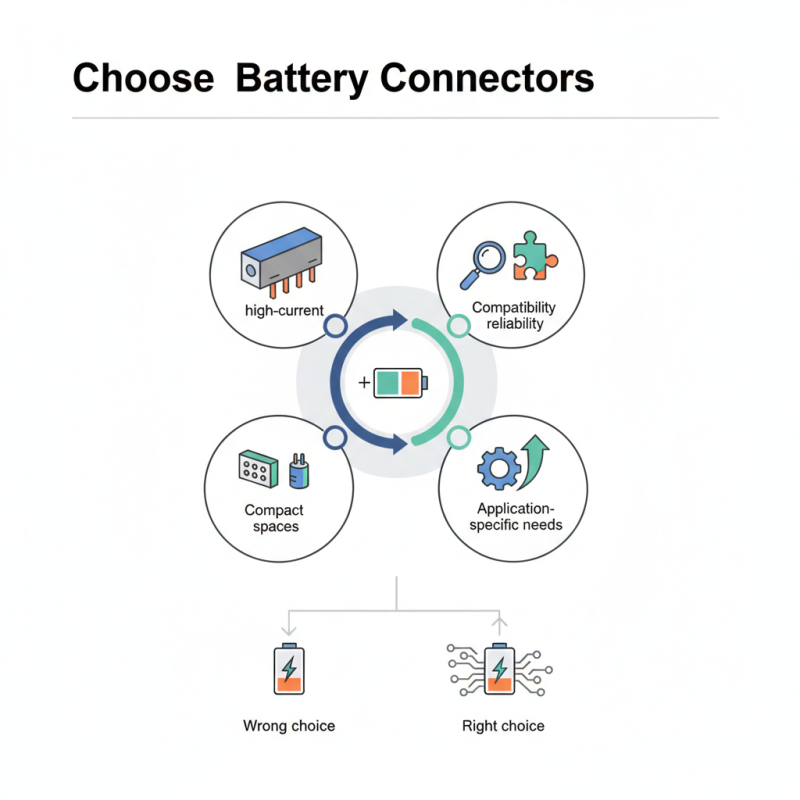
Battery Connectors come in various shapes, sizes, and materials. Each type serves a unique purpose and application. For instance, some connectors are designed for high-current applications, while others work better in compact spaces. The details matter. A proper fit can enhance performance and safety.

Moreover, buyers often overlook the significance of quality. A low-cost connector may save money initially but could lead to failures and replacements. Reflecting on your choices is important. Selecting the right Battery Connector requires careful consideration of quality, compatibility, and application-specific needs. This decision can profoundly affect system reliability and longevity.
How to Choose the Right Battery Connector for Your Needs?

Understanding the Different Types of Battery Connectors Available

When selecting a battery connector, understanding the various types is crucial. Battery connectors come in many forms, including terminal, snap, and bullet connectors. Each type serves distinct applications. Terminal connectors are commonly used in automotive environments, while bullet connectors provide quick connect and disconnect capabilities. Snap connectors are often found in consumer electronics due to their compact design.

Here are some tips to help you choose the right connector. Always consider the amp rating required for your application. A connector has to handle the current without overheating. Also, think about the environment where it will be used. High humidity or extreme temperatures may require specialized connectors. Look for connectors that offer durability and reliability.

Don't overlook the importance of safety features. Some connectors include locking mechanisms to prevent accidental disconnections. Reflect on your needs and future requirements. If you plan to upgrade or change systems, invest in versatile connectors. Rushing this decision may lead to compatibility issues down the road. Select wisely to ensure a reliable performance.

Evaluating Electrical Specifications and Compatibility Requirements

When selecting a battery connector, evaluating electrical specifications and compatibility is crucial. Understanding voltage, current ratings, and resistance is essential. They determine how well the connector will perform with your battery system. Make sure you check the rated current of the connector. Exceeding this can lead to overheating and failure.

Tips: Always double-check the specifications in your user manual. Mismatched connectors can cause serious problems. Getting the right gauge for your wires is also key. A thinner wire may not handle high currents well.

Compatibility is another important factor. Different connectors may operate differently even with the same specifications. Test connectors in real-world scenarios if possible. This ensures that they perform reliably under load. Using connectors from multiple sources can lead to issues. Aim for uniformity in your components for best results.

Tips: Look for detailed product descriptions. These can offer insights on how connectors interact. Consult industry forums or experts if unsure about choices. Their experience can guide you through tricky options.

Battery Connector Types Comparison

Assessing Connection Reliability and Durability for Your Application

When selecting a battery connector, connection reliability and durability are crucial. You need to understand how these factors impact the overall performance of your application. Poor connections can lead to device failures, which may cause costly downtimes. Durability is essential, especially in harsh environments where connectors face vibrations, temperature fluctuations, and moisture exposure.

Consider the type of materials used in connectors. For example, gold plating may offer better conductivity, but it is also more expensive. Sometimes, you’ll need to balance cost and performance depending on your specific needs. Additionally, pay attention to the connector design. Some designs are more suited for high-current applications. This makes a significant difference in reliability and can be a game-changer in critical applications.

Look for connectors with wear-resistant features. This can lead to longer lifespans, which is essential for reducing maintenance and replacement costs. Regular testing of the connections can expose potential weaknesses in the setup. Reflect on the performance metrics of similar applications to guide your choices. This process can be tedious, but it ensures that you choose a connector that meets the required reliability standards for your needs.

How to Choose the Right Battery Connector for Your Needs? - Assessing Connection Reliability and Durability for Your Application

Connector Type Material Current Rating (A) Voltage Rating (V) Temperature Range (°C) Durability (Connect/Disconnect Cycles)
Anderson Powerpole Copper, Plastic 30 600 -20 to 100 500
XT60 Gold Plated Copper, Nylon 60 16 -20 to 80 100
Deans Connectors Copper, Plastic 60 10 -20 to 80 100
JST Connector Copper, Plastic 3 300 -25 to 85 30
Molex Connector Copper, Plastic 1.5 500 -20 to 105 50

Choosing the Right Tools for Installation and Maintenance

Selecting the right tools for battery connector installation and maintenance is crucial. Start by ensuring you have the basic tools. A reliable wire stripper is essential for precise and clean cuts. A crimping tool allows for secure connections, preventing issues later on. A multimeter can help you check voltages and troubleshoot problems.

Consider the environment where you will work. If you're in a damp area, choose tools that resist corrosion. Good lighting is often overlooked but crucial. Use a well-lit workspace to avoid mistakes. Proper organization of your tools can save time and reduce frustration.

Don't forget to wear safety gear. Safety glasses protect your eyes from sparks. Gloves can help with grip and prevent cuts. Reflect on how often you perform maintenance. Do you have a regular schedule? Often, we ignore signs of wear until it's too late. Regular checks can extend the life of your connectors and ensure safety. Always be mindful of your workspace and the condition of your tools.

Considering Environmental Factors Affecting Connector Performance

When selecting a battery connector, environmental factors play a crucial role. Humidity, temperature, and exposure to chemicals can impact connector performance. Connectors in high-humidity areas may corrode faster. This can lead to poor electrical connections. It’s essential to consider how the environment may affect durability.

Temperature variations also influence connector materials. Extreme heat may cause plastic components to warp. Cold conditions can make materials brittle. Always assess the operating range. A connector might perform well in ideal conditions but can fail under stress.

Additionally, exposure to dust or chemicals requires careful consideration. Sealing and material choice can protect connectors. Not all connectors are built the same. Regular checks for wear can prevent unexpected failures. Staying informed about these factors ensures better decisions in the long run.

Learn More

Connect with us today to learn more about our industrial automation solutions—and how to commission them for your application.