
Connect with us today to learn more about our industrial automation solutions—and how to commission them for your application.
China Top 10 Expulsion Fuse Manufacturers for Global Buyers
Choosing a supplier for overhead distribution protection is not a catalog exercise. Expulsion Fuses must match the network’s voltage, available fault current, fuse-link requirements, and installation environment. A fuse that looks suitable on paper may perform differently on a pole exposed to salt, dust, or heavy rain.
This guide examines ten China-based manufacturers for global buyers. It focuses on practical evidence: published ratings, test documentation, product range, manufacturing capability, customization, and export support. Buyers should compare rated voltage and current, interrupting capacity, insulation details, and compatible fuse links. Ask for current datasheets and test reports, then check that the stated ratings fit the intended application. Details matter.
Distribution-protection author Thomas A. Short’s published work points to a useful principle: protective devices should be selected for actual system conditions, not by habit. That principle also applies when comparing suppliers. A neat table can still hide a weak comparison. Some product pages offer less detail than buyers need, and that gap deserves follow-up—not assumption. Request clear answers about quality controls, delivery schedules, and technical support before treating a manufacturer as a reliable fit.
No ranking replaces engineering review. But a careful shortlist can make that review more focused. For global buyers, the best choice is not necessarily the lowest quotation. It is the supplier whose documented product, communication, and production capability align with the project’s needs.
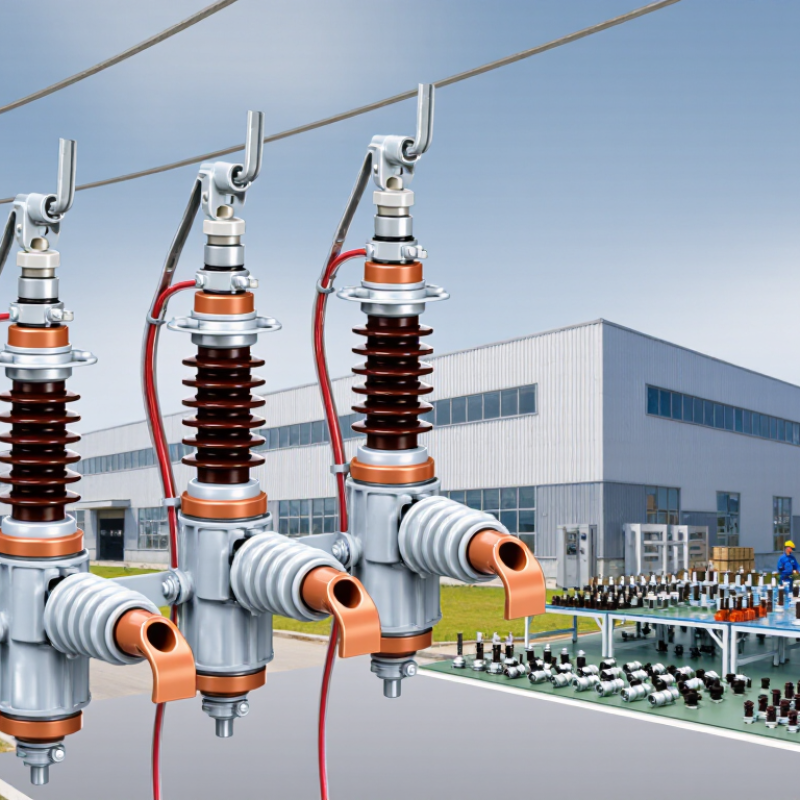
Table of Contents [Hide]
Expulsion Fuses: Purpose, Components, and Operating Principles
Expulsion fuses protect overhead distribution equipment from excessive current, helping isolate a fault before it causes wider damage. They are commonly installed in a visible cutout assembly on a utility pole. The assembly typically includes an insulating body, conductive contacts, a fuse link, and an arc-extinguishing tube. Exact designs vary by voltage class and application.
The fuse link carries normal current. During a sufficiently high fault, it melts and separates, creating an arc inside the tube. Heat and gases produced by the arc help extinguish it, while the fuse’s moving parts may drop open and provide a visible indication of operation. Small detail, big consequence. Performance depends on correct ratings, coordination with upstream protection, and suitable installation conditions. A fuse that interrupts one fault successfully may not be appropriate for another system. Buyers should review the equipment’s voltage, current, interrupting capacity, and environmental requirements with qualified engineers. Never assume that a matching physical size means matching electrical performance. Expulsion fuses are simple devices, but their selection deserves careful verification.
China Top 10 Expulsion Fuse Manufacturers for Global Buyers - Expulsion Fuses: Purpose, Components, and Operating Principles
| No. | Comparison area | Factual technical reference | Information to request from a supplier |
|---|---|---|---|
| 1 | Purpose and application | Expulsion fuses provide overcurrent protection by interrupting excessive current. Fuse cutouts are commonly used on overhead distribution systems, including transformer and line protection applications. | Confirm the intended application, protected equipment, system voltage, and coordination requirements with upstream and downstream protective devices. |
| 2 | Rated voltage | The fuse or cutout voltage rating must be suitable for the system voltage and grounding conditions. A voltage rating alone does not establish suitability for every system configuration. | Request the rated maximum voltage, system application guidance, and applicable technical datasheet for the exact product configuration. |
| 3 | Continuous current rating | Continuous current rating describes the current the equipment can carry under specified conditions. It is distinct from the fuse link’s rated current and time-current behavior. | Check the cutout’s continuous-current rating, the available fuse-link ratings, and any stated ambient or installation conditions. |
| 4 | Interrupting capability | Interrupting capability is the maximum fault current a device is designed and tested to interrupt under specified conditions. It must be considered alongside the prospective fault current at the installation point. | Ask for the interrupting rating and supporting test documentation; verify that it meets the system’s calculated fault-current duty. |
| 5 | Fuse link | The fuse link is the replaceable element that melts when current and time conditions exceed its operating characteristic. Link characteristics affect protection coordination and response. | Request available link types and ratings, time-current curves, and confirmation of compatibility with the specified cutout. |
| 6 | Fuse holder and contacts | The fuse holder carries the fuse link and engages the cutout contacts. Contact design and fit are important for electrical connection and mechanical operation. | Confirm holder dimensions, contact arrangement, compatible fuse-link type, and any interchangeability limitations. |
| 7 | Arc-extinguishing tube | In an expulsion fuse, the arc-extinguishing tube helps interrupt the arc. Arc heat can generate gases from the tube’s lining, helping deionize and extinguish the arc as current is interrupted. | Request construction details, applicable operating limitations, and documentation for the complete tested assembly. |
| 8 | Operating principle | When the fuse link melts, an arc forms as the circuit opens. The expulsion action assists arc interruption; in a dropout cutout design, the fuse holder may also swing open to provide a visible indication of operation. | Clarify whether the offered device is a dropout cutout or another configuration, and request operating instructions and maintenance guidance. |
| 9 | Standards and testing | IEC 60282-2 covers high-voltage fuses, including expulsion fuses. IEEE C37.41 addresses design tests for high-voltage fuses, fuse disconnecting switches, and accessories; applicable editions and product scope should be checked. | Ask which standards and editions apply, and obtain test reports or certificates identifying the tested model and ratings. |
| 10 | Documentation and quality control | Technical suitability should be assessed using product-specific ratings, drawings, installation requirements, and test evidence rather than a general product description alone. | Request datasheets, dimensional drawings, installation and maintenance instructions, traceability details, and inspection or test records for the supplied batch. |