China Top 10 Mechanical Gaming Keyboard Manufacturers

China’s keyboard sector serves gamers, system builders, and global brands. Its manufacturers differ in scale, design focus, and production capabilities. This guide examines ten companies connected to the Mechanical Gaming Keyboard market, with attention to what buyers and business partners can actually assess. Switch feel matters. So do stabilizer rattle, keycap fit, case construction, and how a board sounds on a desk. Small details matter.

Design researcher Donald Norman wrote, “Good design is actually a lot harder to notice than poor design.” Norman was not discussing keyboards specifically, but the idea offers a useful lens: a well-made board should feel consistent during long sessions, not merely look striking in a product photo. This introduction uses that human-centered perspective while distinguishing observable features from claims that need independent verification. The outline will consider product range, manufacturing strengths, customization options, quality controls, and support. It will also note where public information may be incomplete. A ranked list can suggest useful starting points, but it cannot replace sample testing, supplier checks, or clear technical specifications. That limitation deserves attention. A quiet switch, dependable firmware, and a sturdy USB connection may matter more to daily use than a dramatic feature list.
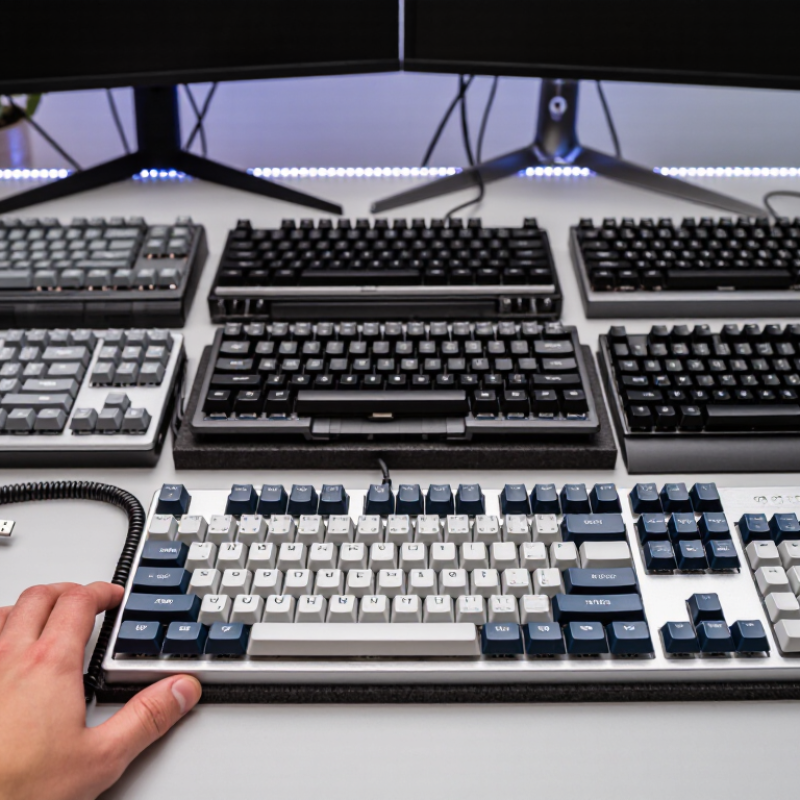
China Top 10 Mechanical Gaming Keyboard Manufacturers

China’s Mechanical Gaming Keyboard Manufacturing Industry

China’s mechanical gaming keyboard manufacturing industry combines component sourcing, assembly, testing, and product customization. Many production centers can source switches, printed circuit boards, stabilizers, and keycaps through established supplier networks. This can shorten development cycles, though material availability still varies. A missing switch type can delay a complete order.

Inside a typical workshop, technicians may inspect solder joints, test key registration, and listen for uneven stabilizer noise. Quality checks matter. A board can look clean yet produce inconsistent keystrokes. Buyers should ask about sampling, defect handling, and production testing rather than relying only on catalog specifications. Small details, such as USB port alignment or case rattle, affect daily use.

Manufacturers often support different layouts, lighting settings, case materials, and packaging options. These choices help importers shape products for distinct markets, but added customization can increase coordination time. Production capacity is only part of the evaluation. Communication, sample consistency, and clear delivery schedules deserve equal attention. I have seen specifications become surprisingly vague once a project moves from sample approval to mass production; written tolerances help, though they do not solve every problem. The industry is capable, but not every factory offers the same engineering depth.

Criteria for Identifying Leading Chinese Manufacturers

Assessing leading Chinese mechanical keyboard manufacturers requires more than comparing catalog photos or quoted prices. A capable supplier should explain its production flow, from PCB assembly and switch mounting to final key testing. Ask how it checks actuation consistency, stabilizer noise, and key registration across a batch. Details matter.

Request sample units and test them on different surfaces, not just a showroom desk. Listen for uneven spacebar rattle, inspect keycap fit, and check whether repeated presses register reliably. Then ask for documented quality-control steps, defect handling, and realistic lead times. Clear answers are useful evidence; polished sales language alone is not.

Evaluate engineering support, too. Can the team adjust layouts, firmware, or materials without making vague promises? Confirm which changes affect tooling, cost, and delivery schedules. For export orders, review relevant test reports and product documentation rather than assuming every model has identical credentials. No scorecard captures everything. Even careful sampling can miss variation in a larger production run, so request batch inspection records where available. Some answers may remain imperfect, and that uncertainty deserves attention.

Profiles of the Top 10 Mechanical Gaming Keyboard Manufacturers

China’s mechanical gaming keyboard manufacturers serve different needs, from large production runs to specialist designs. A high-volume producer may offer stable lead times and many layout options, but buyers should verify sample consistency. A switch-focused manufacturer can provide tactile, linear, or clicky choices. Ask for force curves and durability test details. Small differences matter.

A compact-keyboard specialist often works with 60% or 75% layouts, leaving more desk space for mouse movement. A metal-case producer may emphasize machining and finish; inspect edges and coating under bright light. A cost-focused factory can suit entry-level projects, though keycap feel may be a compromise. One wireless specialist may support multiple connection modes, while another prioritizes wired speed. Check latency claims with independent testing. A customization-oriented maker can adjust legends, colors, and firmware, but changes may extend sampling time. An ergonomic producer may offer split or angled layouts; fit is personal. An esports-focused manufacturer tends to prioritize rapid input and sturdy stabilizers. Finally, a quality-control-led supplier may document inspection steps and batch checks. Paperwork helps, but it cannot replace hands-on testing. These profiles are starting points, not rankings. Samples sometimes surprise.

China Top 10 Mechanical Gaming Keyboard Manufacturers - Profiles of the Top 10 Mechanical Gaming Keyboard Manufacturers

Note: Company names and brands are omitted. The entries below are anonymized product-and-capability profiles, not a verified company ranking or claims about specific manufacturers. Features vary by model and production order.

Anonymous Profile Typical Product Focus Common Layouts Switch and Keycap Options Connectivity Often Offered Potential Production Services
Profile 1 Competitive gaming keyboards with a focus on straightforward wired operation Tenkeyless and full-size Linear, tactile, or clicky mechanical switch options; ABS or PBT keycaps, depending on model Wired USB connection; connector type varies by model OEM/ODM customization may include layout, legends, packaging, and lighting configuration
Profile 2 Compact keyboards designed to reduce desk footprint 60% and 65% Mechanical switch choices; some configurations support replaceable switches, subject to PCB design Wired USB; wireless versions may be available in selected product lines Custom case colors, keycap sets, and private-label packaging may be available by order
Profile 3 Versatile keyboards balancing gaming controls and everyday typing 75% and 80% / tenkeyless Linear and tactile switch variants; keycap material and profile depend on specification Wired USB, with 2.4 GHz or Bluetooth options on some models May support layout adaptation, multilingual legends, and market-specific packaging
Profile 4 Wireless mechanical keyboards for gaming and multi-device use 65%, 75%, and compact full-size variants Mechanical switches; hot-swap support is model-specific Some models combine wired USB, 2.4 GHz, and Bluetooth modes Wireless configuration, battery capacity, and regional compliance requirements need order-level confirmation
Profile 5 Full-featured gaming keyboards with dedicated numeric keys Full-size and 96% / 98% Multiple mechanical switch types; keycap material varies by product tier Typically wired USB; selected designs may add wireless modes May offer custom legends, indicator layouts, and packaging for different sales regions
Profile 6 Enthusiast-oriented keyboards with configurable components 60%, 65%, and 75% Some models provide hot-swappable switch sockets; switch compatibility depends on the PCB and socket specification Wired USB-C is common in compact designs; wireless depends on model Component, plate, case, and keycap combinations may be configurable for custom orders
Profile 7 Entry-level gaming keyboards aimed at value-focused product ranges Tenkeyless and full-size Common mechanical switch types; construction and keycap specifications vary by price point Wired USB is a common configuration Private-label branding and carton or manual customization may be offered subject to order terms
Profile 8 Keyboards emphasizing lighting effects and visual customization 60% through full-size, depending on the product line Mechanical switches with lighting-compatible layouts; keycap translucency depends on the selected keycap design Wired USB; wireless options are product-specific Lighting modes, colors, legends, and software features should be verified for each model
Profile 9 Ergonomic or specialized layouts for particular user preferences Split, compact, or non-standard layouts, where offered Mechanical switch selection and keycap compatibility depend on the layout Usually specified per design; wired USB is a common option Custom layout development may require engineering review, tooling, and minimum order quantities
Profile 10 OEM/ODM-focused production for customer-defined keyboard specifications Layouts selected according to the customer brief Switches, keycaps, and construction specified by the customer and confirmed for compatibility Wired or wireless configurations, subject to design and component selection May include sampling, design adaptation, assembly, inspection, and export packaging; scope varies by supplier

Product Lines, Technologies, and Manufacturing Capabilities

China’s leading mechanical gaming keyboard manufacturers typically offer compact, tenkeyless, and full-size layouts. Product lines often include hot-swappable switches, adjustable lighting, and wired or wireless connections. The mix matters. A tournament-focused model may prioritize low latency, while a desk-oriented keyboard may favor a quieter switch and detachable cable.

Grand View Research estimated the global gaming peripherals market at USD 6.30 billion in 2023, with a projected 10.3% annual growth rate from 2024 to 2030. Its report covers keyboards alongside other peripherals, so it does not measure mechanical keyboards alone. Still, that broader demand helps explain investment in switch testing, firmware development, and flexible assembly lines. Manufacturers may use automated key testing, then inspect stabilizers and surface finishes by hand. Small defects show up fast.

Manufacturing capability is more than output volume. Strong suppliers can manage switch sourcing, PCB assembly, keycap molding, and quality checks under one production plan. Some also support custom layouts and small pilot runs before mass production. Ask for switch lifespan test conditions, wireless latency measurements, and defect rates by batch. Details vary. Published capacity figures can be difficult to compare because factory reporting methods differ. That is a real limitation.

Mechanical Gaming Keyboard Technology: Common Polling-Rate Tiers

The chart shows commonly encountered USB polling-rate tiers in gaming keyboards. Higher polling rates allow more frequent input reports; the figures represent technical tiers, not manufacturer rankings, market shares, or measured performance across all models.

Industry Trends and Factors for Comparing Manufacturers

China Top 10 Mechanical Gaming Keyboard Manufacturers

Mechanical gaming keyboards are evolving beyond switch choice and RGB lighting. Buyers now compare hot-swappable sockets, compact layouts, adjustable actuation, and software support. These features matter differently to a tournament player and a home user. Test the keyboard with the games and desk setup it will actually serve. Feel matters.

When comparing manufacturers, look for measurable quality checks, not polished product photos alone. Ask how key consistency, stabilizer noise, and connection stability are tested across production batches. Request specifications for the case material, keycaps, polling rate, and supported layouts. Samples can reveal details that catalogs miss, such as rattling keys or cramped arrow clusters. Some differences are subtle. Others affect daily use.

Also review defect handling, replacement-part availability, lead times, and how clearly the supplier answers technical questions. A low quote is not automatically good value; unclear tolerances may create extra rework. No single checklist captures every user’s needs, and comparing vendors can feel messy.

Tips: Compare two or three samples on the same desk. Record typing sound, latency, and comfort during a real session. Ask for batch inspection records, but verify claims independently where possible. Don’t overrate flashy features.

Learn More

Connect with us today to learn more about our industrial automation solutions—and how to commission them for your application.