
Connect with us today to learn more about our industrial automation solutions—and how to commission them for your application.
China Best Heated Towel Radiator Suppliers?
Choosing a Heated Towel Radiator supplier in China involves more than comparing catalogue prices. Buyers need to assess heating performance, material quality, finish consistency, production capacity, and after-sales support. Small details matter: a clean weld, even coating, and clearly labeled controls can affect both installation and daily use. Looks simple. It isn’t always.
The International Energy Agency’s 2024 Global Status Report for Buildings and Construction estimates that buildings accounted for about 32% of global energy demand and 34% of energy-related carbon dioxide emissions in 2022. These figures cover the wider buildings sector, not towel radiators specifically. Still, they underline why buyers should examine energy use and product specifications rather than rely on appearance alone. Ask suppliers for test documentation, rated output, electrical details, and clear guidance on installation and maintenance. Verify that any claimed certification applies to the exact model and destination market.
This guide explores how to identify capable Chinese suppliers and compare their products with practical questions in mind. It considers manufacturing experience, customization, quality-control processes, lead times, sample policies, and communication. A polished website is not proof of consistent production. Nor is the lowest quotation automatically the best value. Request recent product records and clarify what the quotation includes. Some suppliers may provide excellent samples but offer limited evidence of repeat-batch consistency; that deserves a closer look. The aim is not to declare one universal winner, but to help importers, contractors, and buyers make a more informed shortlist.
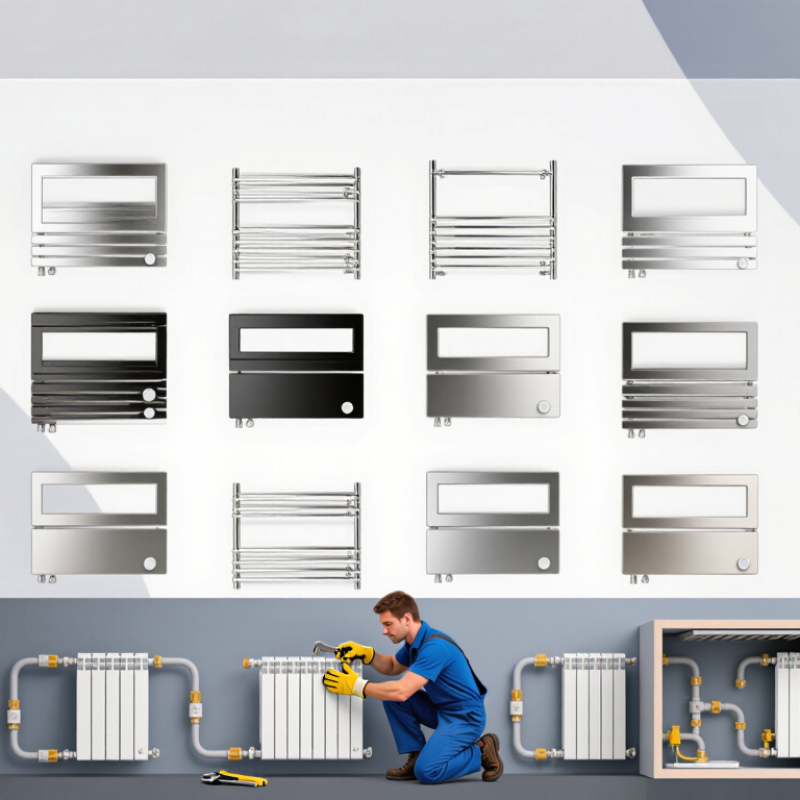
Table of Contents [Hide]
How Heated Towel Radiators Work: Hydronic, Electric, and Dual-Fuel Designs
Hydronic heated towel radiators circulate hot water from a boiler or heat pump through narrow metal tubes. They suit homes with an existing heating loop, but their warmth depends on water temperature and flow. Electric models use an internal heating element, so they can run independently when central heating is off. Dual-fuel designs combine both options, typically using hot water in winter and electricity during warmer months. Real rooms vary. A warm rail is not automatically a room heater.
Tips: Ask suppliers for heat-output figures, test conditions, and clear installation drawings. Check that the electric element matches the radiator and intended bathroom location. Small details matter.
The International Energy Agency’s Energy Efficiency 2023 report estimates that buildings account for about 30% of global final energy consumption. That figure covers far more than towel radiators, but it underlines why operating patterns matter: use a timer, and avoid heating an empty room for hours. When comparing China-based suppliers, request output data tested to EN 442 where applicable, plus material and corrosion-resistance specifications. Dual-fuel controls can be less intuitive than brochures suggest. Confirm how each mode is switched and whether both can run together before ordering.
China Best Heated Towel Radiator Suppliers? - How Heated Towel Radiators Work: Hydronic, Electric, and Dual-Fuel Designs
| Design or evaluation point | How it works | Typical advantages | Key checks when sourcing |
|---|---|---|---|
| Hydronic | Connects to a building’s hot-water heating circuit. Heated water flows through the radiator’s tubes and transfers warmth to the room and towels. | Uses the existing heating system and does not need a separate electric heating element in the radiator. | Confirm the intended system type, connection positions, operating pressure and temperature limits, dimensions, and documented heat output under stated test conditions. |
| Electric | Uses an electric resistance element to heat the radiator. Many models contain a heat-transfer fluid; others use a dry-element design. | Can operate independently of a central hot-water heating circuit, making it suitable where hydronic pipework is unavailable. | Check rated voltage and wattage, required electrical protection, control options, installation clearances, and whether the product is approved for its intended bathroom location. |
| Dual-fuel | Can be connected to a hydronic heating circuit and fitted with an electric element. The electric mode can provide heat when the central heating circuit is off, where the system is correctly configured. | Offers a choice of hydronic or electric operation across different heating seasons or operating schedules. | Verify compatibility among the radiator, heating element, valves, and pipe connections. Electrical installation and plumbing should follow applicable local requirements. |
| Heat output | Output depends on the radiator’s design and size, water temperature for hydronic models, and element rating for electric models. | Allows buyers to compare products against the room’s heating needs and towel-warming expectations. | Request rated output with the test standard and operating conditions stated. Do not compare figures taken at different water temperatures or test conditions as if they were equivalent. |
| Materials and finish | Radiators are commonly made from steel or stainless steel, with finishes selected for appearance and corrosion resistance. | Different materials, tube profiles, and finishes provide options for varied bathroom layouts and design preferences. | Ask for material and coating specifications, corrosion-resistance information, care instructions, and finish samples where color matching matters. |
| Dimensions and connections | Overall height, width, tube spacing, and connection positions affect fitting, clearance, and pipework compatibility. | Careful dimension matching can simplify replacement or installation in a planned space. | Request dimensioned drawings, connection-center measurements, thread details, mounting information, and the complete list of included fittings. |
| Supplier documentation | Technical documents describe product specifications, installation requirements, performance, and applicable conformity information. | Clear documentation helps buyers assess products before sampling, testing, or placing an order. | Request current datasheets, installation instructions, test reports where relevant, warranty terms, quality-control details, and documents required for the destination market. |
| Order and quality checks | Samples, agreed specifications, and inspection plans help confirm that delivered goods match the approved requirements. | Defined acceptance criteria make production and shipment expectations easier to verify. | Agree on material, dimensions, finish, packaging, inspection criteria, lead time, minimum order quantity, and remedies for non-conforming goods in writing. |
Product performance, installation rules, and conformity requirements vary by model and destination market. Confirm technical details with the supplier and a qualified installer before purchase or installation.