
Connect with us today to learn more about our industrial automation solutions—and how to commission them for your application.
5 Best Rockwool Density Options for Insulation?
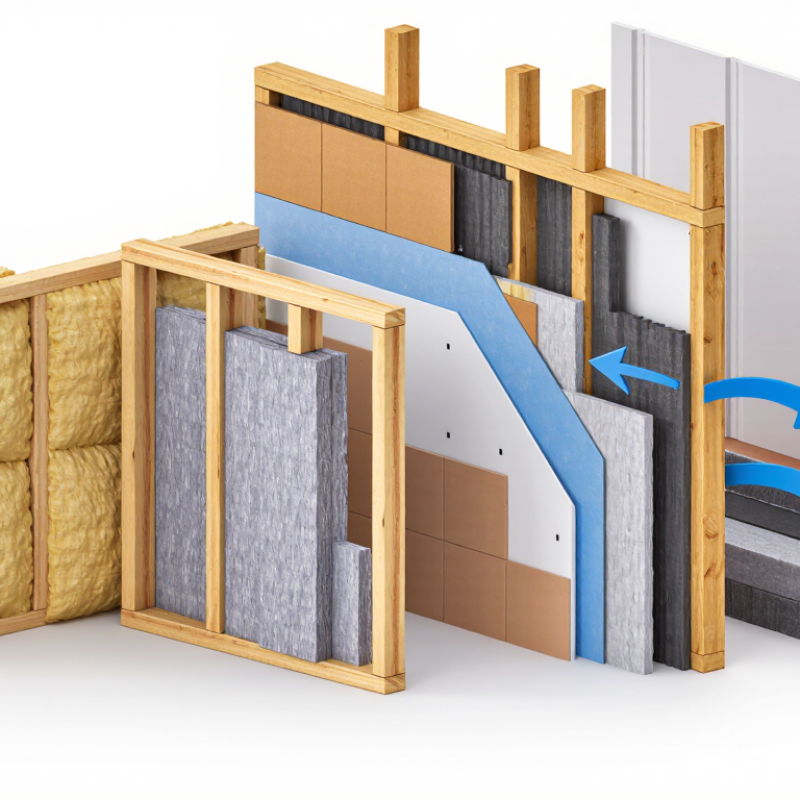
Choosing the right Rockwool Density is less like picking a heavier blanket and more like matching a panel to a specific job. A soft batt may suit a timber stud wall, while a firmer board can better support a façade or roof assembly. Yet density alone does not determine thermal performance. Thickness, declared conductivity, fit, and installation quality matter too. Small gaps count.
Building scientist Joseph Lstiburek’s broader building-science guidance offers a useful reminder: insulation should be evaluated within the complete wall assembly. This is a paraphrase, not a verified verbatim quotation. It matters because a dense product cannot fix a poorly detailed wall. Product specifications and local project conditions deserve a close look.
This guide compares five practical density options, from lighter batts to rigid boards. It explains where each may work, what trade-offs to check, and which details can change the decision. Think of a narrow stud cavity, a rigid board facing wind, or a partition where sound control matters. The best choice depends on the assembly. Not just the number.
There is no universal winner. Density ranges also vary by manufacturer, so compare current technical data rather than relying on labels alone. One detail is easy to miss: a product that feels sturdy in your hands may still be unsuitable for a particular installation. Check the specifications. Then check them again.
Compare 40 kg/m³ Rockwool Batts by Declared Thermal Conductivity, λD
For 40 kg/m³ Rockwool batts, density alone cannot tell you how well a product insulates. Compare the declared thermal conductivity, λD, in W/(m·K): a lower value means less heat passes through the same thickness. ASHRAE Handbook—Fundamentals (2021) gives a broad mineral-fiber insulation range of about 0.033–0.045 W/(m·K), varying by product and test conditions. Product declarations under EN 13162 provide the figure to check for an individual batt. Small differences matter.
At 100 mm thickness, a batt declared at λD 0.035 has a calculated thermal resistance of about 2.86 m²·K/W. At 0.040, it is 2.50 m²·K/W. That comparison assumes the same thickness and ideal installation; gaps and compression can reduce real performance.
A 40 kg/m³ batt with λD 0.036 may therefore outperform a denser option with λD 0.040, but verify the full declaration, not just a headline figure. Check the declared value, thickness, and test conditions side by side. Labels can look deceptively similar.
I would not treat density as a shortcut: it describes mass per volume, not a guaranteed conductivity. One detail is easy to miss. The best comparison uses products tested to the same standard.
Assess 60 kg/m³ Slabs for Walls Using EN 13162 Product Data
A 60 kg/m³ mineral-wool slab can suit framed walls, but density alone cannot predict insulation performance. EN 13162 product data should show declared thermal conductivity, thickness, dimensional tolerances, and relevant mechanical properties. Check the declared conductivity, often written λD, and calculate resistance from thickness divided by conductivity. For example, a hypothetical 100 mm slab at 0.035 W/(m·K) gives an R-value of about 2.86 m²·K/W. That is an example, not a product claim. Read the actual datasheet.
Fit matters. A slab should sit snugly between studs, without compressed edges or visible gaps around pipes and corners. A small gap can become a cold stripe across the wall. The International Energy Agency’s Buildings report notes that buildings account for about 30% of global final energy use, underscoring why sound insulation choices matter. Still, higher density does not automatically mean better thermal resistance; declared conductivity and installed thickness are more useful comparisons. For a 60 kg/m³ option, review the full EN 13162 declaration and installation guidance, not just the headline density. It is easy to overlook workmanship. That part deserves a second look.
5 Rockwool Density Options for Insulation
Reference density points for comparing mineral-wool slabs, with 60 kg/m³ highlighted for wall applications.
These values are comparison points, not standardized density classes or a ranking of performance. Density alone cannot determine whether a 60 kg/m³ slab is suitable for a wall. Check the specific product’s EN 13162 data, including declared thermal conductivity (λD), thickness, intended-use designation and reaction-to-fire classification.
Review 80 kg/m³ Boards with EN 1607 Tensile-Strength Test Results
5 Best Rockwool Density Options for Insulation?
An 80 kg/m³ board can feel firm in the hand, but density alone does not prove its tensile performance. EN 1607 measures tensile strength perpendicular to the board faces. During testing, a specimen is pulled until it separates, and the reported result is usually expressed in kilopascals. Check that the report identifies the board thickness, sample preparation, and failure mode.
When reviewing test results, compare the stated tensile value with the project specification, not with density alone. Two boards at 80 kg/m³ may perform differently because of fibre orientation, binder distribution, and manufacturing controls. Small details matter. A clean test report should show the measured result and the relevant test method, rather than relying on a broad product description. If figures are missing, ask for the laboratory report before making a comparison.
For façade or roof applications, confirm that the tested property matches the forces expected in service. EN 1607 results do not automatically predict every installation condition, especially where joints, fixings, or uneven support affect the assembly. This is where a review can feel incomplete: the board may pass a tensile check, yet the full system still needs careful detailing. Density is only a clue, not a verdict.
Check 100 kg/m³ Boards Against EN 826 Compressive-Stress Ratings
A 100 kg/m³ rockwool board can look reassuringly firm in your hand. That impression is not a compressive rating. Density describes mass per volume; it does not, by itself, tell you how much pressure the board can withstand.
Check the product’s EN 826 test data. The test measures compressive behavior under a controlled load, usually reporting stress at 10% deformation. If the specimen fails earlier, the reported value may reflect that failure instead. Read the declared result and its units, commonly kilopascals, rather than comparing density figures alone. Small print matters.
Consider the actual installation. A board beneath a floor may face sustained, distributed loads, while a roof assembly can include concentrated pressure around supports. The board’s thickness, substrate, and load distribution all affect performance. A 100 kg/m³ option may suit one assembly but prove unsuitable for another. Density is only a screening clue.
Match the EN 826 rating to the project design requirements, and check the manufacturer’s technical documentation for the intended use. Test results do not automatically predict every site condition. Honestly, this is easy to overlook: a board that feels rigid during handling may still deform under long-term loading. Use the rating, not a hand squeeze.
Evaluate 120 kg/m³ Boards by Load Requirements and EN 826 Test Data
A 120 kg/m³ rockwool board can look reassuringly solid, but density alone does not establish its load capacity.
EN 826:2013 sets out how insulation products are tested in compression and how stress at 10% deformation, or a yield point, is reported. EN 13162:2012+A1:2015 covers factory-made mineral-wool products and their declared performance. Check the product declaration, not density alone. Small detail. Big difference.
For a practical reading, imagine a declared EN 826 result of 40 kPa at 10% deformation. Across one square metre, that equals 40 kN of test stress, not a recommended service load.
Do not treat it as a safe design allowance. A floor or roof build-up also faces concentrated feet, uneven support, and long-term compression.
Ask for the exact test value, specimen thickness, and loading direction; then have the assembly checked against its actual loads.
The awkward part is that two boards with similar density can behave differently. EN 826 data helps compare them, but it cannot replace project-specific design.