Connect with us today to learn more about our industrial automation solutions—and how to commission them for your application.
10 Best Neon Light Suppliers for Global Buyers
Choosing among the 10 Best Neon Light Suppliers for Global Buyers takes more than comparing prices or browsing bright product photos. Buyers need to assess how suppliers handle design, materials, production consistency, packaging, and communication. A sign may look vivid on a screen, yet arrive with uneven brightness or dimensions that do not fit the installation. Small details matter.
Light artist James Turrell offers a useful perspective: “Light is not so much something that reveals, as it is itself the revelation.” His work is not a supplier checklist, but the idea fits Neon Light purchasing: illumination shapes how a space feels and how a brand is seen. For buyers, practical questions matter too. Can the supplier explain tube or LED construction clearly? Are drawings, samples, and specifications available before an order is confirmed? How are lead times and after-sales support communicated? Clear answers help reduce uncertainty.
This guide compares suppliers through the details that affect real projects, including customization options, product range, quality controls, and export experience. A polished catalog can still leave important questions unanswered. No shortlist fits every buyer. Some projects need bespoke lettering; others need dependable standard signs, careful packing, or responsive service across time zones. The best choice depends on the brief, budget, and installation needs. Use the comparisons as a starting point, then verify current specifications directly with each supplier. That extra check may feel tedious. It can prevent costly surprises.
Neon Lighting Types and the Global Supplier Landscape
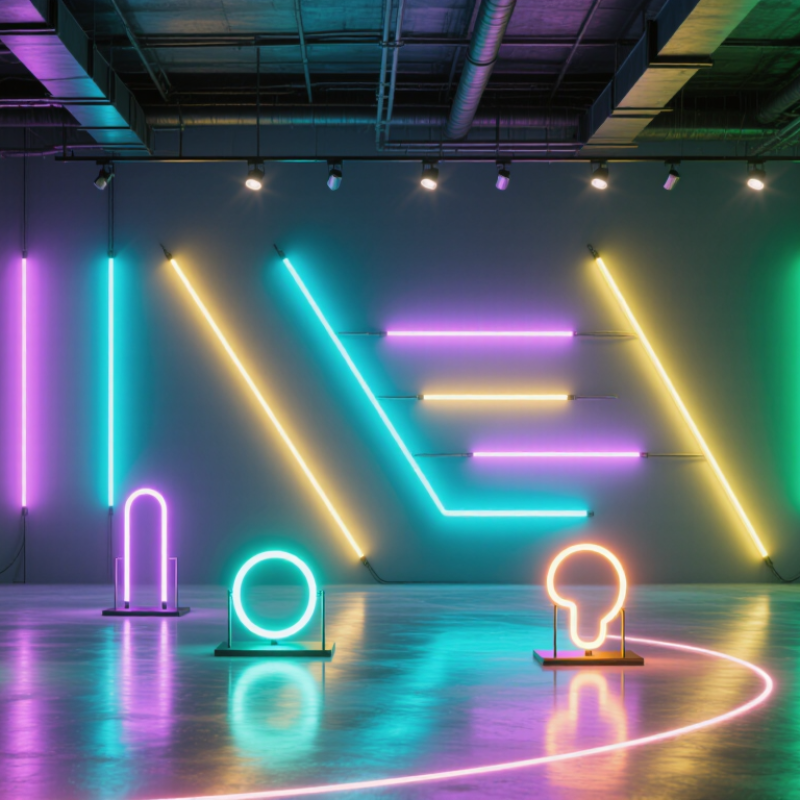
Neon lighting now covers several different products. Traditional glass neon uses shaped glass tubes and produces a continuous, distinctive glow. It suits crafted signs and installations where appearance matters more than quick replacement. LED neon flex uses flexible tubing with LED light sources. It is lighter and easier to shape around letters or display edges. Linear neon-style fixtures can also provide even accent lighting along counters, stairways, or façades. These types are not interchangeable. Their brightness, bending limits, maintenance needs, and visual character differ.
The global supplier landscape includes specialist glass fabricators, LED-flex manufacturers, custom-sign workshops, and larger lighting exporters. Some suppliers focus on design and assembly; others mainly provide components for local installers. Ask how products are tested, what installation drawings are supplied, and whether spare sections are available. Check samples under the lighting conditions where they will be used: a warm indoor display can make colors look quite different from daylight. I have seen specifications look clear on paper, yet leave practical questions unanswered. That is worth noticing.
Tips: Send suppliers a drawing with dimensions, colors, mounting details, and intended use. Request a sample, rated electrical information, packaging details, and a written lead time. Compare like with like.
How the 10 Suppliers Compare on Customization, Capacity, and Export Reach
Comparing ten neon light suppliers is less about finding one universal winner and more about matching production strengths to a project. Some suppliers offer flexible lettering, custom colors, dimming options, and indoor or outdoor-rated housings. Ask for a drawing or sample before approving a large order. A bright product photo is not enough.
Capacity affects both lead time and consistency. A workshop making small custom batches may suit a café sign, while larger projects need documented output, stable materials, and clear quality checks. Request the production schedule, packaging details, and a sample inspection report. Look closely at edge finishing and cable exits. Small flaws show.
Export reach also needs careful checking. Suppliers experienced with international freight can explain carton dimensions, tracking, spare parts, and realistic delivery windows. Ask how they handle transit damage and replacement components before placing an order. Compare written quotations, not just headline prices. Some details remain hard to verify from a website, and supplier claims can sound better than the finished product. Independent samples and direct questions help reveal the difference.
10 Best Neon Light Suppliers for Global Buyers - How the 10 Suppliers Compare on Customization, Capacity, and Export Reach
This is an anonymized comparison template, not a verified ranking. No supplier-specific source data was provided, so customization, production capacity, and export markets are marked for verification rather than presented as confirmed facts.
| Supplier | Customization to Verify | Production Capacity | Export Reach | Key Evidence to Request | Buyer Fit |
|---|---|---|---|---|---|
| Supplier 1 | Custom shapes, dimensions, colors, mounting, and artwork files: confirm available options. | Not independently verified Request monthly output, current utilization, and lead time. | Not independently verified Confirm destination countries and recent shipment experience. | Product specification sheet, production photos, sample approval process, and dated capacity statement. | Buyers comparing custom design support. |
| Supplier 2 | Confirm logo reproduction, color matching, packaging, and design revision limits. | Not independently verified Request output by product type and order size. | Not independently verified Request destination references and available shipping terms. | Written quotation, sample lead time, quality-control checklist, and packaging details. | Retail and promotional orders requiring branded designs. |
| Supplier 3 | Confirm custom lengths, cuts, connectors, power options, and installation accessories. | Not independently verified Ask for standard and peak monthly capacity. | Not independently verified Check shipping coverage, export documents, and delivery history. | Electrical specifications, compliance documents for the target market, and packing list example. | Projects with installation or electrical requirements. |
| Supplier 4 | Confirm custom lettering, font choices, size limits, and proofing before production. | Not independently verified Request production schedule and repeat-order capacity. | Not independently verified Confirm markets served and any local agent or distributor support. | Artwork proof, revision policy, defect policy, and a sample order timeline. | Buyers ordering signs with detailed typography or artwork. |
| Supplier 5 | Confirm outdoor-use options, enclosure choices, ingress-protection claims, and mounting methods. | Not independently verified Request capacity by indoor and outdoor product category. | Not independently verified Verify destination-market requirements and export experience. | Test reports supporting environmental claims, warranty terms, and installation instructions. | Commercial or exterior installations requiring documented specifications. |
| Supplier 6 | Confirm custom color availability, consistency across batches, and color approval methods. | Not independently verified Ask how capacity changes for multi-color or complex orders. | Not independently verified Request shipping records or references for target regions. | Color samples, batch-control procedure, inspection criteria, and sample-to-production policy. | Buyers needing consistent color across multiple signs or locations. |
| Supplier 7 | Confirm private-label packaging, instruction inserts, barcode labeling, and carton customization. | Not independently verified Request minimum and maximum order quantities and replenishment lead time. | Not independently verified Confirm whether export packaging and documentation are available. | Packaging mock-up, carton dimensions, product labeling examples, and MOQ terms. | Importers and retailers preparing products for resale. |
| Supplier 8 | Confirm project-specific dimensions, mounting hardware, cable routing, and installation support. | Not independently verified Request capacity and delivery milestones for project orders. | Not independently verified Check international project references and delivery responsibilities. | Project drawings, installation guide, packaging plan, and milestone-based schedule. | Hospitality, event, and multi-site projects. |
| Supplier 9 | Confirm prototype options, design-for-manufacturing feedback, and engineering change handling. | Not independently verified Ask about prototype and mass-production capacity separately. | Not independently verified Verify export paperwork and shipping arrangements for samples and bulk orders. | Prototype quotation, revision log, inspection records, and production-readiness approval. | Buyers developing new or technically unusual designs. |
| Supplier 10 | Confirm custom bundles, spare parts, replacement components, and after-sales support. | Not independently verified Request output, reorder lead time, and spare-parts availability. | Not independently verified Confirm service process for overseas claims and replacement shipments. | Warranty policy, parts list, claim procedure, and response-time commitment. | Buyers prioritizing long-term supply and after-sales service. |
Technical Benchmarks: 50,000-Hour LED Ratings and IEC 60529 IP65 Protection
For global buyers, a 50,000-hour LED rating is a useful comparison point, not a promise of maintenance-free operation. Ask how the figure was measured and whether it describes expected life to L70, when light output falls to 70% of its initial level. Test conditions matter. High temperatures inside a narrow channel can shorten LED and driver life, even when the chips carry a long rating. Request test data, operating-temperature limits, and warranty terms for the complete sign assembly. A number without conditions tells only part of the story.
IEC 60529 IP65 means an enclosure is dust-tight and protected against water jets during specified testing. It does not mean the sign can be submerged. Check whether the rating covers connectors, end caps, and cable entries after installation, not just the LED strip. Look for clear installation instructions and inspect seals for gaps or pinching. A small detail. For outdoor use, mounting angle and drainage can affect how water behaves around joints. I would also compare samples under the buyer’s actual dimming and operating conditions; laboratory ratings do not always mirror a busy storefront. No single benchmark settles the choice, but verified reports make supplier claims easier to assess.
Compliance Checks: UL 48, CE, RoHS, and Regional Market Requirements
Compliance is not a logo on a product page. For neon signs, ask which rules apply to the finished sign, its power supply, and the country where it will be installed. In the United States, UL 48 may be relevant to electric signs; verify the exact product scope and listing details. Ask for the certificate, model number, and installation conditions. Do they match your order? Paperwork matters.
For European markets, CE marking indicates the manufacturer’s declaration of conformity with applicable EU requirements; it is not a universal quality rating. Request the declaration and supporting technical documents, not just a certificate image. RoHS documentation should identify the product or components covered and address restricted substances. Regional checks can also include local electrical rules, plug types, labeling, and outdoor-use ratings. Details get missed. A practical check is to compare the documents with the sample’s label, cable, and power supply before shipment. A tidy file can still leave gaps, so confirm requirements with the relevant local authority or a qualified compliance professional.
10 Best Neon Light Suppliers for Global Buyers — Compliance Checks
EU RoHS restricted-substance limits for electrical and electronic equipment
Limits are measured by weight in homogeneous materials. The 0.01% limit applies to cadmium; the other listed substances have a 0.1% limit. Product scope, applicable exemptions, and other regional requirements should be checked for each neon sign.
Buyer Evaluation: Minimum Orders, Lead Times, Warranties, and After-Sales Support
Comparing neon light suppliers is less about polished catalogs than the terms behind a sample order. Ask for the minimum order quantity (MOQ) by design, color, and packaging, not just one headline figure. A supplier may accept one prototype but require 50 finished signs for production. Get that distinction in writing. Small detail, big cost.
Lead times should be split into artwork approval, fabrication, testing, and shipping. Request a dated schedule and ask what happens if a component is unavailable. A quoted “three-week lead time” may exclude proofing or transit. That ambiguity matters. Compare the delivery point, not only the factory completion date, and leave time for inspection before an event or store opening.
Warranty language deserves close review. Check coverage for power supplies, dimming parts, color consistency, and labor, plus the claim window and evidence required. Ask whether replacement parts can ship separately; returning a large sign may be slow and expensive. Test after-sales support by sending one specific technical question, then note the response time and clarity. A fast reply is useful, but it does not prove the fix will work. Record agreed tolerances in the purchase file. I sometimes overlook that step, and it can make later discussions harder.