
10 Best Hydronic Heat Transfer Plates for Radiant Heating

Space heating is a major household energy load. The U.S. Energy Information Administration’s 2020 Residential Energy Consumption Survey estimates that it accounts for about 42% of residential energy use. That makes heat delivery—not just boiler efficiency—worth careful attention. The U.S. Department of Energy notes that radiant systems can avoid duct losses associated with forced-air heating. But performance still depends on sound design and installation.

Hydronic Heat Transfer Plates help move warmth from tubing into the floor. Their shape, thickness, material, and contact with the tubing can affect heat distribution and response. John Siegenthaler, P.E., a hydronic-heating engineer and author, has emphasized in his published design guidance that reliable heat transfer depends on good contact and thoughtful system design. This is a paraphrase, not a verbatim quotation. Small details matter.

The “10 Best” picks ahead compare plate styles for different floors, tubing layouts, and project needs. Some plates fit between joists; others attach beneath the subfloor. A shiny finish alone tells little. Compare coverage, fit, installation method, and manufacturer specifications. And honestly, no plate can rescue a poorly balanced system. This guide offers practical comparisons, not a substitute for sizing calculations or qualified installation advice.
10 Best Hydronic Heat Transfer Plates for Radiant Heating

What Hydronic Heat Transfer Plates Are and How They Work

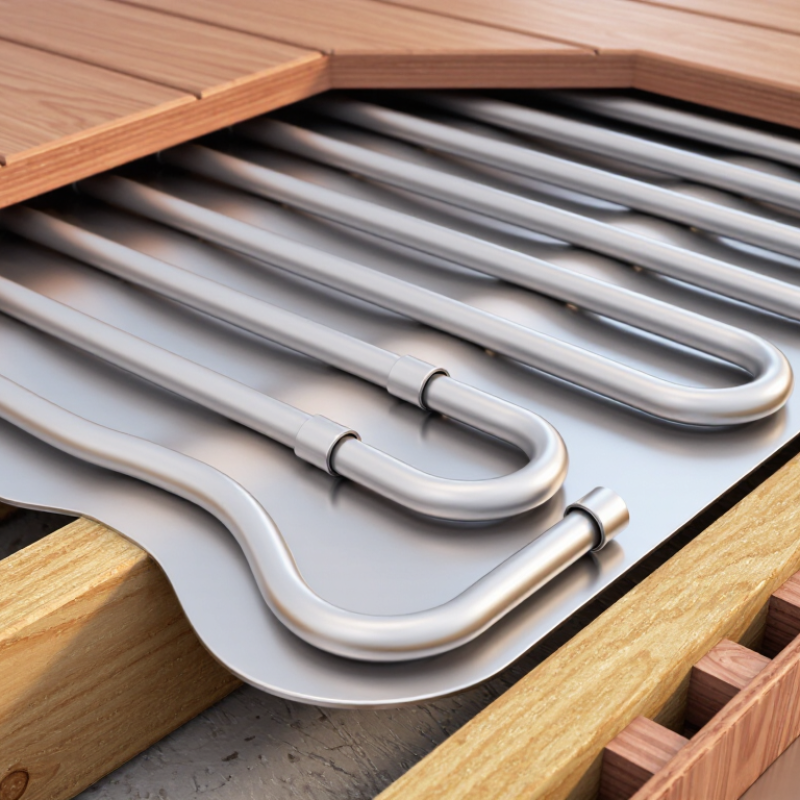
Hydronic heat transfer plates are thin metal channels fitted beneath a finished floor, usually around PEX tubing. Their job is simple: spread heat sideways from the pipe into a wider area of flooring. Without a plate, heat can remain concentrated near the tubing. Copper and aluminum conduct heat well, but plate thickness, tube fit, and floor materials all affect real-world output. Small gaps matter.

The U.S. Energy Information Administration’s 2020 Residential Energy Consumption Survey reports that space heating accounts for about 42% of household energy use. That figure is not specific to radiant floors, but it shows why distribution losses and control choices matter. A plate helps transfer heat to the floor, while insulation below the system limits heat escaping downward. Warm feet, not hot pipes. Water temperature, tubing spacing, and floor coverings still determine how evenly a room warms.

During installation, plates should sit firmly against the tubing and supporting surface. A loose fit may reduce contact and create uneven warm and cool strips. Thick rugs or insulating floor finishes can also slow heat reaching the room. I would not treat a plate’s advertised output as a guaranteed result; actual performance depends on the whole assembly and careful installation. That uncertainty is easy to underestimate. DOE Building America guidance likewise emphasizes evaluating radiant-floor systems as assemblies, including their insulation and controls.

Hydronic Heat Transfer Plate Materials: Thermal Conductivity

Heat transfer plates spread heat from hydronic tubing across the floor assembly. These approximate room-temperature conductivity values help compare common metals; actual system performance also depends on plate shape, contact with the tubing and subfloor, and installation.

Approximate material values in W/m·K; values vary with alloy and composition.

Key Types and Materials Used in Radiant Heating Plates

Hydronic heat-transfer plates mainly come as stamped sheet plates or heavier extruded channels. Stamped aluminum plates are thin, easy to wrap around tubing, and commonly used beneath wood subfloors. Extruded plates have deeper grooves and more mass, which can improve tube contact.

Fit matters. A loose groove leaves air gaps, slowing heat flow into the floor.

Material choice affects lateral heat spreading. ASHRAE Handbook—Fundamentals material-property tables give representative room-temperature conductivities near 200 W/(m·K) for aluminum, 50 for carbon steel, and 390 for copper; actual values vary by alloy. Copper spreads heat well but usually costs more, while steel is sturdy yet conducts heat less readily.

Not magic.

Plate thickness, tube spacing, floor covering, and installation quality also shape performance. A thick rug can blunt the benefit of a highly conductive plate. On real jobs, the specified material may look ideal on paper, but uneven contact or awkward joist bays can complicate the result. That detail deserves checking before the floor closes.

How to Evaluate Plate Performance, Compatibility, and Value

A hydronic heat-transfer plate should be judged as part of a floor assembly, not as a stand-alone piece of metal. The U.S. Energy Information Administration’s 2020 Residential Energy Consumption Survey attributes about 42% of household energy use to space heating, making mismatched components costly over time. ASHRAE’s Handbook—HVAC Systems and Equipment emphasizes that radiant output depends on water temperature, tube spacing, and floor construction. Ask for output figures at conditions close to your design, not a single best-case number.

Check the plate’s channel against the tubing’s outside diameter and profile. Then confirm its width fits the joist bay and leaves good contact along the tube. Subfloor thickness, insulation below the plates, and flooring resistance also affect heat delivery. A thick rug can matter more than a small plate upgrade. Looks can mislead.

For value, compare installed cost with documented output, material thickness, coverage, and fastening requirements. A broad plate may spread heat more evenly, but only if it sits flat against the subfloor. Thin or loose sections can leave warm and cool stripes. There is a catch: published ratings rarely mirror every real floor. Treat them as comparisons, then check the full assembly with a heating designer or installer before ordering.

Ten Notable Hydronic Heat Transfer Plates Compared

A useful comparison of ten hydronic heat-transfer plate designs starts with their construction: thin stamped aluminum, heavier-gauge aluminum, extruded aluminum, shallow-channel plates, deep-channel plates, single-groove plates, double-groove plates, full-coverage plates, partial-coverage plates, and plates fitted between floor joists. Each handles tubing contact and heat spread differently. A snug channel can improve contact; a broad plate can distribute warmth across more subfloor. Small details matter.

Installation changes the result. In a staple-up retrofit, joist spacing, insulation, tubing diameter, and plate fit all affect heat delivery. The U.S. Energy Information Administration’s 2020 Residential Energy Consumption Survey reports that space heating accounted for about 42% of household energy use. That makes system design consequential, but the figure does not measure plate performance. ASHRAE’s HVAC Systems and Equipment Handbook likewise treats radiant output as dependent on the full assembly, not the plate alone.

For a practical comparison, check plate thickness, coverage, channel fit, and installation access—not just the material label. Aluminum transfers heat well, yet a loose tube or uneven subfloor can blunt that advantage. I would not call one style universally best. Real floors are rarely perfect; even careful estimates can miss a cold edge near an exterior wall.

10 Best Hydronic Heat Transfer Plates for Radiant Heating - Ten Notable Hydronic Heat Transfer Plates Compared

No. Plate Style Typical Tube Fit Typical Plate Width Heat-Spreading Profile Installation Characteristics Best-Suited Use Key Consideration
1 Stamped aluminum, single channel Commonly 1/2-inch PEX Often about 4–6 inches Good contact along one tube run; spreads heat across the plate and into the floor assembly. Lightweight and typically fastened to the underside of a subfloor. General-purpose staple-up radiant floors. Plate width, channel fit, and installation spacing vary by design; confirm compatibility with the actual tubing.
2 Stamped aluminum, single channel for larger tubing Commonly 5/8-inch PEX Often about 4–6 inches Provides a close-fitting channel for a larger tube size. Installed beneath the subfloor; plate profile must match the tube diameter. Staple-up layouts designed around 5/8-inch tubing. A plate made for 1/2-inch tubing should not be assumed to fit 5/8-inch tubing.
3 Wide stamped aluminum, single channel Commonly 1/2-inch PEX Often about 6–8 inches Wider coverage can distribute heat over a broader strip of subfloor. Requires adequate clearance and a suitable fastening surface beneath the floor. Staple-up installations where broader plate coverage is desired. Actual heat output depends on the complete floor assembly, water temperature, tube spacing, and insulation.
4 Double-channel stamped aluminum Often designed for two parallel 1/2-inch tube runs Typically wider than a single-channel plate; check product dimensions Can hold two tube runs in one plate, increasing tube density in a given area. Requires careful tube routing and a layout that matches the plate spacing. Selected staple-up layouts needing two parallel runs in a wider plate. Do not use two channels as a substitute for hydraulic or heat-output design; verify spacing and circuit requirements.
5 Extruded aluminum, single channel Available for common PEX sizes, including 1/2-inch and 5/8-inch Profile-specific; check the manufacturer’s drawing A formed groove can provide substantial tube contact when the tube and channel are correctly matched. Generally more rigid than thin stamped sheet plates and may require a different fastening approach. Installations prioritizing a robust, defined tube channel. Higher material mass or stiffness does not alone determine system performance; fit and floor construction matter.
6 Extruded aluminum, larger-tube channel Commonly offered for 5/8-inch tubing Profile-specific; check the product dimensions Designed to make broad contact around a larger tube profile. Accurate alignment is important because the channel is formed to a particular tube size. Staple-up systems using 5/8-inch tubing and compatible extruded profiles. Check the specified tube outside diameter, not only the nominal tube size.
7 Thin stamped aluminum, compact channel Commonly available for 3/8-inch tubing Often narrower than plates intended for larger tubing Provides a close channel for small-diameter tubing; overall spreading area depends on plate width. Can suit tighter routing, but small tubing generally requires a system-specific circuit layout. Projects designed around 3/8-inch tubing and compatible spacing. Confirm tubing pressure drop, loop length, and heat-output design separately from plate selection.
8 Heavy-gauge stamped aluminum, single channel Commonly designed for 1/2-inch or 5/8-inch tubing Varies by tube size and profile Often more resistant to bending than thinner sheet profiles; heat spreading still depends on contact and geometry. May be heavier and less flexible to handle than lightweight stamped plates. Installations where a sturdier sheet-style plate is preferred. “Heavy-gauge” is not a universal thickness specification; compare published material thickness and dimensions.
9 Clip-in or snap-fit aluminum channel plate Tube-size-specific; commonly offered for standard PEX sizes Profile-specific Channel geometry holds the tube in place and supports contact along the run. May simplify tube retention, but the required mounting surface and fastening method are design-specific. Layouts where secure tube retention is an installation priority. Verify that the tube can be seated and retained as intended without damage or excessive force.
10 Continuous or long-run aluminum transfer plate Usually designed around a specified PEX size Long sections; width varies by profile Creates an extended heat-spreading path along a straight tube run. Long pieces can reduce the number of separate plate sections but need suitable access and support. Long, relatively straight staple-up runs with compatible joist-bay geometry. Plan around joists, turns, connections, and expansion considerations before selecting plate length.

Comparison note: These entries describe common plate styles rather than specific branded products. Widths and tube fits are typical market configurations, not universal specifications. Confirm dimensions, material thickness, tube outside diameter, fastening requirements, and installation instructions for the selected plate. Heat output depends on the full radiant-floor assembly and system design.

Choosing and Installing Plates for Different Floor Systems

For joist-bay staple-up systems, choose plates sized to the tubing and the available bay width. Aluminum plates should hold the tube firmly against the subfloor, not leave it loose in a shallow channel. Wider plates spread heat across more wood, while narrower plates can fit around framing and obstructions. Measure the joist spacing before ordering; a small mismatch can turn installation into awkward trimming.

Above the subfloor, grooved panels often combine insulation with formed channels for tubing. Use plates or panels designed for the specific tube diameter, and check that the finished floor can accommodate the added height. Tile and stone usually need a different support approach than wood or laminate. For tubing embedded in a concrete slab, separate transfer plates are generally unnecessary because the slab distributes heat. Details vary.

A common installation miss is fastening too close to the tubing. Mark the tube path, follow the panel instructions, and pressure-test the loop before covering it. Keep plates in firm contact with the subfloor; loose edges can create uneven heat and ticking sounds. Small details matter. Also check the flooring maker’s temperature limits and account for rugs, which can trap heat. Even a careful layout may need adjustment around doors or cabinets.

Learn More

Connect with us today to learn more about our industrial automation solutions—and how to commission them for your application.