Top Arm Exercise Machines for Commercial Gyms

Choosing the right arm equipment can shape how members train, recover, and return to your commercial gym. Top Arm Exercise Machines for Commercial Gyms should offer more than attractive frames and polished cables. They must support safe movement, consistent resistance, and practical maintenance.

A reliable machine feels stable under repeated use. Its seat should adjust smoothly, even when several members share it daily. Handles need comfortable grips, while weight stacks should move quietly and predictably. In a busy facility, small details matter. A loose pin or awkward adjustment can interrupt an entire workout.

This guide examines machines through real commercial-use concerns, including biomechanics, durability, user comfort, and service access. It considers preacher curls, cable stations, triceps units, and multifunctional systems. Each option serves a different training purpose. Some save floor space. Others provide better isolation or easier progression for beginners.

No machine is perfect. Space changes everything. A premium unit may still fail if members cannot adjust it quickly. Personal testing, manufacturer specifications, warranty terms, and feedback from experienced gym operators can reveal problems that photographs hide. That part deserves more attention.

The goal is not to crown one universal winner. It is to help facility owners compare equipment with clearer expectations. A strong choice should suit the gym’s traffic, membership profile, budget, and maintenance capacity. It should also encourage controlled training without making the experience feel complicated.
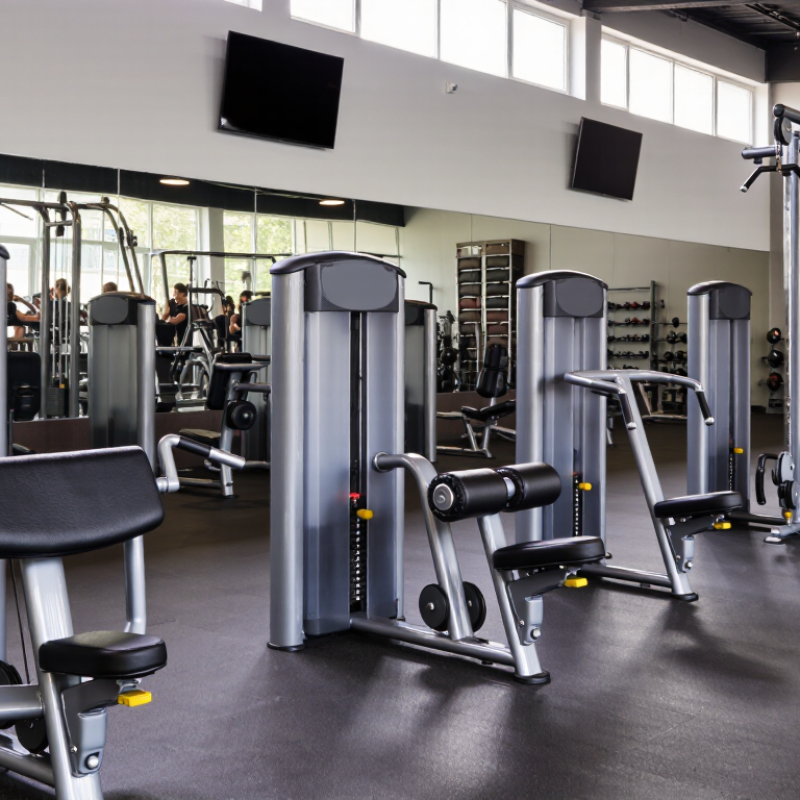
Top Arm Exercise Machines for Commercial Gyms

Arm Exercise Machines: Purpose, Scope, and Commercial Gym Applications

Top Arm Exercise Machines for Commercial Gyms

Arm exercise machines support controlled training for the biceps, triceps, and forearms. They guide movement through a predictable path. This helps beginners learn positioning without managing heavy free weights. A cable station offers wider exercise variety. A preacher curl machine provides strong upper-arm support. A seated triceps machine keeps the elbows aligned during pressing.

The scope is broader than muscle isolation. These machines help gyms serve beginners, rehabilitation-focused members, and experienced lifters. Adjustable seats, clear resistance markings, and accessible handles improve daily usability. In a busy facility, durable upholstery matters. So does simple maintenance. Staff should inspect cables, pivot points, pads, and locking systems regularly. Small faults can change exercise comfort and safety.

Placement affects commercial value. Put arm machines near other strength equipment, but leave enough space for entry and adjustment. I have found that poor spacing creates hesitation during peak hours. A machine may be excellent, yet underused if members cannot approach it comfortably. Fixed movement is useful, but it is not perfect for every body shape. Some users need different seat heights or lighter starting resistance. Gym planners should observe real member behavior, not rely only on equipment specifications. That feedback can reveal awkward handles, confusing adjustments, or machines that require better instruction.

Key Muscle Groups Targeted by Commercial Arm Machines

Top Arm Exercise Machines for Commercial Gyms

Commercial arm machines can train more than visible biceps. They can also develop the triceps, brachialis, forearms, and supporting shoulder muscles. A seated curl machine keeps the upper arm stable, helping lifters load the biceps through a controlled range. The brachialis works beneath the biceps and contributes to overall elbow strength. Neutral-grip handles often make this muscle easier to feel. Small details matter.

Triceps press machines emphasize the three heads of the triceps, especially when the elbows remain close to the torso. Cable stations offer adjustable angles for pressdowns, overhead extensions, and single-arm work. These variations can shift tension across the muscle, although they do not isolate each head perfectly. Assisted dip machines also train the triceps, chest, and front shoulders. They are useful when bodyweight dips feel unstable or too demanding.

Grip position influences the forearms and wrist muscles. A thicker handle may challenge grip endurance, while a neutral grip can reduce wrist discomfort for some users. In practice, I have seen lifters choose excessive resistance and shorten every repetition. That weakens the training effect. Slow lowering phases and steady elbow alignment usually provide better feedback. Still, machine paths differ, and one setup may not suit every body. A qualified fitness professional should check seat height, joint alignment, and progression before heavier work. My own judgment is not always perfect; comfort can sometimes hide poor technique.

Top Arm Exercise Machines for Commercial Gyms

Key Muscle Groups Targeted by Commercial Arm Machines

The chart compares the major muscle groups commonly involved in commercial arm-machine exercises. A value of 1 indicates that the muscle group is a primary or consistently involved contributor to the movement; 0 indicates that it is not a main target. Actual involvement varies with grip, range of motion, resistance, and exercise setup.

Main Types of Arm Exercise Machines and Their Functions

Top Arm Exercise Machines for Commercial Gyms

Commercial gyms usually need several arm machines because each design trains movement differently. Cable stations provide adjustable resistance for curls, pressdowns, and single-arm extensions. Their pulleys support smooth tension through much of each repetition. However, cable height can change joint angles more than beginners expect.

Selectorized curl machines stabilize the upper arm and guide users through a controlled elbow bend. They work well for new members and busy training areas.

Preacher curl machines reduce shoulder movement during biceps training. The angled pad makes cheating harder, although poor seat adjustment can stress the elbows. Triceps press machines focus on elbow extension with a fixed pressing path. Assisted dip machines combine triceps and chest work while reducing bodyweight demands. Plate-loaded arm machines often feel more natural, but their resistance jumps may be too large for smaller users. No machine is perfect.

Tips: Adjust the seat before selecting weight. Keep wrists neutral and elbows aligned. Use slow repetitions, especially near full extension. Staff should inspect cables, pads, and locking pins regularly. I have found that users often chase heavier stacks too soon. That habit can reduce control and hide weak points. Test each machine with a light load first, then record settings for consistent sessions.

How to Evaluate Safety, Adjustability, and User Comfort

Top Arm Exercise Machines for Commercial Gyms

Safety and adjustability should guide every commercial arm-machine purchase. The Health & Fitness Association reported 72.9 million U.S. fitness-facility members in 2023. That volume demands equipment built for repeated, varied use. Inspect frame welds, cable routing, weight-stack guards, and exposed pinch points. ASTM F2276 offers a useful fitness-equipment safety reference, but certification cannot replace daily inspections. Check whether locking pins engage fully and remain visible during setup. A stable base matters when users apply uneven force. My own first-pass checklist can be too rigid. Real users move differently.

Comfort begins with alignment, not soft padding. The American College of Sports Medicine’s 2024 Worldwide Survey ranked traditional strength training fifth among fitness trends. Choose machines with adjustable seats, independent handles, and clear elbow alignment markers. Test the starting position with shorter and taller users. Their shoulders should stay relaxed, not forced forward. Handles need enough diameter for secure gripping without excessive wrist bending. Pads should support the upper arm without pressing into the elbow crease. Fit beats novelty. Watch for pressure points after several repetitions, not just the first movement. A quiet pivot helps, though noise alone does not prove poor quality. Record user feedback, maintenance findings, and adjustment failures before approving the final layout.

Top Arm Exercise Machines for Commercial Gyms - How to Evaluate Safety, Adjustability, and User Comfort

Machine Type Primary Training Use Key Safety Evaluation Points Adjustability and User Fit Comfort and Accessibility Features Commercial Gym Suitability
Selectorized Biceps Curl Machine Controlled elbow-flexion training with a stable seated position. Check for a fully shrouded weight stack, an independent start position, rounded frame edges, secure handles, and a range-of-motion limiter that prevents excessive elbow extension. Look for an adjustable seat, pivot alignment that matches the elbow joint, multiple starting-angle settings, and a resistance range suitable for both beginners and experienced users. A contoured arm pad, neutral wrist positioning, easy-to-reach adjustment pins, and clear instruction signage improve comfort and reduce setup errors. High
Efficient for supervised and independent use.
Triceps Extension Machine Focused elbow-extension work for the triceps through a guided movement path. Evaluate the stability of the seat and chest support, the smoothness of the cam or pulley system, the security of the handles, and protection from pinch points around moving linkages. Prefer adjustable seat height, handle position, starting range, and resistance increments that allow users with different arm lengths to maintain aligned elbows. Padded chest support, washable upholstery, non-slip grips, and a posture-supporting back or torso pad help limit unnecessary shoulder and wrist strain. High
Suitable for high-frequency circuit training.
Dual-Function Arm Press Machine Combines pushing patterns that emphasize the triceps, shoulders, and upper chest. Confirm that each arm moves independently or is balanced by a protected linkage, resistance starts smoothly, and the handles cannot travel beyond a user-safe end position. Important adjustments include seat height, back-pad angle, handle position, and starting range. Independent arms can accommodate left-to-right strength differences. A supportive back pad, rotating or multi-grip handles, low step-in height, and accessible controls improve comfort for a broad range of users. High
Versatile, but requires more floor space than single-purpose units.
Adjustable Cable Crossover Station Supports curls, pushdowns, overhead extensions, and functional upper-body movements. Inspect cable integrity, pulley guards, attachment points, frame anchoring, stack guards, and the emergency-stop procedure where powered features are included. Dual adjustable pulley columns should offer broad vertical travel, clearly marked settings, compatible attachments, and enough clearance for different user heights and exercise positions. Multiple handle options, non-slip flooring, unobstructed access, and adequate spacing between columns improve comfort and reduce collision risk during busy periods. High
Excellent exercise variety and space efficiency when programmed well.
Preacher Curl Bench with Free Weights Isolates the biceps while limiting shoulder movement during curling exercises. Check frame stability, bench weight capacity, welded joints, rack security, and the presence of safe weight-storage points that do not obstruct the user or walkway. An adjustable seat, several arm-pad positions, and an appropriately angled pad help accommodate different torso and arm lengths. Firm but cushioned upholstery, a comfortable elbow edge, easy plate or dumbbell access, and sufficient space around the bench support safer transitions. Medium
Requires active supervision of free-weight handling and storage.
Assisted Dip and Pull-Up Machine Provides counterbalanced assistance for dips and pull-ups, engaging the triceps and upper body. Verify a stable step platform, secure knee pad, protected counterweight system, slip-resistant grips, and a controlled return path that prevents sudden platform movement. The assistance range should be fine enough for gradual progression. Adjustable handles and a height-appropriate knee pad improve alignment for different users. A wide, supportive pad, low step height, multiple grip positions, and clear entry and exit space benefit beginners and users rebuilding strength. High
Useful for progressive strength training with clear setup instructions.
Plate-Loaded Arm Press Delivers a more freely loaded pressing movement for experienced strength-training users. Assess frame rigidity, weight-storage capacity, handle restraint, starting-position control, and the availability of spotter access. Confirm that plates cannot contact nearby equipment. Adjustable seat and back support are essential. Independent lever arms and multiple grip positions can improve fit and accommodate different shoulder widths. Supportive pads, textured handles, clear loading zones, and sufficient clearance around the machine reduce awkward lifting and improve user confidence. Medium
Strong option for advanced areas with trained users and staff oversight.
Resistance-Band and Functional Arm Station Light-to-moderate resistance training, rehabilitation-style movements, and warm-up exercises. Inspect anchor-point ratings, attachment wear, frame stability, and the condition of bands and handles. Replace elastic components when cracking, fraying, or loss of tension is observed. Adjustable anchor heights, several attachment points, and a clear resistance-progression system allow the station to serve users with varied strength levels. Lightweight handles, low-impact resistance, open access, and an uncluttered training zone support comfortable use by beginners and older adults. Standard
Best used as a complementary station rather than a primary strength unit.

Evaluation note: Before purchasing, verify that each machine complies with applicable local commercial-gym safety requirements, is installed on a suitable level surface, includes accessible maintenance points, and provides clear user instructions. Actual comfort and suitability should be confirmed through supervised, hands-on testing by users of different heights and ability levels.

Choosing, Arranging, and Maintaining Machines for Commercial Gyms

Top Arm Exercise Machines for Commercial Gyms

Choosing, arranging, and maintaining arm machines requires more than counting available stations. A commercial gym benefits from varied movement patterns. Include a cable station, seated biceps curl machine, triceps press machine, and assisted dip unit. Adjustable seats and handles should suit different body sizes. Smooth resistance matters more than impressive appearance. Test each machine before opening hours. Listen for clicking, uneven movement, or sudden tension changes.

Arrange machines according to traffic, not simply by muscle group. Place cable equipment near open space because users need room to step back safely. Keep dip and pressing stations away from narrow walkways. Allow enough clearance for moving weight stacks and supervising members. Clear sightlines help staff notice poor technique. A layout may look efficient on paper but feel crowded during peak hours. That mistake is easy to make.

Maintenance needs a written schedule and daily attention. Staff should wipe contact surfaces, check adjustment pins, and inspect cables for broken strands. Loose bolts, worn upholstery, and damaged grips require prompt action. Record repairs with dates and machine locations. This creates accountability and reveals repeated failures. Do not rely only on manufacturer guidance; actual member usage may be heavier than expected. Small oversights happen. Regular staff training can reduce them, although no inspection system is perfect. Reassess the arrangement after observing real traffic for several weeks.

Learn More

Connect with us today to learn more about our industrial automation solutions—and how to commission them for your application.