Connect with us today to learn more about our industrial automation solutions—and how to commission them for your application.
7 Best Fence Machines for Sale in 2026
Choosing the right Fence Machine is less about chasing the biggest production number and more about matching equipment to the work ahead. A compact farm may need a practical post driver, while a contractor building long runs may value faster feeding and fewer manual adjustments. Terrain, fence design, available power, transport, and operator experience all affect which machine makes sense.
This guide looks at seven Fence Machines for sale in 2026, with attention to the details buyers can compare: intended use, working capacity, setup, controls, maintenance, and support. Small details matter. A machine that looks efficient in a product photo may be awkward to move across uneven ground or difficult to service far from a dealer. Specifications also vary by configuration, so confirm current details, pricing, warranty terms, and parts availability with the seller before making a decision.
No single model suits every property or crew. That is worth admitting. The best choice balances purchase cost with the time and effort it can realistically save. Consider the materials you use, the length of fence you install, and how often the equipment will run. Then compare each option against those needs, not just its headline features. The shortlist can help narrow the field, but a careful site assessment and a clear conversation with the supplier still matter.
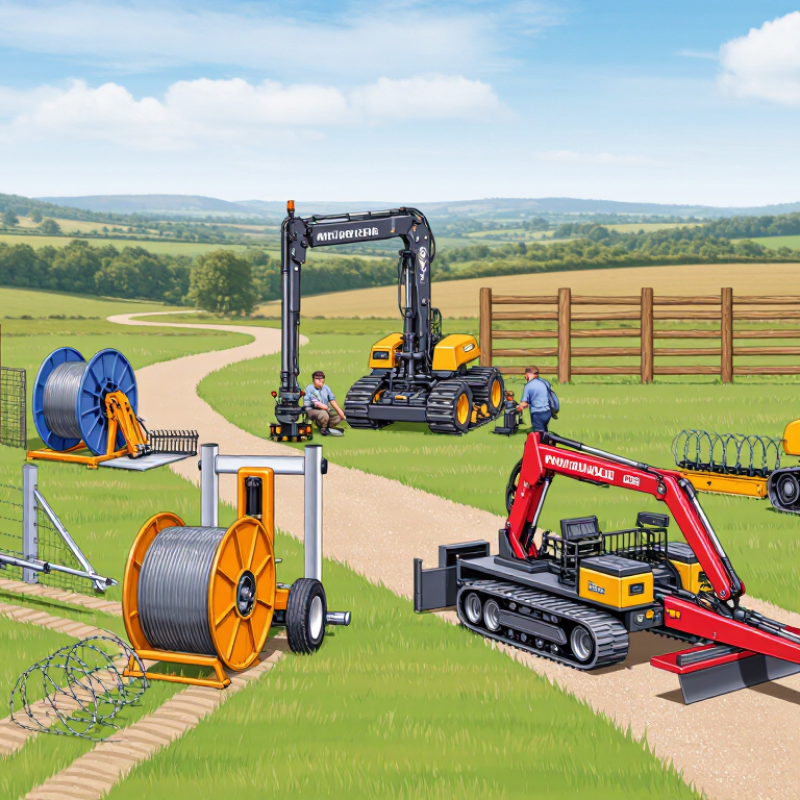
What Fence Machines Are and How They Are Used
Fence machines are tools for setting posts, preparing holes, handling wire, and tightening fence lines. A tractor-mounted post driver uses impact force to seat posts in firm soil. Augers make holes where rocky ground or larger posts call for them. Wire dispensers and tensioners help crews unroll and pull fencing evenly. Some machines serve workshops, forming or joining wire panels before installation.
The scale of farm operations gives this equipment practical context. USDA’s National Agricultural Statistics Service reported 1.9 million U.S. farms covering 880.1 million acres in its 2022 Census of Agriculture. That figure describes farmland, not fence length or machinery sales. Still, on a long boundary, mechanized post setting can reduce repetitive manual work. Operators match equipment to soil, slope, post material, and fence design. A machine that works well in level pasture may struggle on wet ground or tight corners. Small details matter. Correct post spacing and steady wire tension affect durability, while rushed setup can leave a line uneven. Speed is tempting to overvalue. Regular checks of guards, hydraulic connections, and moving parts help keep the work controlled.
Main Types of Fence Machines Available in 2026
Fence machines serve different jobs, so the right type depends on the product and worksite. Wire mesh welding machines join crossing wires into rigid panels or rolls. Buyers should check wire diameter, mesh spacing, working width, and changeover time. A sample panel can reveal uneven welds before a larger order begins.
Chain-link fence machines weave wire into continuous mesh and may include equipment for forming the edge selvage. Field fence machines make woven wire with varied spacing, often using closer gaps near the bottom to help contain smaller animals. Barbed-wire machines twist strands and add barbs at set intervals. These systems need consistent wire feeding. Small feed variations matter.
Other options handle installation rather than fence production. Hydraulic or pneumatic post drivers push posts into soil, while tensioning equipment stretches wire between end posts. Ground conditions, post material, and access space affect machine choice. A powerful driver is not automatically the best fit.
For any type, review rated output alongside maintenance access, operator guarding, and available technical support. Ask how tooling changes and routine cleaning are handled. Specifications can look impressive on paper, yet a machine may not suit a small workshop’s power supply or daily production mix. That deserves a second look. Compare sample output and operating costs before choosing.
7 Best Fence Machines for Sale in 2026 — Main Types of Fence Machines Available in 2026
| Machine Type | What It Does | Typical Materials | Common Applications | Key Buying Considerations |
|---|---|---|---|---|
| Chain-Link Fence Weaving Machine | Weaves wire into a continuous diamond-pattern mesh, which is cut to the required roll length. | Galvanized or plastic-coated steel wire; finished mesh is commonly supplied in rolls. | Residential boundaries, sports areas, commercial sites, and perimeter security. | Check the supported wire diameters, mesh opening range, roll width, changeover requirements, and whether automatic cutting or winding is included. |
| Welded Wire Fence Panel Line | Feeds longitudinal and cross wires into a grid, resistance-welds their intersections, and cuts panels to length. | Low-carbon or galvanized steel wire; coating may be applied before or after welding, depending on the line and product specification. | Welded mesh panels, garden fencing, partition panels, and some livestock or industrial enclosures. | Verify wire-feed configuration, panel width and length range, mesh spacing, welding capacity, and the electrical supply required. |
| Field Fence Weaving Machine | Joins horizontal and vertical wires to form knotted or hinged-joint mesh, often with varied spacing between horizontal wires. | Galvanized steel wire, usually supplied on wire coils. | Farm boundaries, pasture, ranch fencing, and livestock enclosures. | Match the machine to the required knot style, wire gauge, fence height, wire spacing, and intended livestock use. |
| Barbed Wire Making Machine | Twists line wires together and secures barbs at regular intervals to make barbed wire. | Galvanized steel line wire and barb wire. | Agricultural boundaries and perimeter fencing where a barbed-wire design is permitted and appropriate. | Confirm line-wire and barb-wire diameter ranges, barb spacing, twist pattern, coil take-up, and applicable local safety rules. |
| Razor Wire Coiling Machine | Forms concertina or straight razor-wire coils from metal strip and core wire; some configurations also clip adjacent loops together. | Usually galvanized or stainless-steel strip with a supporting core wire. | Restricted-access and high-security perimeter installations, subject to local regulations. | Check compatible strip profiles, coil diameter, clipping method, guarding, and safety procedures for handling sharp material. |
| Fence Post Driver | Uses impact force to drive posts into the ground, with handheld, tractor-mounted, skid-steer, or excavator-mounted configurations available. | Timber, steel, or other compatible posts, depending on the driver and attachment. | Farm, ranch, roadside, and site fencing where posts can be driven into suitable ground. | Compare carrier compatibility, post-size range, impact energy, access conditions, soil and rock conditions, and operator safety features. |
| Post-Hole Auger | Rotates an auger bit to drill holes for fence posts; available as handheld or machine-mounted equipment. | Ground is drilled rather than processed; bit choice depends on soil conditions and hole dimensions. | Fence installation where posts are set in prepared holes, including installations in ground unsuitable for direct driving. | Match the power source, mounting system, bit diameter and length to the post design; account for soil, stones, utilities, and required hole depth. |
“Best” depends on the fence product and installation method. Capabilities vary by configuration; confirm specifications, safety requirements, and local regulations with the equipment supplier before purchase.
Key Features to Compare Before Buying
When comparing fence machines for 2026, match the equipment to the fences you actually build. A compact post driver may suit short runs and tight access, while long projects may justify a faster, higher-capacity setup. Check hydraulic flow, compatible post sizes, wire-reel capacity, and adjustment time. USDA NRCS Conservation Practice Standard 382 treats fence design as site-specific, so terrain and livestock needs matter. Ask how the machine handles rocky ground, slopes, and frequent wire changes. Brochure speed can mislead; setup time often changes the real pace.
Safety and serviceability deserve equal attention. The U.S. Bureau of Labor Statistics recorded 1,075 fatal work injuries in construction in 2023. That figure is not specific to fence work, but it supports checking operator visibility, guarding, emergency controls, and stable transport. Look for accessible wear parts and clear maintenance intervals. A machine that is difficult to service can lose valuable workdays. Small details matter. I would compare the quoted capacity with your typical crew and soil, not the best-case demonstration. Ask sellers for operating dimensions, required hydraulic flow, and realistic daily output under similar site conditions.
Seven Fence Machines to Consider in 2026
A compact post-hole auger suits small crews working in tight yards. For rocky ground, check the bit’s diameter and torque before renting or buying. A hydraulic post driver can set posts quickly, but uneven spacing still depends on careful layout. A wire straightening and cutting machine helps prepare consistent lengths for repairs or production. Measure a sample coil first.
For mesh production, compare a chain-link weaving machine with a welded-mesh machine. The first forms interlocking wire into rolls; the second joins crossing wires into rigid panels. A field-fence knotting machine makes flexible livestock mesh, while an automatic panel line can speed up repeat jobs. These are different tools, not interchangeable upgrades. I would test the intended wire gauge and finished panel size before committing; specifications can look better on paper than in a noisy workshop.
Tips: Match capacity to daily output, not a best-case sales figure. Ask about guarding, spare parts, setup time, and operator training. Check weld consistency across several panels. Keep a small test batch. It may reveal a mistake early. Include power requirements and floor space in your budget, too.
How to Match a Fence Machine to Your Needs
Choosing a fence machine starts with the fence you plan to build, not the machine’s advertised speed. A compact unit may suit short livestock runs, while larger projects often need equipment that handles continuous wire feeding and heavier posts. Check the fence material, post spacing, and expected daily output. A machine designed for woven wire may not handle chain-link work or repeated heavy-duty installation equally well. I would not choose by catalog speed alone; that number can mislead.
Consider the ground and the crew, too. Rocky soil, slopes, and tight corners can slow installation and affect which machine features matter most. Compare the machine’s working width, power requirements, transport setup, and access to replacement parts. Ask for a demonstration using materials close to your own. Also calculate setup and maintenance time, not just installation time. I may be overvaluing ease of transport, but a machine that cannot reach the job site is no bargain.
Tips: Measure a typical fence section before shopping. Bring details about your terrain and wire type. Ask how adjustments are made, and whether one operator can manage them safely. Leave room in your budget for routine upkeep.