
7 Best Machine Spindles for CNC Machines in 2026

Choosing the right Machine Spindle can determine whether a CNC process feels controlled or constantly compromised. In 2026, spindle selection involves more than maximum RPM. Buyers must compare torque curves, bearing design, cooling methods, runout, power delivery, tool interface, and service support.

Industry demand supports this careful approach. The International Federation of Robotics reported 541,302 industrial robots installed worldwide in 2023, showing continued investment in automated production. The World Robotics 2024 report also recorded a global operational stock exceeding four million industrial robots. More automated factories require stable cutting performance, predictable maintenance, and accurate tool positioning. A spindle that survives a test cut may still struggle during continuous production.

This guide evaluates seven leading spindle options for CNC machines using practical and technical criteria. These include speed range, rated power, continuous torque, thermal behavior, vibration control, compatibility, and total ownership cost. ISO 230 testing principles and ISO 1940-1 balancing practices provide useful reference points for accuracy and rotational stability. Manufacturer specifications remain important, but they do not tell the entire story. A compact 24,000 RPM spindle may excel in aluminum machining, while a slower high-torque model may perform better in steel. That difference matters.

No ranking is universal. Real results depend on machine rigidity, tooling, workholding, programming, and operator experience. Even published performance figures can require careful interpretation. The following selections highlight strong candidates for different CNC applications, budgets, and production demands in 2026. Some choices may be imperfect. That is worth acknowledging. A reliable spindle is not always the fastest one; it is the one that consistently matches the machine, material, and workload.
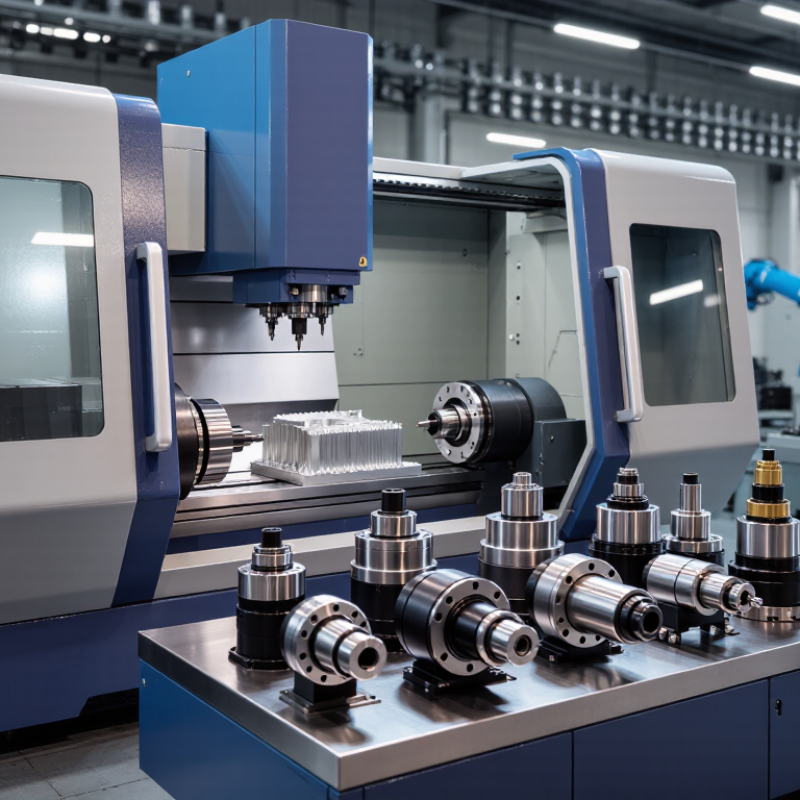
7 Best Machine Spindles for CNC Machines in 2026

CNC Machine Spindles: Purpose, Design, and Key Performance Factors

7 Best Machine Spindles for CNC Machines in 2026

CNC Machine Spindles: Purpose, Design, and Key Performance Factors

A spindle is the cutting engine of a CNC machine. It rotates the tool, controls cutting speed, and transfers torque into the workpiece. A suitable spindle must match the material, cutter size, and production schedule. The highest rpm is not always the best choice. Aluminum may need speed, while steel often rewards steadier torque and careful heat control.

Spindle design affects accuracy and service life. Look closely at bearing arrangement, shaft stiffness, tool-holding method, cooling system, and housing protection. Ceramic or hybrid bearings can support fast rotation, but they still need correct preload and lubrication. Air cooling can simplify maintenance, while liquid cooling may control heat more consistently during long cycles. Even a small temperature rise can change tool position and affect dimensional accuracy.

Performance testing should include speed stability, torque across the working range, vibration, runout, and noise. A spindle with low advertised runout may perform poorly if the tool holder is dirty or poorly balanced. This detail is often overlooked. Select a model with enough power, not excessive power, for the machine’s frame and electrical system. In practice, duty cycle matters as much as peak output. I would also leave a safety margin, because real workshops rarely cut under perfect conditions. Dawning tool wear, interrupted cuts, and imperfect setup can expose weaknesses quickly.

How to Evaluate Spindle Speed, Power, Torque, and Cooling Systems

7 Best Machine Spindles for CNC Machines in 2026

Selecting the seven best machine spindles starts with your cutting material and tool diameter. Speed should match the cutter, not marketing claims. Small tools benefit from higher rpm, while aluminum and steel often need stronger torque. At 24,000 rpm, a 12 kW spindle delivers roughly 4.8 Nm. That sounds impressive. However, torque may fall sharply below the rated speed.

According to the U.S. Department of Energy’s Motor System Market Assessment, motor-driven equipment consumes about 69% of industrial electricity. Efficiency therefore matters during every shift. Compare spindle power at continuous duty, not only peak output. Check the torque curve, acceleration time, and inverter compatibility. Grand View Research estimates the CNC machine market will grow at a 10.3% CAGR from 2024 to 2030. That growth increases pressure to select efficient, durable systems.

Cooling deserves equal attention. Liquid cooling usually controls heat more consistently than air cooling during long, heavy cuts. Install flow monitoring, clean filters, and a stable chiller temperature. ISO 14955-1 also encourages measuring machine energy performance across operating conditions. I still distrust specifications without test conditions. Ambient temperature, tool balance, and bearing preload can change results. A quiet spindle is not automatically a reliable spindle. Evaluate vibration at working speed, inspect service records, and test the actual material before committing.

Seven Leading Machine Spindles for CNC Machines in 2026

Seven Leading Machine Spindles for CNC Machines in 2026

Machine spindle choice now depends on material, duty cycle, speed range, and maintenance access. Grand View Research projects the global CNC machine market to expand at about 8.5% annually from 2024 to 2030, increasing pressure on shops to improve spindle performance.

High-speed electric spindles suit aluminum, plastics, and detailed engraving. High-torque spindles handle steel, titanium, and deep cuts. Belt-driven spindles offer practical serviceability and strong torque transfer. Gear-driven spindles support heavy milling at lower speeds. Built-in motor spindles reduce transmission losses and improve compactness. Liquid-cooled spindles control heat during long production cycles. Air-cooled spindles simplify installation for lighter workloads. These seven categories can overlap.

Thermal stability matters more than a headline RPM figure. A 30,000-rpm spindle may perform poorly when run hot for hours. It needs proper balancing, clean coolant, and accurate tool holding. ISO 230 testing guidance emphasizes geometric accuracy and repeatable machine performance, not speed alone.

The U.S. Department of Energy also identifies motor systems as major industrial electricity users, making efficiency a practical purchasing concern. I have seen specifications hide noise, runout, and warm-up requirements. That is a mistake. Buyers should request measured runout, continuous power, bearing life, cooling limits, and service records before selecting a spindle.

Matching Spindle Types to Materials, Tools, and CNC Applications

7 Best Machine Spindles for CNC Machines in 2026

Matching Spindle Types to Materials, Tools, and CNC Applications

Spindle selection should begin with the material, not the machine’s advertised speed. Aluminum often benefits from high-speed, low-torque spindles using two- or three-flute cutters. Steel needs lower speed, stronger bearings, and sustained torque. Wood and plastics usually require clean evacuation, sharp tools, and careful heat control. That choice affects surface finish, tool life, and dimensional accuracy.

A 2.2 kW spindle may suit light aluminum work, engraving, and plastics. Heavy steel cutting demands more torque, cooling capacity, and rigidity. Ceramic or composite machining can require sealed bearings and dust protection. Short tools improve stiffness, while long tools magnify vibration. Small details matter.

The International Energy Agency reports that electric motor systems consume roughly 45% of global electricity. Efficient spindle motors therefore influence operating cost, not only cutting speed. MarketsandMarkets’ 2024 CNC machine report also identifies automation and higher precision as major market drivers. That trend favors closed-loop speed control, thermal monitoring, and automatic tool changing. However, published ratings can mislead. Rated power is not cutting performance. I would test runout, acceleration, noise, and temperature under the actual tool load. A spindle that looks powerful on paper may struggle after ten minutes of continuous cutting. Even experienced shops get this wrong.

7 Best Machine Spindles for CNC Machines in 2026 – Matching Spindle Types to Materials, Tools, and CNC Applications

Rank Recommended Spindle Type Typical Power Range Typical Speed Range Tool Interface Best-Suited Materials Recommended Tooling Ideal CNC Applications Main Advantages Important Limitations
1 High-Speed Precision Spindle
Compact electric spindle for detailed, high-RPM machining
0.8–3.5 kW 18,000–60,000 rpm ER11, ER16, or ER20 collet Aluminum, brass, plastics, wood, composites, and non-ferrous alloys Small solid-carbide end mills, engraving cutters, micro drills, and ball-nose cutters Fine engraving, PCB isolation routing, small parts, mold details, sign making, and desktop CNC work Excellent surface finish, low runout, fast acceleration, and strong performance with small-diameter tools Limited torque at low speed; not intended for heavy steel cutting or large-diameter tooling
2 General-Purpose BT30 Spindle
Versatile spindle for compact machining centers
5.5–12 kW 8,000–24,000 rpm BT30 taper with pull stud Aluminum, plastics, brass, cast iron, and light-to-medium steel work Indexable and solid-carbide end mills, drills, face mills, and reamers Prototype machining, 3-axis and 4-axis milling, small production parts, and educational CNC centers Good balance of rigidity, tool capacity, speed, and compact machine size Lower maximum cutter size and lower rigidity than BT40 or BT50 systems
3 Heavy-Duty BT40 Spindle
Rigid spindle for general industrial milling
10–22 kW 6,000–18,000 rpm BT40 taper with pull stud Steel, stainless steel, cast iron, aluminum, titanium, and engineering plastics Face mills, shell mills, indexable end mills, drills, taps, and carbide cutters Production milling, mold and die work, 3-axis machining, 4-axis machining, and medium-sized components Strong tool retention, high rigidity, broad tooling availability, and reliable metal-removal capability Heavier and less agile than compact high-speed spindles; requires a stronger machine structure
4 High-Speed HSK Spindle
Precision spindle designed for fast tool changes and high-speed cutting
12–30 kW 12,000–30,000 rpm HSK-A40, HSK-A50, or HSK-E50 Aluminum, titanium, hardened steels, composites, and mold materials High-speed carbide tools, shrink-fit holders, hydraulic holders, and balanced tool assemblies High-speed machining, aerospace components, complex molds, medical parts, and precision production Strong radial accuracy, excellent balance at high speed, short tool overhang, and repeatable tool changes Higher interface and tooling cost; requires accurate spindle, toolholder, and automatic tool-change alignment
5 High-Torque Low-Speed Spindle
Spindle optimized for large cutters and difficult materials
15–40 kW 4,000–12,000 rpm BT40, BT50, or CAT40/CAT50 taper Steel, stainless steel, cast iron, nickel alloys, titanium, and hardened materials Large indexable end mills, face mills, drills, thread mills, and heavy-duty carbide tools Deep pocketing, roughing, structural components, large molds, and high-volume material removal High torque, strong resistance to cutting shock, and excellent performance with large-diameter tools Lower maximum speed, greater machine mass, and increased heat generation during prolonged heavy cutting
6 Right-Angle or Auxiliary-Axis Spindle
Angled spindle attachment for difficult-to-reach features
3–15 kW 3,000–15,000 rpm Machine-specific taper, ER collet, or compact HSK interface Aluminum, steel, stainless steel, composites, plastics, and wood Short end mills, drills, chamfer tools, countersinks, and angled cutting tools Side machining, undercuts, deep cavities, multi-face machining, and 4-axis or 5-axis operations Improves access to features that a straight spindle cannot reach and can reduce part re-fixturing Lower rigidity and power transmission efficiency than a direct inline spindle; limited tool length and clearance
7 Water-Cooled Router Spindle
Stable continuous-duty spindle for routing and general fabrication
2.2–7.5 kW 8,000–24,000 rpm ER20, ER25, or ER32 collet Wood, MDF, plastics, acrylic, aluminum, foam, and composite sheet materials Compression bits, upcut and downcut routers, V-bits, O-flute cutters, and engraving tools Cabinet production, furniture parts, signage, sheet processing, nesting, and light aluminum routing Stable temperature during long cycles, relatively low operating noise, and consistent cutting performance Needs a pump, reservoir, hoses, and coolant maintenance; generally unsuitable for heavy steel milling

Selection note: Actual spindle performance depends on machine rigidity, bearing arrangement, inverter settings, toolholder balance, cutting parameters, cooling capacity, and the required work envelope. Power and speed figures shown are typical engineering ranges rather than specifications for a particular manufacturer or model.

Installation, Maintenance, Safety, and Future Spindle Developments

7 Best Machine Spindles for CNC Machines in 2026

Choosing among seven spindle types requires more than comparing speed ratings. Installation begins with clean mounting faces, correct drawbar alignment, and measured runout. A practical target is below 0.01 mm at the tool holder, although machine builders may specify tighter limits. ISO 230-1 provides testing principles for machine-tool accuracy, while ISO 12100 supports risk assessment during setup. Never judge a spindle by maximum RPM alone. Torque curves, cooling capacity, bearing preload, and duty cycle matter more in daily production.

Maintenance should include vibration checks, thermal monitoring, tool-holder inspection, and scheduled lubrication where applicable. The U.S. Department of Energy reports that motor-driven systems can consume more than half of industrial electricity. Efficient spindle control therefore affects both energy cost and workshop temperature. Liquid cooling can stabilize temperature during long aluminum cuts, but blocked channels can quietly damage bearings. I have seen maintenance schedules fail because operators recorded hours, not cutting conditions. That mistake is easy to repeat.

Safety systems need guarded moving parts, verified emergency stops, and controlled restart procedures. ISO 13849 offers guidance for safety-related control systems. Future spindle developments will likely combine embedded sensors, predictive maintenance, regenerative braking, and adaptive speed control. Industry 4.0 research increasingly links machine data with reduced unplanned downtime, though the data quality is often imperfect. Sensor warnings are useful, not magical. A loose tool can still defeat an intelligent spindle. Choose a design that technicians can inspect, repair, and understand.

7 Best Machine Spindles for CNC Machines in 2026

The chart compares representative CNC spindle configurations by typical maximum rotational speed. Compact ER11 and ER20 spindles prioritize high-speed routing and engraving, while BT, HSK, and high-torque configurations provide greater rigidity and cutting capacity. Actual performance depends on spindle power, bearings, tooling, cooling, balancing, installation accuracy, and the machine controller. Safe operation requires correct tool retention, guarding, scheduled bearing and cooling-system maintenance, and compliance with the machine builder’s operating limits.

Learn More

Connect with us today to learn more about our industrial automation solutions—and how to commission them for your application.