2026 Best Shuttle Automation Systems for Warehouses?
Warehouses are under pressure to move more cartons through tighter spaces, often without expanding their buildings. Shuttle Automation can help by storing and retrieving totes or trays inside dense racking, while reducing some repetitive travel. But a fast shuttle is not automatically the right system. SKU mix, order profiles, peak volumes, and integration quality all shape the result.
MHI and Deloitte’s 2024 Annual Industry Report found that 55% of surveyed supply chain leaders planned to increase investment in supply chain innovation. This signals sustained interest in technology, not proof that every warehouse needs automation. Shuttle systems work best when inventory patterns and picking processes suit their design. Aisle dimensions matter. So do replenishment rules and recovery plans when equipment stops.
This guide compares leading shuttle automation systems for warehouses in 2026, focusing on system types, storage density, throughput, scalability, and practical selection factors. It also considers how software, service support, and existing warehouse systems affect day-to-day performance. A glossy throughput figure can hide real constraints. For example, product dimensions, uneven order peaks, or a poorly tuned interface may limit actual output. The available industry data rarely isolates shuttle performance, so comparisons should be treated carefully. The best system is not always the most automated one; it is the one that fits the building, workload, and team—and can keep working when conditions change.
What Shuttle Automation Systems Are and How They Work
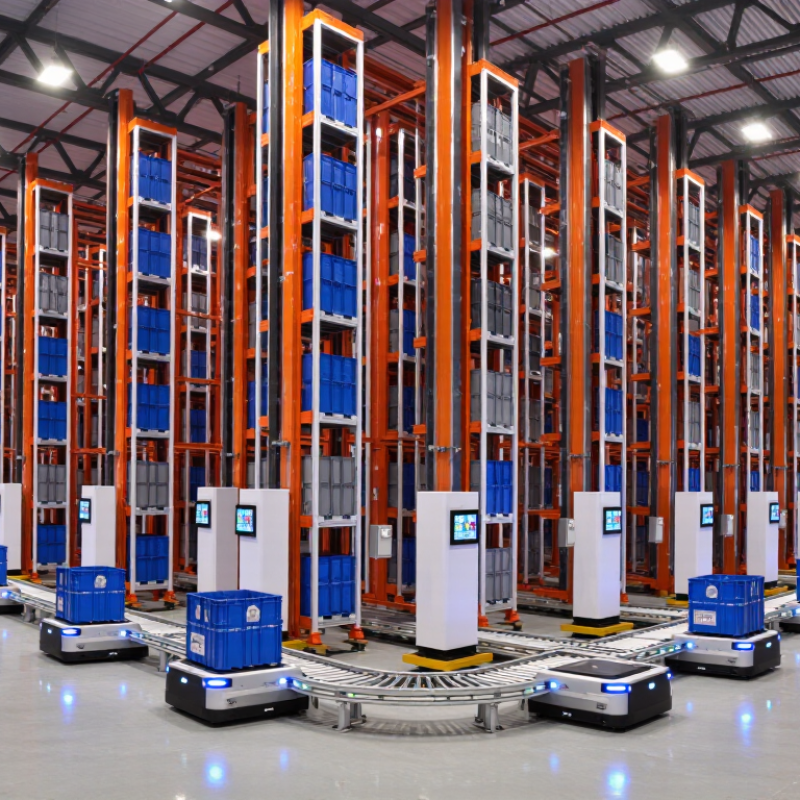
A warehouse shuttle system stores and moves pallets or totes inside dense rack structures. A shuttle vehicle travels along rails within a storage lane, carrying a load to an open position or retrieving it for a lift or conveyor. In multi-level systems, lifts transfer loads between floors. Warehouse software assigns storage locations and coordinates orders, equipment, and inventory records. The result is less forklift travel in the storage aisles and more consistent access to high-turnover goods. Small details matter: rail alignment, load dimensions, and clear handoff points can affect daily performance.
Shuttles are often selected for high-volume operations with many repeatable storage and retrieval tasks. MHI and Deloitte’s 2024 Annual Industry Report found that 55% of surveyed supply-chain leaders planned to increase investment in supply-chain innovation. That interest does not mean every warehouse needs a shuttle. Capacity depends on order mix, peak demand, lift speed, and replenishment timing. A system can look fast on paper and still create queues at a conveyor. A shuttle is not magic.
Tips: Map real order patterns before sizing equipment. Ask suppliers to model peak-hour traffic, not just average throughput. Check what happens during a lift outage or maintenance stop. Leave room for change; product sizes and demand rarely stay still. Planning estimates can be wrong, so validate them against site data.
Key Types of Warehouse Shuttle Systems
Warehouse shuttle systems move loads through storage lanes with less manual travel. Carton shuttles handle totes and small cases in high-density shelving. They suit order picking when many products need quick access. Pallet shuttles carry heavier unit loads, often into deep lanes. A forklift places or retrieves pallets, while the shuttle travels inside the rack. It can reduce truck movement in busy aisles. Capacity and load dimensions still matter.
Four-way shuttles travel across multiple levels and lanes, supporting flexible storage and retrieval. They can serve mixed tasks, but need coordinated controls and careful system design. Some warehouses use multi-level shuttle setups for cartons, with lifts moving goods between floors. These systems can increase throughput, yet add equipment and maintenance needs. No layout is perfect. A poorly matched shuttle can create congestion rather than relieve it.
Tips: Check your order profile, peak-hour volume, pallet or tote size, and inventory rotation before choosing a type. Ask for a test using real load dimensions and sample workflows. Measure aisle space and lift capacity, too. Leave room for service access. One detail is easy to miss: software and operator training affect performance as much as shuttle speed. Review failure procedures and spare-part access before installation. A small pilot can expose awkward handoffs, though it may not predict every seasonal peak.
Criteria for Evaluating Shuttle Systems in 2026
Evaluating shuttle automation in 2026 starts with the warehouse’s actual work profile, not a headline throughput figure. Measure the real mix. Review order lines, SKU variety, tote dimensions, peak-hour demand, and replenishment patterns. A system rated for ideal conditions may slow when several fast-moving items empty at once. Ask suppliers to model your busiest shift using your own data, and show the assumptions behind each estimate.
Check storage density alongside retrieval speed. More locations can help, but only if operators can replenish them without creating congestion. Watch a tote move. Observe queueing, handoffs, and recovery when a lane is blocked or a container is damaged. Confirm that warehouse software can exchange inventory and task updates reliably. Request sample performance logs, not just a polished demonstration. Examine safety interlocks, maintenance access, spare-part availability, and the time needed to restore service after a fault.
Compare the full operating cost over the system’s expected life, including energy, service, software, and planned downtime. Test whether capacity can expand as order volumes or product dimensions change. There is no universal best. A pilot with representative products can reveal awkward exceptions that a spreadsheet misses. Even a careful pilot has limits, so document what it did not test before making a decision.
Leading Shuttle Automation Systems and Their Features
Shuttle automation systems move totes or cartons through dense storage lanes, helping warehouses use vertical space and reduce travel time. The strongest designs combine shuttle vehicles, rack structure, lifts, conveyors, and warehouse software. Look for clear controls, dependable communication, and safe recovery procedures when a vehicle stops inside a lane. That matters. A high storage rate is useful only when operators can keep goods flowing.
Compare systems by more than shuttle speed. Check how quickly lifts serve multiple levels, how easily batteries or vehicles can be serviced, and whether the software supports order peaks without creating bottlenecks. Ask for throughput data under conditions close to your own: item sizes, shift patterns, and replenishment volume. Watch the handoffs. A fast shuttle can still wait if conveyors or picking stations fall behind. Site layouts change, too, so allow room for maintenance access and future adjustments. A tidy simulation may not capture every awkward corner.
Tips: Before choosing, map one busy operating day and test the proposed system with representative loads. Confirm what happens during a communication fault or blocked lane. Request realistic uptime assumptions, service response details, and training plans. Test it loaded. If the supplier cannot explain recovery steps simply, your team may need more evidence before committing.
Implementation, Integration, and Operational Considerations
A shuttle system is not a plug-in shortcut. Before selecting one, map tote sizes, SKU velocity, order profiles, and peak-hour demand. Then check whether the building’s floor, clearances, fire protection, and charging areas suit the design. MHI’s 2024 Annual Industry Report found that 55% of surveyed supply-chain leaders planned to invest in robotics and automation. That signals strong interest, not guaranteed returns. Treat it as context, not a business case.
Integration often decides whether the system performs as expected. Confirm how warehouse software will release tasks, manage inventory, and recover from stalled shuttles. Test barcode reads, exception handling, and network interruptions with real orders before expanding. Test it live. A small pilot can expose awkward handoffs between replenishment and picking. Expect friction. Measure lines per hour, queue time, availability, and manual interventions across a normal shift and a peak shift. Train operators on safe access and recovery; keep maintenance staff involved in commissioning. Spare parts and service response times matter when a lane stops. A detail teams sometimes miss: congestion can move to the lift or packing area, even when shuttle aisles run smoothly. Review those constraints with actual shift data.
2026 Best Shuttle Automation Systems for Warehouses?
Example Implementation Schedule for a Shuttle Automation Project
The chart shows an illustrative planning schedule, not an industry benchmark: durations depend on site conditions, system scope, procurement lead times, and integration requirements. Work packages may overlap, so their durations should not be added to estimate the total project timeline.
