2026 Best Galvanized Steel Pipe Round Suppliers?

Choosing the 2026 best Galvanized Steel Pipe Round suppliers requires more than comparing prices. It requires practical judgment.

A reliable supplier should provide consistent outside diameter, wall thickness, zinc coating, and pipe weight. These details matter on a real jobsite. A pipe that looks bright may still have uneven coating or poor threading. Small defects become visible when pipes are cut, joined, or exposed to rain.

Tom Langill, Technical Director of the American Galvanizers Association, explains, “The zinc coating is metallurgically bonded to the steel.” This bond gives galvanized pipe its useful protection against moisture and corrosion. However, coating quality still depends on steel chemistry, surface preparation, bath control, and inspection discipline.

The strongest suppliers usually support products with mill test certificates, coating records, dimensional reports, and clear traceability. They should also understand ASTM A53, ASTM A500, EN 10255, or the standard required for your project. Certification alone is not enough. Documents must match the delivered bundle.

Look closely.

A serious evaluation should consider manufacturing capacity, export experience, packaging, lead time, and after-sales communication. Ask how pipes are protected during loading. Scratched bundles can arrive damaged, even when production was acceptable.

No supplier is perfect, and no ranking should pretend otherwise. Some companies offer excellent prices but limited technical support. Others provide strong documentation but slower delivery. This guide compares those trade-offs, including real-world weaknesses, to identify dependable Galvanized Steel Pipe Round suppliers for construction, infrastructure, agriculture, and industrial applications in 2026.

2026 Best Galvanized Steel Pipe Round Suppliers?

What Galvanized Round Steel Pipes Are

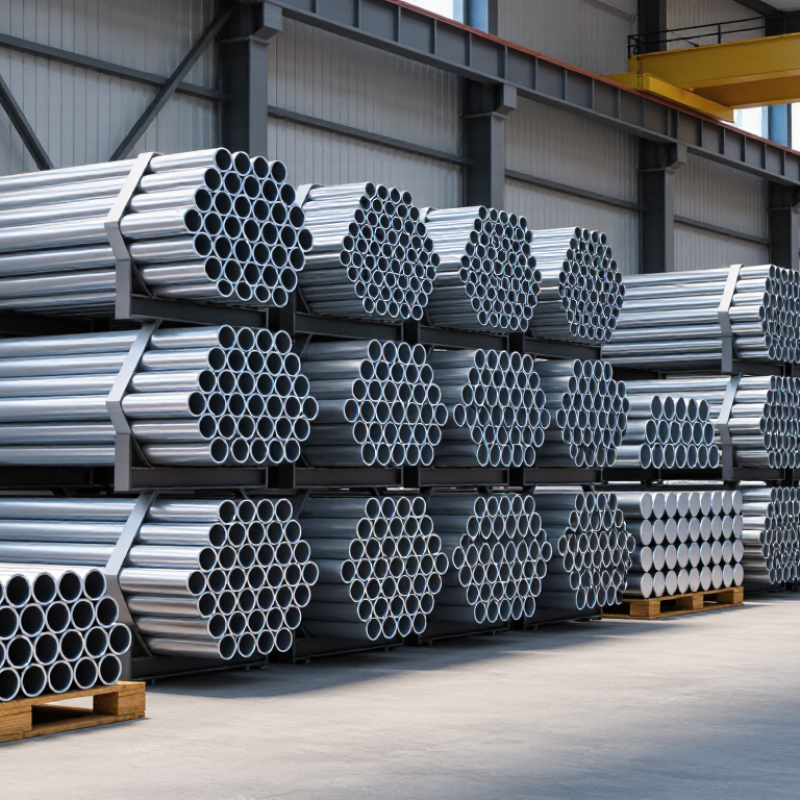
Galvanized round steel pipes are circular steel tubes protected by a zinc coating. The coating is usually applied through hot-dip galvanizing, where cleaned steel enters molten zinc. Zinc then forms protective alloy layers and a tougher outer surface. That dull silver finish is functional, not cosmetic.

A pipe may look simple. It is not. The steel carries pressure and structural loads, while zinc slows corrosion by creating a barrier and acting sacrificially. ISO 1461:2022 specifies hot-dip galvanized coating requirements, including coating thickness and inspection principles. For common structural and fluid applications, ASTM A53 also defines requirements for steel pipe. Buyers should check diameter, wall thickness, coating mass, weld quality, and end preparation. Small differences matter during installation.

Industry scale gives useful context. The World Steel Association reported about 1.89 billion tonnes of crude steel production in 2023. Only part becomes galvanized pipe, but the figure shows the depth of the steel supply chain. In practice, coating life depends on humidity, salt exposure, abrasion, and trapped water. Industry guidance from the American Galvanizers Association indicates that galvanized coatings can protect steel for decades in many atmospheric environments. That estimate is not universal. Coastal sites can behave differently.

A reliable supplier should provide mill certificates, coating inspection records, dimensional reports, and traceable batch information. Ask for test evidence. I would also inspect cut edges and threaded sections, because these areas often reveal careless handling. A bright surface alone proves very little.

2026 Best Galvanized Steel Pipe Round Suppliers? What Galvanized Round Steel Pipes Are

Galvanized round steel pipes are carbon-steel tubes protected by a zinc coating for improved corrosion resistance. The chart compares common ASTM A53 Schedule 40 nominal sizes using standard outside diameters and wall thicknesses. The calculated mass is based on steel dimensions; actual galvanized pipe weight varies with the zinc coating.

Reference formula: theoretical steel mass ≈ 0.02466 × wall thickness × (outside diameter − wall thickness), with dimensions in millimeters and mass in kilograms per meter.

How Galvanized Steel Pipes Are Manufactured and Classified

Galvanized steel pipes are manufactured by bonding zinc to steel, usually through hot-dip galvanizing. The cleaned pipe passes through degreasing, acid pickling, and flux treatment. It then enters a molten zinc bath near 450°C. Zinc reacts with iron and forms protective alloy layers, followed by a pure zinc outer layer.

The process is not cosmetic.

According to ISO 1461, coating thickness depends on the steel section and measured surface area. Thicker steel generally receives a thicker zinc layer. ASTM A53 commonly covers welded and seamless steel pipe for mechanical and pressure applications.

Classification also includes manufacturing method, outside diameter, wall thickness, and schedule number. Electro-galvanized pipe uses an electric current instead of immersion. It offers a thinner, more uniform coating, but often provides less outdoor durability.

The World Steel Association reported approximately 1.88 billion tonnes of crude steel production in 2024. That scale explains why consistent coating inspection matters across global supply chains. Inspectors commonly check zinc thickness, adhesion, appearance, and uncoated areas. A rough gray finish is not automatically a defect; it can result from silicon content or reactive steel chemistry. Still, visual inspection alone is insufficient.

A supplier should provide mill certificates, coating measurements, dimensional tolerances, and applicable test records. In practice, small differences between batches can affect threading and field installation. That detail is easy to overlook. Classification should therefore match the service environment, not just the lowest quoted price.

Key Standards, Dimensions, and Performance Requirements

2026 Best Galvanized Steel Pipe Round Suppliers?

Choosing a reliable supplier requires more than comparing prices. Confirm compliance with recognized standards, such as ASTM A53, EN 10255, or ISO 1461, where applicable. These standards address manufacturing, dimensions, zinc coating, and testing requirements. Ask for current mill certificates, coating records, and batch traceability before placing an order.

Dimensions must match the installation, not just the catalog description. Check nominal pipe size, outside diameter, wall thickness, length, and thread details. Schedule ratings can affect pressure capacity significantly. For water, fencing, scaffolding, or structural use, the required performance may differ. Verify hydrostatic testing, tensile strength, bend performance, coating adhesion, and corrosion resistance. A thicker zinc layer usually improves durability, but surface preparation remains equally important. Poor preparation can cause early flaking.

Tips: Request random sample measurements. Inspect cut edges and threaded areas. Compare certificates with the actual bundle markings. Do not assume “galvanized” means identical protection across suppliers. In practical inspections, small coating defects often appear near ends and handling points. Suppliers should explain repair procedures clearly. No supplier is perfect, and even good documentation deserves a careful second check. Consider independent inspection for large or critical orders.

2026 Best Galvanized Steel Pipe Round Suppliers? - Key Standards, Dimensions, and Performance Requirements
Evaluation Category Applicable Standard or Reference Typical Requirement or Data Common Product Range What to Verify with a Supplier
Material Standards and Product Classification
General-purpose galvanized pipe ASTM A53/A53M Seamless or welded carbon steel pipe for mechanical and pressure applications; Grade B is widely specified. NPS 1/8 to NPS 26, depending on product type and manufacturer capability. Material grade, manufacturing process, pipe type, heat number, dimensional inspection, and certificate of compliance.
High-temperature service pipe ASTM A106/A106M Seamless carbon steel pipe for elevated-temperature service; Grades A, B, and C are available. Commonly supplied from small diameters through large nominal sizes, subject to wall-thickness limits. Confirm that galvanizing is compatible with the intended service and that the base pipe complies with the specified A106 grade.
Oil, gas, and pipeline service API 5L / ISO 3183 Line pipe grades include PSL 1 and PSL 2 requirements; Grade B has a typical minimum yield strength of 35 ksi and tensile strength of 60 ksi. Outside diameters and wall thicknesses are selected according to the pipeline design and applicable line-pipe specification. PSL level, grade, impact-testing requirements, sour-service requirements, NDE scope, and full traceability.
European threaded and plain-end tube EN 10255 Non-alloy steel tubes suitable for welding and threading; S195T has a nominal minimum yield strength of 195 MPa. Light, medium, and heavy series; commonly used for water, air, low-pressure fluids, and general installations. Series designation, outside diameter, wall thickness, thread type, end condition, and EN 10255 inspection documents.
Hot-dip galvanized coating ASTM A123/A123M or EN ISO 1461 Coating requirements depend on the product category, steel thickness, and applicable standard; coating thickness or mass must be measured and documented. Continuous or batch hot-dip galvanizing, depending on pipe size, production route, and order quantity. Coating standard, average and local coating thickness, adhesion, visual condition, repair method, and test records.
Threaded connections ASME B1.20.1 NPT pipe threads are commonly used in North American installations; other regional thread profiles may apply. Threaded ends are normally offered on smaller nominal sizes; larger sizes are often supplied plain-end or bevel-end. Thread standard, taper, gauge inspection, thread protector use, coupling supply, and compatibility with fittings.
Dimensional tolerances Product standard and ASME B36.10M reference dimensions Outside diameter, wall thickness, length, ovality, straightness, and mass tolerances must follow the selected product standard. Random lengths are often approximately 4.8–6.7 m; fixed lengths can be produced to order within mill and cutting limits. Permitted tolerance values, actual measured dimensions, length tolerance, end squareness, and packing method.
Common Round Pipe Dimensions
NPS 1/2 / DN 15 ASME B36.10M nominal dimensions Outside diameter: 0.840 in / 21.3 mm; Schedule 40 wall: 0.109 in / 2.77 mm. Typical uses include small water, air, drainage, and instrument-support lines. Confirm actual outside diameter, wall thickness, threading allowance, and internal zinc buildup.
NPS 1 / DN 25 ASME B36.10M nominal dimensions Outside diameter: 1.315 in / 33.4 mm; Schedule 40 wall: 0.133 in / 3.38 mm. Common for building services, compressed air, water distribution, and low-pressure systems. Confirm schedule, pressure-design basis, end type, and fitting compatibility.
NPS 2 / DN 50 ASME B36.10M nominal dimensions Outside diameter: 2.375 in / 60.3 mm; Schedule 40 wall: 0.154 in / 3.91 mm. Frequently used in fire-water, utility, agricultural, and general mechanical installations. Verify dimensional tolerance, coating uniformity, coupling or flange connection requirements, and hydrostatic test documentation.
NPS 4 / DN 100 ASME B36.10M nominal dimensions Outside diameter: 4.500 in / 114.3 mm; Schedule 40 wall: 0.237 in / 6.02 mm. Suitable for larger water, utility, structural, and industrial piping systems when design conditions permit. Check lifting, bundling, end protection, straightness, internal cleanliness, and coating repair procedures.
NPS 6 / DN 150 ASME B36.10M nominal dimensions Outside diameter: 6.625 in / 168.3 mm; Schedule 40 wall: 0.280 in / 7.11 mm. Common in industrial utilities, water networks, sprinkler mains, and large mechanical systems. Confirm flange dimensions, bevel geometry, wall-thickness measurement method, and transport protection.
NPS 8 / DN 200 ASME B36.10M nominal dimensions Outside diameter: 8.625 in / 219.1 mm; Schedule 40 wall: 0.322 in / 8.18 mm. Used for high-flow utility, process, cooling-water, and fire-protection applications. Verify dimensional control, weld quality where applicable, coating continuity, handling equipment, and site joining method.
NPS 12 / DN 300 ASME B36.10M nominal dimensions Outside diameter: 12.750 in / 323.9 mm; Schedule 40 wall: 0.375 in / 9.53 mm. Used in large-diameter water, utility, industrial, and infrastructure systems subject to engineering design. Confirm production route, maximum available length, weld inspection, coating thickness mapping, and loading plan.
Performance and Quality Requirements
Mechanical strength Specified material standard For ASTM A53 Grade B, typical minimum values are 35 ksi / 240 MPa yield strength and 60 ksi / 415 MPa tensile strength. Values vary by grade, standard, product form, and test direction. Review mill test certificates, heat number traceability, tensile results, yield results, and elongation results.
Pressure capability Engineering design code and product standard Pressure rating is not determined by nominal size alone; it depends on material strength, wall thickness, temperature, weld factor, corrosion allowance, and design code. Use the purchaser’s design pressure, temperature, fluid, and safety-factor requirements. Request a design calculation or rating basis rather than relying only on a generic working-pressure claim.
Hydrostatic or nondestructive testing ASTM, API, EN, or project specification Testing may include hydrostatic testing, ultrasonic testing, electromagnetic testing, radiography, or visual inspection, depending on the standard. Test scope should be stated in the purchase order and inspection plan. Confirm test pressure or test method, duration, acceptance criteria, calibration records, and retest policy.
Coating uniformity ASTM A123/A123M or EN ISO 1461 Coating should be continuous and substantially free from bare spots, excessive runs, blisters, flaking, and harmful inclusions. Minor surface variations may occur after hot-dip galvanizing, but functional defects require evaluation and repair. Check magnetic thickness readings, sampling plan, visual inspection records, and approved zinc-rich repair materials.
Corrosion-service suitability Project corrosion-control specification Galvanized steel performs well in many atmospheric and water-service environments, but performance depends on pH, chlorides, temperature, flow, and exposure. Do not assume suitability for continuously immersed, highly acidic, highly alkaline, or high-temperature service without technical review. Request a corrosion assessment, service-temperature limit, water chemistry review, and compatibility confirmation.
Welded-pipe weld quality Applicable product standard and purchase specification Welded pipe should have a controlled longitudinal or spiral weld process with appropriate inspection and dimensional control. Inspection level varies by ASTM, API, EN, or project requirements. Verify welding procedure controls, NDE percentage, weld repair policy, weld-location records, and operator qualifications.
End preparation Product standard and purchaser specification Available ends include plain end, beveled end, threaded end, and grooved end; bevel geometry must match the joining procedure. Plain and beveled ends are common for welded or flanged systems; threaded ends are common for smaller sizes. Confirm bevel angle, root face, thread protection, groove dimensions, burr removal, and end-cap requirements.
Traceability and documentation EN 10204 inspection-document system or equivalent project requirement Typical documentation includes material certificate, coating report, dimensional report, test report, packing list, and certificate of conformity. 3.1 inspection certificates are commonly requested for critical industrial applications. Ensure heat numbers remain legible through galvanizing, bundling, delivery, and final installation.
Supplier capability benchmark Purchaser qualification procedure Preferred suppliers should demonstrate standard compliance, stable production capacity, quality-control systems, export packing, and repeatable dimensional performance. Evaluate sample approval, production lead time, minimum order quantity, customization, and inspection support. Compare verified test records, audit results, sample quality, delivery history, technical response time, and after-sales handling.
Packaging and transport protection Project logistics specification Pipe should be bundled securely with separators or protective materials that minimize coating damage, deformation, contamination, and water entrapment. Suitable for truck, container, break-bulk, or long-distance multimodal transport. Confirm bundle weight, lifting points, end caps, moisture protection, marking, container loading plan, and storage instructions.

How to Evaluate Galvanized Steel Pipe Suppliers in 2026

Evaluating round galvanized steel pipe suppliers in 2026 requires more than comparing quotations. World Steel Association data recorded about 1.88 billion tonnes of crude steel production in 2024. That scale makes traceability essential. Ask for heat numbers, mill certificates, coating test results, and production dates. A reliable supplier should connect every bundle to a specific manufacturing record.

Check compliance with ASTM A123/A123M, ASTM A53, or relevant EN standards. Confirm wall thickness, outside diameter, zinc coating mass, tensile strength, and hydrostatic testing. The International Zinc Association notes that galvanizing remains one of zinc’s largest industrial uses, reflecting its importance in corrosion protection. Still, zinc content alone does not prove quality. Surface preparation, bath control, cooling, and inspection matter just as much.

Look closely at the supplier’s quality system. ISO 9001 certification helps, but it is not a guarantee. The ISO Survey has recorded more than one million ISO 9001 certificates worldwide, so certificates are common. Audit the details. Can the supplier provide recent third-party inspection reports? Can it explain rejected batches without vague answers? Delivery performance also deserves evidence. Review twelve months of order records, packaging photos, and claims data. I would sample pipes personally when possible. A clean surface can hide poor coating adhesion. Even experienced buyers miss this. Supplier evaluation should remain practical, documented, and slightly skeptical.

Leading Supplier Regions and Smart Purchasing Factors

In 2026, galvanized steel pipe sourcing is increasingly regional. China offers broad production capacity and flexible order volumes. India is strong in construction-grade pipe and export packaging. Turkey serves European, Mediterranean, and nearby markets with shorter transit routes. The United Arab Emirates can support projects needing regional stock and rapid delivery. No region is perfect. Freight, port delays, and local finishing standards can change the real cost.

Smart purchasing begins with the project specification, not the supplier quotation. Confirm outside diameter, wall thickness, pipe length, threading, and zinc coating weight. Ask for recent mill test certificates and production records. The documents should match the actual heat number on the pipe. A small sample inspection can reveal rough threads, uneven coating, or blocked pipe ends. These details matter during installation.

Compare landed cost, including freight, insurance, duties, inspection, and storage. Check the supplier’s monthly capacity before accepting a large order. Independent inspection is useful for critical infrastructure, even when the supplier appears reliable. I once saw a low quotation become expensive after replacing poorly bundled pipes. That mistake was avoidable. Buyers should also request clear tolerance data and packing photographs. Some suppliers communicate well before payment, then respond slowly after production starts. Written milestones, realistic delivery dates, and a documented claims process reduce that risk.

Learn More

Connect with us today to learn more about our industrial automation solutions—and how to commission them for your application.